Simple Errors That Are Ruining Your Lawn Health

TL;DR
- Mowing too short stresses grass roots and opens the door to weeds and disease — raise your deck to at least 3 inches for most cool- and warm-season grasses.
- Watering daily in small amounts trains roots to stay shallow and weak — water deeply 2-3 times per week instead.
- Skipping a soil test means you are guessing on fertilizer and lime, and guessing usually costs more in the long run.
- Leaving dull mower blades on too long tears grass instead of cutting it, which turns lawns yellow and invites fungal problems.
- Most lawn problems trace back to timing — doing the right thing in the wrong season makes it worse, not better.
Why Healthy Lawns Fail Even When Owners Are Trying

Most lawn damage does not come from neglect. It comes from well-meaning habits done slightly wrong — mowing a little too short, watering a little too often, fertilizing a little too late. The gap between a struggling lawn and a thick, even one is usually a handful of small corrections, not an expensive renovation.
This guide covers the most common errors homeowners make, why each one hurts the grass, and what to do differently starting this weekend.
Mowing Too Short Invites Weeds and Weakens Roots
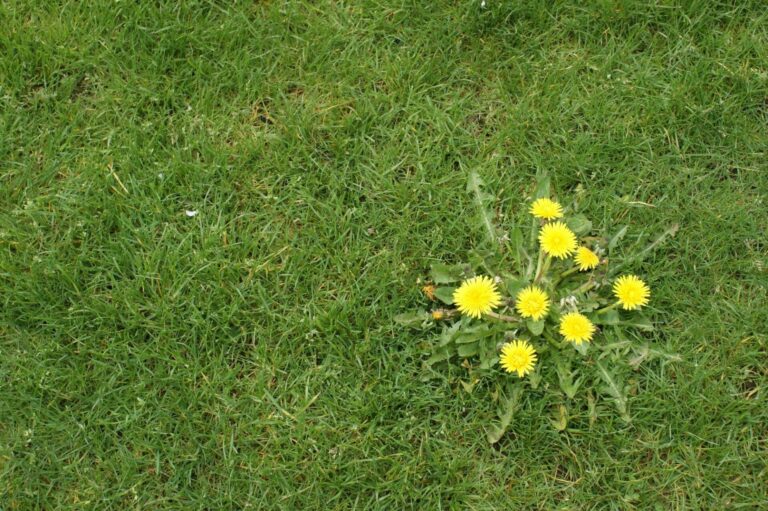
Cutting grass below 2.5 to 3 inches is the single most widespread lawn mistake in the United States, according to the University of Maryland Extension. When you scalp the lawn, the grass plant loses the leaf surface it uses to produce energy. Shallow roots follow, and shallow roots mean the lawn dries out faster, recovers slower, and loses ground to crabgrass and dandelions.
The fix is simple: raise the mower deck. For tall fescue and Kentucky bluegrass, cut at 3 to 4 inches. For Bermuda and Zoysia, 1.5 to 2.5 inches is appropriate. As a general rule, never remove more than one-third of the blade height in a single mow — this is called the one-third rule, and it applies to every grass type.
A dull blade makes this worse. A blade that has not been sharpened in a season tears grass fibers instead of cutting them cleanly. Torn grass tips turn yellow within a day or two and leave the plant open to fungal infection. Sharpen or replace your blade at least once per mowing season, or after every 20-25 hours of use.
Watering Every Day Is Training Your Lawn to Be Weak

Daily light watering is one of the most common and counterproductive lawn habits. When you apply a small amount of water every day, the moisture stays near the surface. Grass roots follow the water, so they stay shallow. A shallow-rooted lawn wilts faster in heat and dies faster in drought.
The correct approach is infrequent, deep watering. Most lawns need about 1 to 1.5 inches of water per week, applied in two or three sessions rather than seven (Toro Irrigation, 2023). Each session should wet the soil to a depth of 4 to 6 inches. The easiest way to measure this is to set an empty tuna can on the lawn — when it is full, you have applied roughly one inch.
Water in the early morning, between 5 a.m. and 10 a.m. Watering at night leaves the grass wet through the dark hours, which is when fungal diseases like brown patch spread fastest.
Skipping a Soil Test Means Fertilizing Blind
Most homeowners pick a fertilizer bag off the shelf based on the picture on the front. That approach often leads to over-applying nitrogen (which burns grass and runs off into waterways) or under-correcting pH (which locks out nutrients the grass cannot absorb no matter how much you apply).
A basic soil test costs $15 to $25 through your state’s cooperative extension service and tells you your soil’s pH, nitrogen level, phosphorus, and potassium. If your soil pH is below 6.0, grass cannot properly absorb fertilizer — applying more nitrogen on acidic soil is money down the drain. The fix is lime, typically 40 to 50 pounds per 1,000 square feet for moderately acidic soil (Penn State Extension, 2023).
Test your soil every two to three years. It is the cheapest diagnostic tool in lawn care.
Fertilizing at the Wrong Time of Year Does More Harm Than Good
Applying a high-nitrogen fertilizer to cool-season grass in July is one of the faster ways to damage a lawn. Feeding grass when it is heat-stressed pushes the plant to grow when it wants to rest, weakening the root system and making it more vulnerable to drought and disease.
The timing by grass type:
| Grass Type | Best Fertilizer Window | Avoid Feeding |
|---|---|---|
| Tall fescue, Kentucky bluegrass | Early fall (Sept-Oct), light spring feed | Summer (June-Aug) |
| Bermuda grass | Late spring through summer | Fall and winter |
| Zoysia grass | Late spring once fully green | Before green-up, after Labor Day |
| St. Augustine | Spring through early summer | Fall and winter |
If you are not sure what type of grass you have, your local cooperative extension office can identify it from a photo or a small clipping.
Ignoring Thatch Until It Becomes a Problem
Thatch is the layer of dead stems and organic material that builds up between the grass blades and the soil surface. A thin layer — under half an inch — is normal and actually helpful. When it exceeds half an inch, it blocks water, fertilizer, and air from reaching the roots.
You can check thatch depth by pushing a screwdriver into the lawn. If there is spongy resistance before you hit soil, you likely have a thatch problem. Dethatching with a power rake or vertical mower is the solution, and early fall is the best time to do it for cool-season grasses (Scotts, 2024). For warm-season grasses, early summer works better.
Frequently Asked Questions
How short is too short when mowing a lawn?
Anything below 2.5 inches is too short for most cool-season grasses like tall fescue and Kentucky bluegrass. Cutting below that height stresses the plant, reduces root depth, and gives weeds an opening. Warm-season grasses like Bermuda can be cut shorter — 1.5 to 2 inches — without the same damage.
How often should you water your lawn?
Water 2 to 3 times per week rather than daily, applying enough each time to wet the soil 4 to 6 inches deep. Most lawns need 1 to 1.5 inches of water per week total (Toro Irrigation, 2023). Daily shallow watering keeps roots near the surface and makes the lawn weaker over time.
Do I really need to test my soil?
Yes, if you want fertilizer to actually work. Without knowing your soil’s pH, you may be applying fertilizer that the grass cannot absorb. A soil test from your state cooperative extension costs $15 to $25 and tells you exactly what your lawn needs — and what it does not.
When should I fertilize my lawn?
It depends on your grass type. Cool-season grasses like tall fescue and bluegrass respond best to fall fertilization in September and October. Warm-season grasses like Bermuda and Zoysia should be fed in late spring through summer. Feeding either type during its dormant or stressed period pushes growth at the wrong time and weakens the plant.
What does thatch look like and how do I fix it?
Thatch is a dense, spongy layer of dead organic material between the grass and the soil. Push a screwdriver into the lawn — if you feel cushiony resistance before hitting soil, your thatch is likely over half an inch thick. Fix it with a power rake or vertical mower in early fall for cool-season grass, or early summer for warm-season grass.
Why do my grass tips turn yellow after mowing?
Yellow tips after mowing almost always mean a dull blade. A sharp blade cuts grass cleanly; a dull one tears the tissue, which oxidizes and turns yellow within a day or two. Sharpen your blade at least once per season or after 20 to 25 hours of use (Oregon Products, 2024).