SAE 30 Oil in Lawn Mowers: The Complete Guide for Homeowners

TL;DR
- SAE 30 is the recommended engine oil for most single-cylinder, 4-stroke lawn mower engines operating in temperatures above 40°F.
- Most push mowers and walk-behind mowers use SAE 30 – check your owner’s manual to confirm before you pour anything in.
- SAE 30 and 10W-30 are not the same thing; using the wrong one in the wrong conditions can accelerate engine wear.
- Change your mower’s engine oil every 50 hours of use or once per season, whichever comes first (Briggs & Stratton maintenance guidelines).
- Do not use SAE 30 in 2-stroke engines – 2-stroke engines require a different oil mixed directly with the fuel.
What Is SAE 30 Oil and Why Do Lawn Mowers Use It?

Credit: https://pennypincherjournal.blogspot.com/
SAE 30 is a single-grade motor oil with a viscosity rating of 30, as defined by the Society of Automotive Engineers (SAE). It flows at a consistent thickness across a defined temperature range, which makes it a reliable choice for small, air-cooled engines like those found in most residential push mowers and walk-behind mowers.
Most single-cylinder, 4-stroke lawn mower engines are designed around SAE 30 because those engines run at relatively steady temperatures, lack the complex cooling systems of car engines, and don’t experience the wide cold-to-hot temperature swings that multi-grade oils are built to handle.
If your mower has a 4-stroke engine and you’re mowing in warm weather – which is most of the country, most of the season – SAE 30 is almost certainly what the manufacturer recommends.
When Should You Use SAE 30 in a Lawn Mower?
Use SAE 30 when the outdoor temperature is consistently above 40°F. That covers the full mowing season for most of the continental United States, from mid-spring through early fall.
SAE 30 is a single-grade oil, meaning it does not adjust its flow characteristics based on temperature. In cold weather (below 40°F), it thickens and can make cold starts harder on the engine. For climates with colder springs or higher elevations where morning temps regularly dip below 40°F, a multi-grade oil like 10W-30 handles the cold-start phase better.
For standard suburban lawn mowing between May and September, SAE 30 is the right call for most push mowers.
SAE 30 vs. 10W-30: Which One Does Your Mower Actually Need?
| Oil Type | Best Temperature Range | Viscosity Behavior | Typical Application |
|---|---|---|---|
| SAE 30 | Above 40°F | Single-grade, stable in warm temps | Most walk-behind push mowers |
| 10W-30 | 0°F to 100°F | Multi-grade, thinner when cold | Riding mowers, variable climates |
| SAE 10W-40 | Wide range | Multi-grade, thicker when hot | Some commercial engines |
| 5W-30 | Below 40°F | Multi-grade, very fluid when cold | Cold-climate or early-spring use |
SAE 30 and 10W-30 behave the same once the engine is fully warmed up. The difference is cold-start performance: the “10W” in 10W-30 means it flows like a 10-weight oil in cold temperatures, which reduces engine wear during startup. For most homeowners mowing in summer heat, either will work fine – but always check your owner’s manual first, because some manufacturers specify one over the other.
Running 10W-30 in an engine spec’d for SAE 30 is generally not harmful. Running SAE 30 in an engine spec’d for 10W-30 in cold weather can cause hard starts and excess wear on startup.
How Much SAE 30 Oil Does a Lawn Mower Take?
Credit: http://walmart.com/
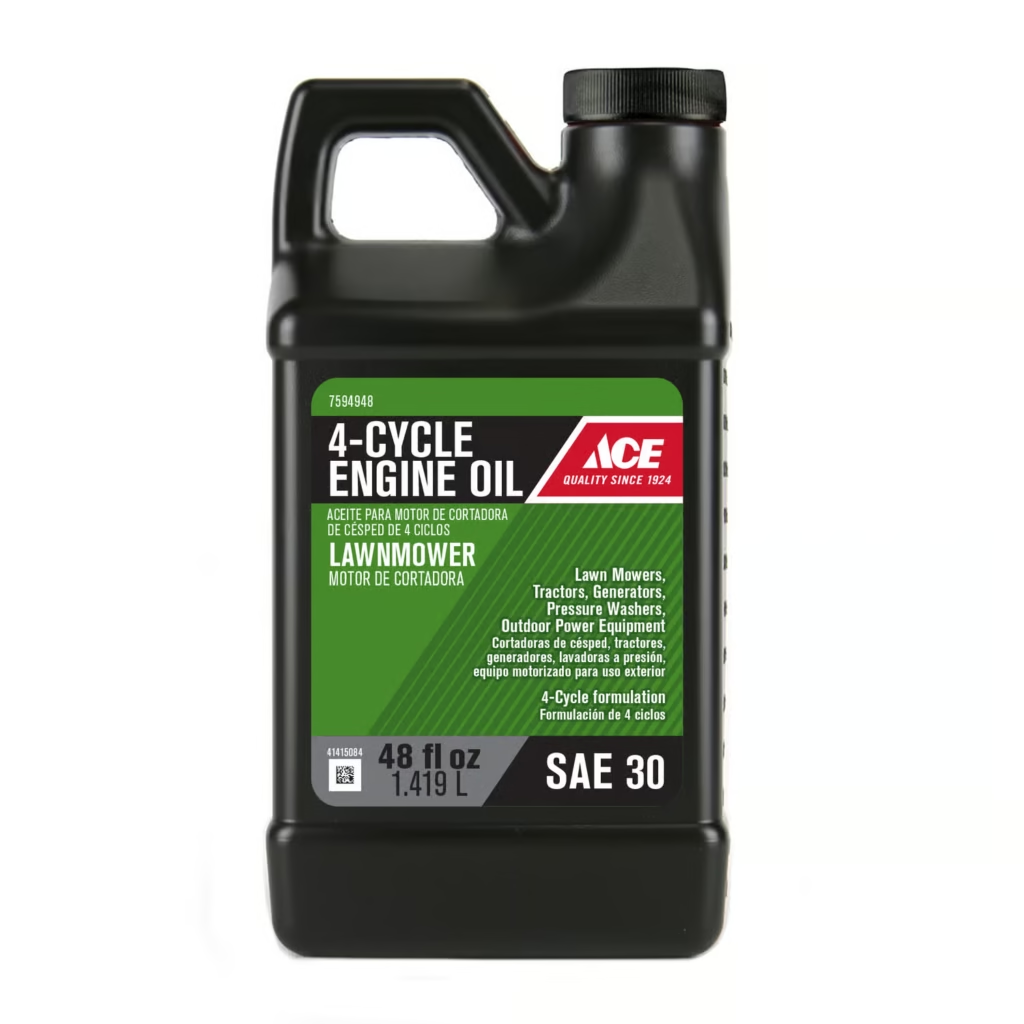
Most walk-behind push mowers hold between 15 and 20 oz (roughly 0.5 quarts) of engine oil. Riding mowers typically take 48 to 64 oz (1.5 to 2 quarts), depending on engine size.
Check the oil level with the dipstick before every mow. Fill to the “full” line – overfilling is as problematic as running low, since too much oil can cause air-oil foaming and pressure buildup that damages seals.
If you don’t have your manual, the dipstick and the fill cap are your guides. Never guess at capacity.
How to Change SAE 30 Oil in a Lawn Mower
Changing mower oil takes about 15 minutes and requires no special tools beyond a drain pan and a rag.
What you need:
- Fresh SAE 30 engine oil (check your manual for capacity)
- Oil drain pan
- Clean rag or paper towels
- Funnel (optional but helpful)
Step 1: Warm the engine briefly. Run the mower for 2 minutes before draining. Warm oil flows out faster and carries more contaminants with it than cold oil does.
Step 2: Disconnect the spark plug wire. Do this before any work under the deck or near moving parts. It’s a simple safety step that prevents accidental startup.
Step 3: Drain the old oil. Tip the mower to the drain plug side (or use a siphon pump through the dipstick tube if your mower has no drain plug). Let it drain fully into your pan.
Step 4: Refill with fresh SAE 30. Pour slowly, check the dipstick frequently, and stop at the “full” line.
Step 5: Reconnect the spark plug wire and run the engine. Check for leaks around the fill cap and drain plug. Done.
Dispose of used oil at a local auto parts store – most accept it for free.
Common Oil Change Mistakes That Cost You More
- Skipping the pre-drain warm-up: Cold oil leaves more sludge behind. Two minutes of runtime before draining makes a real difference.
- Overfilling the crankcase: Oil above the full line foams under pressure and can blow past seals. Fill to the line, not above it.
- Using 2-stroke oil in a 4-stroke engine: These are different products with completely different formulations. Using the wrong one destroys the engine.
- Ignoring the 50-hour interval: Oil breaks down from heat and combustion blowby even if the mower looks fine. Fresh oil is cheap; a seized engine is not.
Frequently Asked Questions
Can I use SAE 30 in any lawn mower?
SAE 30 works in most 4-stroke, single-cylinder push mower engines. It does not work in 2-stroke engines, which require oil mixed into the fuel. Check your owner’s manual – it will list the recommended oil grade for your specific engine.
What happens if I use the wrong oil in my lawn mower?
Using an oil with the wrong viscosity can cause poor lubrication during startup (too thick) or insufficient film strength at operating temperature (too thin). Either condition accelerates engine wear over time. One wrong fill won’t destroy an engine, but repeated use of the wrong grade will shorten engine life.
How often should I change the oil in my lawn mower?
Change the oil every 50 hours of operation or at the start of each mowing season, whichever comes first. New mowers typically need a break-in oil change after the first 5 hours of use – check your manual for this detail.
Is SAE 30 the same as 10W-30?
No. Both have a warm-temperature viscosity of 30, but 10W-30 is a multi-grade oil that flows more easily in cold temperatures. SAE 30 is a single-grade oil that can thicken significantly below 40°F, making cold starts harder on the engine.
Can I mix SAE 30 with 10W-30 if I run out?
Mixing the two won’t cause an immediate failure, but it dilutes the consistency of whichever grade your engine was spec’d for. Top off with the correct oil as soon as possible and do a full change at your next service interval.