Electric vs Gas Lawn Equipment: Which Should You Buy?

TL;DR
- Electric lawn equipment costs less to run and maintain than gas – battery charging runs roughly $0.10-$0.25 per session vs $3-$6 for a tank of gas (Consumer Reports, 2024)
- Gas equipment delivers more sustained power and unlimited runtime, making it the better fit for yards over half an acre or heavy-duty work
- Electric is the stronger choice for most suburban homeowners with yards under half an acre
- Battery platforms matter more than individual tools – buying into one brand’s system (Ryobi, EGO, Greenworks) means every battery works across all their tools
- Neither option requires a pro to maintain – but gas equipment demands significantly more regular upkeep
What Is the Real Difference Between Electric and Gas Lawn Equipment?
Credit: https://www.homedepot.com/
Electric lawn equipment runs on a rechargeable lithium-ion battery or a corded power supply. Gas equipment runs on a small combustion engine fueled by regular or ethanol-free gasoline. That core difference drives every practical comparison: cost, power, noise, maintenance, and convenience.
For most homeowners shopping today, the decision comes down to yard size, how often you mow, and how much time you want to spend on upkeep.
How Much Does Each Type Cost to Own?
Electric equipment typically costs more upfront but less to operate over time. A quality battery-powered lawn mower from EGO or Greenworks runs $350-$600. A comparable gas mower – say, a Toro Recycler 22 or Honda HRX217 – runs $350-$800 (Home Depot, 2026).
The gap closes fast once you factor in running costs.
| Cost Category | Electric | Gas |
|---|---|---|
| Purchase price (push mower) | $350-$600 | $350-$800 |
| Annual fuel/charging cost | $5-$15 | $60-$120 |
| Annual maintenance (parts) | $0-$20 | $40-$100 |
| Average 5-year total cost | $400-$650 | $650-$1,100 |
Estimates based on Consumer Reports (2024) and Angi (2025) cost data.
Gas equipment requires annual tune-ups: fresh oil, a new spark plug, air filter replacement, and often a carburetor cleaning after winter storage. Electric equipment needs almost none of that – wipe the deck, check the blade, charge the battery.
Which Type Is More Powerful?
Gas equipment still has the power advantage for heavy-duty work. A Briggs & Stratton 675exi or Honda GCV160 engine produces consistent torque through thick, wet grass, steep slopes, and extended mowing sessions without any concern about battery life.
Battery-powered equipment has closed the gap significantly. The EGO Power+ 56V platform and Greenworks 82V series now handle most suburban lawns without issue. Where electric still falls short: yards over half an acre mowed in a single session, thick fescue or zoysia grass, and commercial or semi-professional use.
For a standard quarter-acre suburban lot with typical turf, a modern 56V or higher battery mower does the job cleanly.
Which Type Is Easier to Maintain?

Credit: https://garageworld360.com/
Electric lawn equipment wins this comparison without much contest. There is no engine oil to change, no spark plug to swap, no air filter to clean, no carburetor to rebuild after a winter of stale gas sitting in the tank. A battery-powered mower needs a sharp blade and a charged battery. That is most of it.
Gas mowers need at minimum:
- An oil change every 50 hours or once per season
- A new spark plug each spring
- Air filter inspection and replacement annually
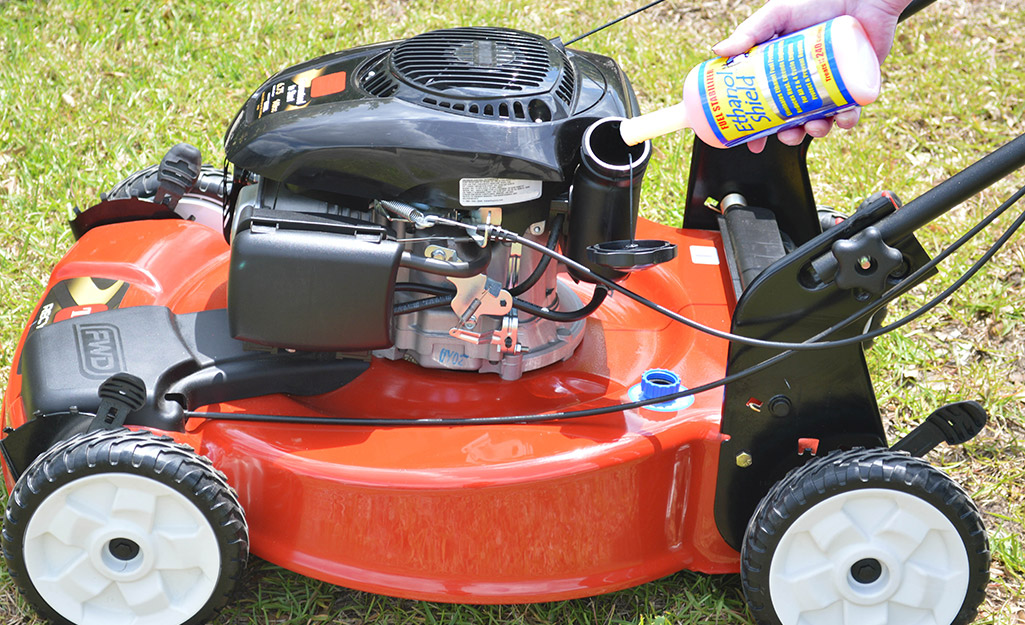
- Fuel stabilizer added before winter storage, or the tank drained completely
- Carburetor cleaning if the mower sat over winter with ethanol-blend gas
If you skipped any of those last season, you already know what a hard-starting mower feels like in April.
Which Type Is Better for the Environment and Your Neighbors?
A gas-powered lawn mower running for one hour produces roughly the same emissions as driving a car 300 miles, according to the California Air Resources Board (2021). Electric equipment produces zero direct emissions at the point of use.
Noise is the other factor. Gas mowers typically run at 85-95 decibels – loud enough to require hearing protection over extended use. Most battery-powered mowers operate at 75-80 decibels, which is a meaningful difference for early morning mowing and neighbors with young kids or thin walls.
Common Mistakes That Cost You More in the Long Run
- Buying a cheap battery platform: A $180 no-name electric mower with a proprietary battery locks you into that one tool. EGO, Greenworks, and Ryobi all offer cross-compatible battery systems – one battery runs a mower, trimmer, blower, and chainsaw.
- Underestimating your yard size: Battery runtime matters. A 5Ah battery on a 56V mower covers roughly 30-45 minutes of mowing under normal conditions. For half an acre or more, you need a second battery or a gas backup.
- Storing gas equipment without fuel treatment: Ethanol-blend gasoline left in a carburetor over winter gums up the jets and costs $50-$150 in carburetor cleaning or replacement (Angi, 2025). Use ethanol-free fuel or a quality stabilizer like Sta-Bil every time.
Frequently Asked Questions
How long do battery-powered lawn mowers last?
Most lithium-ion battery packs are rated for 500-1,000 full charge cycles before capacity drops noticeably (EGO, 2024). With once-a-week mowing during a 20-week season, that is 25 years of cycles before degradation becomes a real issue – though the mower deck and motor will likely need service before the battery does.
Can electric lawn equipment handle a large yard?
Electric equipment works well on yards up to half an acre with a quality 56V or 82V battery platform. For anything larger, you either need a riding mower or multiple batteries to finish in one session. Gas or a battery riding mower is the more practical answer above one acre.
Is gas lawn equipment being phased out?
California has banned the sale of new gas-powered small off-road engines starting in 2024 (California Air Resources Board). Other states are watching. Gas equipment remains widely available and serviceable nationwide for now, but the long-term direction of the industry is clearly toward battery power.
Which is cheaper to buy – electric or gas?
At the entry level, both start around $200-$350 for a push mower. Mid-range electric and gas mowers cost roughly the same. The difference is that electric costs less to operate each year, while gas costs more upfront in maintenance over time.
Do I need a special outlet to charge a battery lawn mower?
No. All current residential battery-powered lawn equipment charges on a standard 120V household outlet. Charging times range from 30 minutes to 3 hours depending on battery size and whether the charger is standard or rapid-charge.