
Why Your Lawn Care Efforts Aren’t Working (And How to Fix It)

TL;DR
- The most common reason lawns fail despite regular care is mowing too short, which stresses grass and lets weeds move in.
- Watering at the wrong time of day causes up to 30% of applied water to evaporate before it reaches the roots (University of California Cooperative Extension, 2019).
- Compacted soil blocks water, air, and nutrients from reaching grass roots, no matter how much you fertilize.
- Most cool-season grasses should be cut no shorter than 3 inches; most warm-season grasses no shorter than 1.5 to 2 inches (Purdue Extension, 2022).
- Fix the mowing height, water deeply twice a week in the morning, and aerate once a year – those three changes solve the majority of lawn problems.
What “Lawn Care Isn’t Working” Actually Means

credit: https://www.pennington.com/
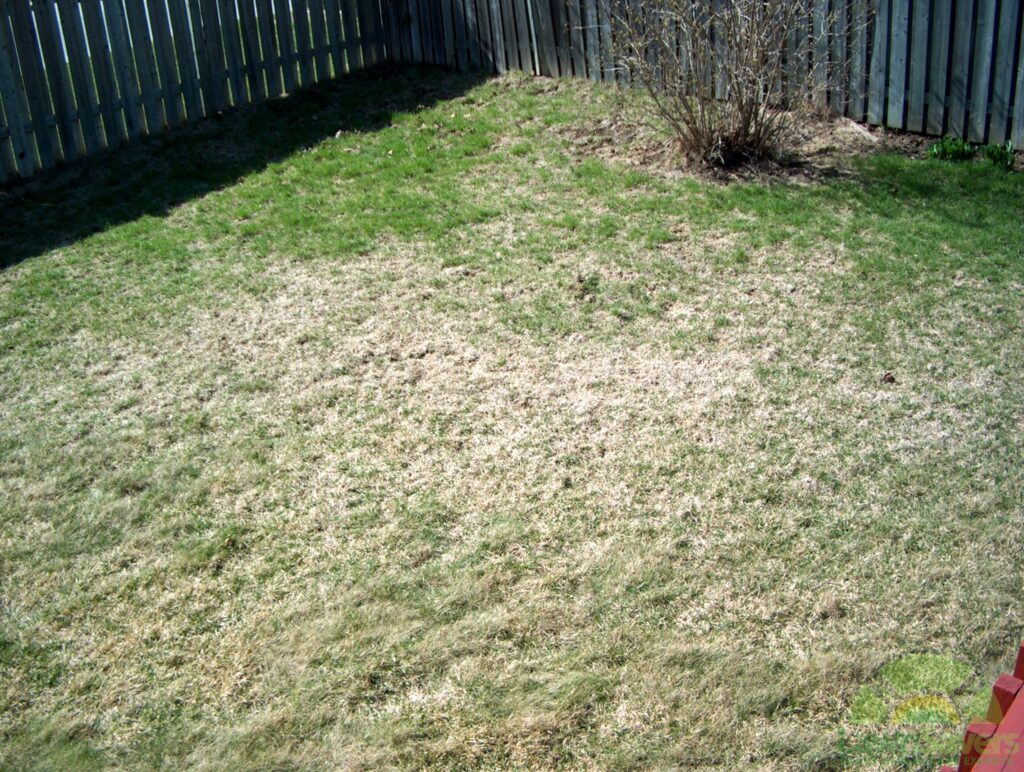
Most lawn problems aren’t random. They follow patterns, and those patterns almost always trace back to three things: how you’re cutting, how you’re watering, and what’s happening below the surface with your soil. If your grass looks thin, brown, or weedy despite regular effort, one of these is almost certainly the cause.
This article covers the most common mistakes homeowners make in each area, with specific fixes for each one.
Why Your Mowing Habits May Be the First Problem
Cutting grass too short is the single most damaging thing most homeowners do to their lawns. When you cut below the recommended height, the grass plant loses leaf area it needs for photosynthesis, the root system shrinks in response, and the lawn becomes thin enough for weeds to take hold.
The general rule for cool-season grasses like Kentucky bluegrass, tall fescue, or perennial ryegrass is to never cut below 3 inches (Purdue Extension, 2022). Warm-season grasses like Bermuda or zoysia can handle 1.5 to 2 inches, but not much less.
The one-third rule matters here: never remove more than one-third of the blade length in a single mow. If your grass is 4.5 inches tall and you drop it to 3 inches, that’s fine. If you let it reach 5 inches and then scalp it to 2, the lawn will show stress within days.
Blade sharpness compounds this. A dull blade tears grass instead of cutting it cleanly, leaving ragged tips that turn brown and create entry points for disease. Sharpen your mower blade at least once per season, and twice if you mow more than an acre.
How Watering at the Wrong Time Wastes Most of What You Apply
Watering in the middle of the day means a significant portion of moisture evaporates before it soaks in. The University of California Cooperative Extension (2019) estimates up to 30% of midday irrigation is lost to evaporation in warm, dry conditions. Water in the early morning, between 5 and 9 a.m., when temperatures are low and wind is minimal.
Frequency matters as much as timing. Shallow, daily watering trains grass roots to stay near the surface, where they’re vulnerable to heat and drought. The better approach is to water deeply and less often – about 1 inch of water twice a week – which pushes roots deeper and builds a more drought-tolerant lawn.
To check whether you’re hitting 1 inch, set an empty tuna can in your yard while you water. When it’s full, you’ve applied roughly 1 inch.
What Compacted Soil Does to a Lawn (and Why Fertilizer Can’t Fix It)
Compacted soil is dense enough that water pools on the surface instead of soaking in, and grass roots can’t push through it to find nutrients or moisture. You can fertilize every month and still get thin, struggling grass if the soil underneath is compacted.
This is common in high-foot-traffic areas, clay-heavy soils, and lawns that were never aerated after the initial build. The fix is core aeration – a process where a machine pulls small plugs of soil from the lawn to open up channels for air, water, and roots. Do it once a year in fall for cool-season grasses, or in late spring for warm-season grasses.
After aerating, top-dress with a thin layer of compost if the soil quality is poor. This builds organic matter over time and gives grass roots something better to grow into.
Common Lawn Care Mistakes and Their Fixes
| Mistake | What It Causes | Fix |
|---|---|---|
| Mowing below recommended height | Thin turf, weed invasion, stressed roots | Set mower deck to 3 in. for cool-season grass, 1.5-2 in. for warm-season grass |
| Watering daily and lightly | Shallow root system, drought vulnerability | Water deeply twice a week, 1 inch per session |
| Watering in afternoon | Evaporation loss, potential fungal issues overnight | Water between 5-9 a.m. |
| Skipping aeration | Water runoff, fertilizer waste, thin grass in high-traffic zones | Core aerate once per year |
| Using a dull blade | Torn grass tips, brown edges, disease entry | Sharpen blade once per season minimum |
| Fertilizing compacted soil | Fertilizer runs off without reaching roots | Aerate before fertilizing |
Frequently Asked Questions
Why does my lawn look bad even though I water it every day?
Daily watering is usually the problem, not the solution. Watering a little every day keeps moisture near the surface and trains roots to stay shallow. Switch to deep watering twice a week, about 1 inch per session, and roots will follow moisture deeper into the soil.
How short is too short when mowing?
For most cool-season grasses like tall fescue, Kentucky bluegrass, and perennial ryegrass, anything below 3 inches is too short (Purdue Extension, 2022). For warm-season grasses like Bermuda and zoysia, stay above 1.5 inches. Cutting below these thresholds stresses the plant and opens the lawn to weeds.
Can I fix a compacted lawn without renting an aerator?
A spike aerator (which pokes holes rather than pulling plugs) provides some relief but doesn’t match the results of a core aerator. For serious compaction, rent a core aerator or hire a lawn service for the job once a year. Many big-box rental centers like Home Depot offer them for around $75-$100 per day.
Why do I have so many weeds even though I fertilize regularly?
Weeds fill space that grass can’t cover. If your mowing height is too low, your soil is compacted, or your watering is shallow, the grass is too stressed to crowd weeds out. Fertilizer feeds whatever is growing, including the weeds. Fix the conditions first and the grass will compete better on its own.
When is the best time to aerate my lawn?
For cool-season grasses (tall fescue, Kentucky bluegrass, ryegrass), aerate in early fall, typically September through early October in most of the U.S. For warm-season grasses (Bermuda, zoysia, St. Augustine), aerate in late spring once the lawn is actively growing. Aerating at the right time gives the grass its best window to fill in the holes quickly.