Why Is My Grass Dying? The Most Common Causes and How to Fix Them

TL;DR
- The most common reasons grass dies are drought stress, compacted soil, fungal disease, grub damage, and mowing too short.
- Yellowing across the whole lawn usually points to water or fertilizer issues; dead patches in irregular shapes usually point to disease or pests.
- Mowing with a dull blade tears grass instead of cutting it, leaving it open to disease and moisture loss.
- Most causes are fixable if caught early – a soil test from your local cooperative extension office costs $15-$25 and removes the guesswork.
- If the grass is brown but not crunchy, it may be dormant, not dead.
How to Tell If Your Grass Is Dead or Just Dormant
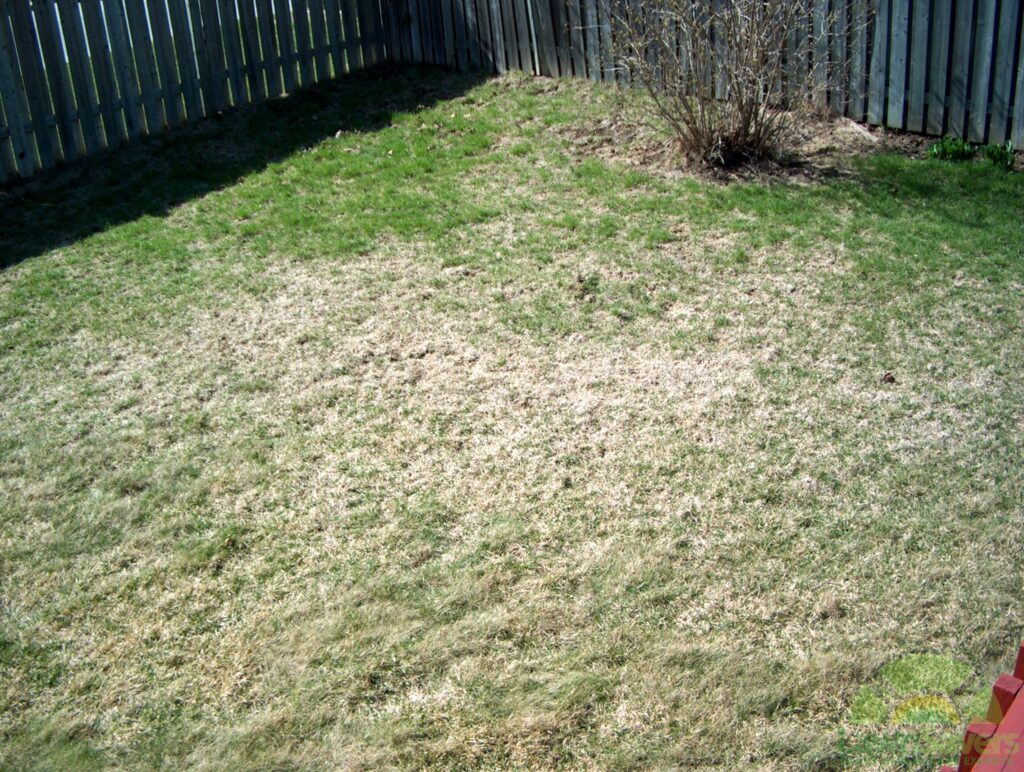
Credit: https://lawnsavers.com/
Brown grass is not always dead grass. Most cool-season grasses – Kentucky bluegrass, tall fescue, perennial ryegrass – go dormant in summer heat and turn brown as a survival response. Warm-season grasses like Bermuda and zoysia do the same in fall and winter.
To check: pull a small clump from the soil. If the roots are white or tan and hold together, the grass is dormant and will recover. If the roots are black, mushy, or fall apart, the grass is dead in that spot.
Why Grass Dies in Patches vs. All Over the Lawn
The pattern of damage is the fastest way to narrow down the cause.
- Uniform yellowing or thinning across the whole lawn points to a systemic issue: drought, wrong fertilizer, compacted soil, or pH imbalance.
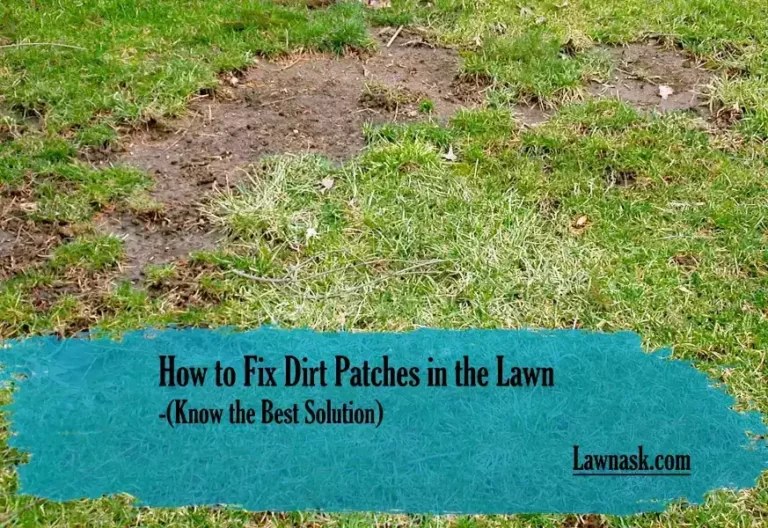
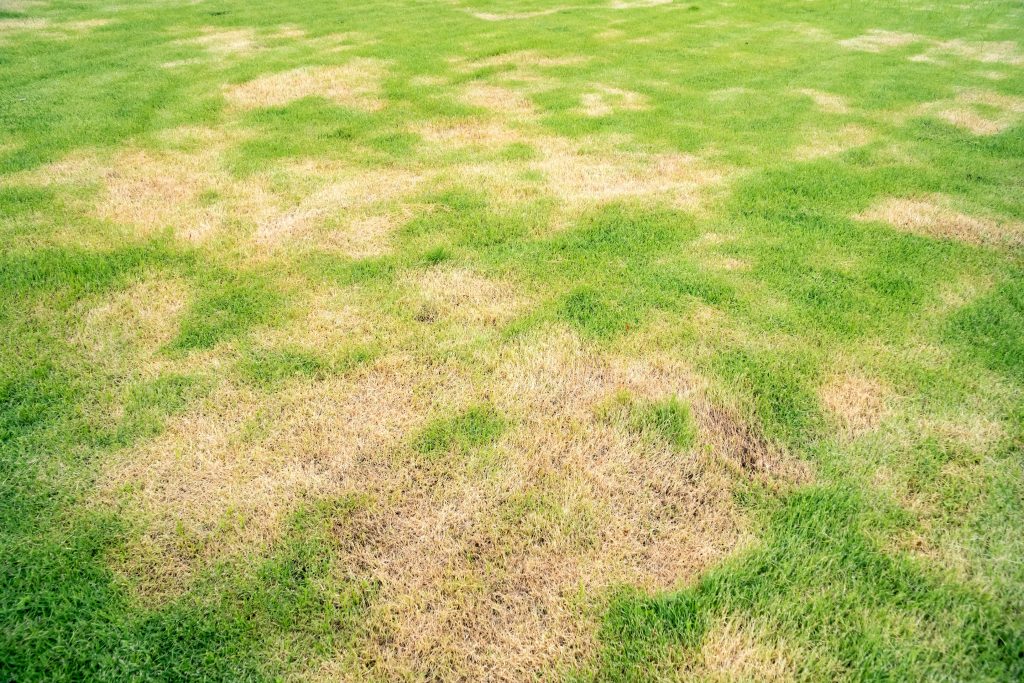
- Irregular brown or dead patches point to localized problems: fungal disease, grub damage, dog urine, or a buried obstruction like a rock or old stump.
- Straight-line or grid-pattern browning often follows your irrigation zones and points to a sprinkler head failure.
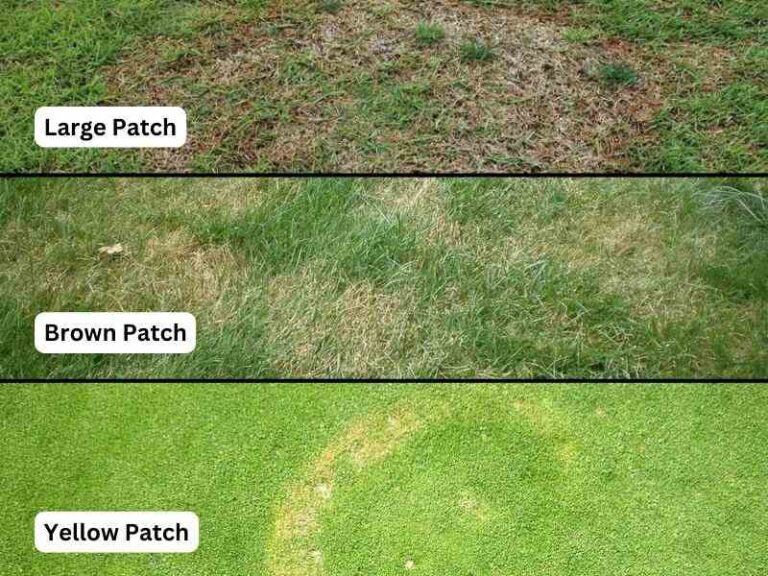
- Circular patches with a darker green ring at the edge are a strong visual indicator of dollar spot or brown patch fungal disease.
The Most Common Reasons Grass Dies
Credit: https://lawncarepro.co.uk/
Not Enough Water – or Too Much
Underwatering is the most common cause of dying grass in summer. Most lawns need 1 to 1.5 inches of water per week, including rainfall (Scotts, 2024). Grass that gets less than that will thin, yellow, and go dormant before it dies outright.
Overwatering causes just as much damage. Soil that stays saturated starves roots of oxygen and creates the wet conditions that fungal disease needs to spread. Water deeply two to three times per week rather than a little every day.
Soil Compaction
Compacted soil blocks water, air, and nutrients from reaching grass roots. It is common in high-traffic areas, clay-heavy soils, and lawns that have never been aerated.
A simple test: push a screwdriver into the soil. If it takes real effort to push 2 inches deep, the soil is compacted. Core aeration – pulling small plugs of soil out of the ground – opens the soil back up and is typically done once a year in fall for cool-season grass or late spring for warm-season grass.
Mowing Too Short
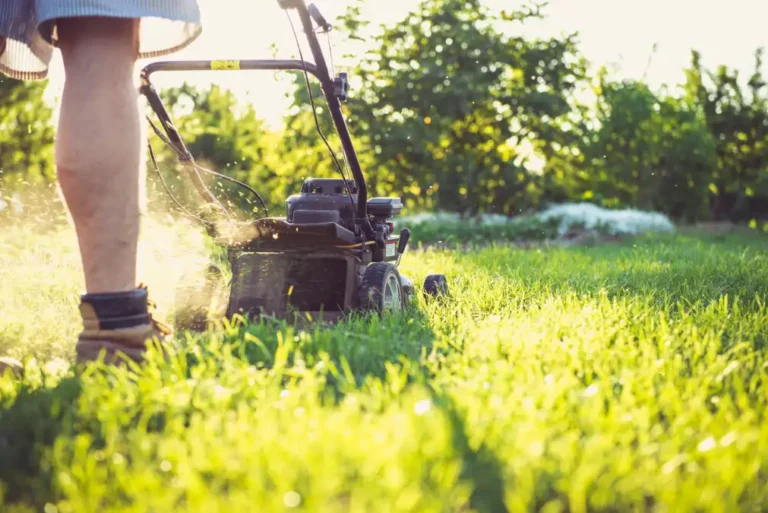
Cutting grass below its recommended height stresses the plant, reduces root depth, and exposes the soil to heat and moisture loss. This is called scalping. A dull mower blade makes it worse – instead of a clean cut, it tears the grass tip, leaving a ragged wound that turns brown within a day or two.
The general rule is to never cut more than one-third of the blade height at one time. For most home lawns, a mowing height of 3 to 4 inches is healthier than the closely cropped look many homeowners prefer (University of Minnesota Extension, 2023).
Sharpen your mower blade at least once per season. A blade that has hit rocks or roots mid-season should be sharpened or replaced immediately.
Fungal Disease
Brown patch, dollar spot, and pythium blight are the most common lawn diseases in the USA. They thrive in warm, humid conditions with poor air circulation – typically mid-summer in the South and during wet springs in the North.
Signs include circular dead patches, a grayish or pinkish ring at the patch edge, or a powdery coating on individual grass blades. Fungicide treatments are available, but fixing the conditions that allow disease to spread – overwatering, poor drainage, excessive nitrogen – is more effective long-term.
Grubs and Other Pests
White grubs – the larvae of Japanese beetles, June bugs, and European chafers – feed on grass roots just below the soil surface. Damage appears as irregular brown patches that peel back from the soil like loose carpet because the roots have been eaten through.
To check for grubs: cut a one-square-foot section of sod about 2 inches deep and flip it over. Finding six or more grubs per square foot is above the treatment threshold (University of Illinois Extension, 2022). Grub control products containing imidacloprid or chlorantranilipro are most effective when applied in early summer before larvae hatch.
Soil pH and Fertilizer Problems
Grass needs a soil pH between 6.0 and 7.0 to absorb nutrients properly. Outside that range, even a well-fertilized lawn will thin and yellow because the roots cannot take up what is available in the soil.
A soil test tells you your current pH, your nutrient levels, and exactly what your lawn needs. Your local cooperative extension office provides testing for $15-$25 and gives region-specific recommendations. Applying lime raises pH in acidic soil; sulfur lowers it in alkaline soil.
| Cause | Key Symptom | Fix |
|---|---|---|
| Drought stress | Uniform yellowing, footprints stay visible | Water 1-1.5 inches per week |
| Soil compaction | Thin growth, hard soil, puddles after rain | Core aeration once per year |
| Scalping / dull blade | Brown tips after mowing, widespread thinning | Raise mow height, sharpen blade |
| Fungal disease | Circular patches, rings, powdery coating | Improve drainage, reduce watering |
| Grub damage | Patches peel up, irregular dead spots | Soil check, apply grub control in early summer |
| pH imbalance | Yellowing despite fertilizing | Soil test, apply lime or sulfur |
Frequently Asked Questions
Why is my grass dying even though I water it?
Overwatering, compacted soil, or fungal disease can kill grass even with regular watering. Check that water is penetrating 4-6 inches into the soil and not sitting on the surface. A screwdriver test checks for compaction; irregular patch shapes with ring edges point to disease.
Why is my grass dying in patches?
Patchy death usually points to grubs, fungal disease, dog urine, or a localized drainage problem. Pull back a patch and check the roots – missing or eaten roots point to grubs; intact roots with discolored blades point to disease or chemical burn.
Can dead grass come back?
Grass that is dormant will come back on its own once temperatures drop or rainfall returns. Grass that is genuinely dead – black or absent roots – will not regrow from the existing plant. Those areas need overseeding or resodding.
How do I know if my lawn needs aeration?
Push a screwdriver 2 inches into the soil. If it requires real force, the soil is compacted and aeration will help. Other signs include water pooling on the surface after rain, thin growth in high-traffic areas, and a spongy thatch layer more than half an inch thick.
When should I test my soil?
Test your soil in early spring before you fertilize, or in fall after the main growing season. Spring testing gives you time to amend the soil before grass begins active growth. Most cooperative extension offices return results within two weeks.