When Can I Mow New Grass? Seed and Sod Timing Guide

TL;DR
- Do not mow seeded grass until it reaches 3-4 inches tall, which typically takes 6-8 weeks after germination
- Sod can be mowed after 2-3 weeks, once roots have anchored and grass hits 3-4 inches
- The safest test is the tug test: if grass pulls up easily, the lawn is not ready
- Always use a sharp blade and never cut more than one-third of the blade height in a single mow
- Mowing too early is one of the most common causes of new lawn failure
How Long Before You Can Mow New Grass?
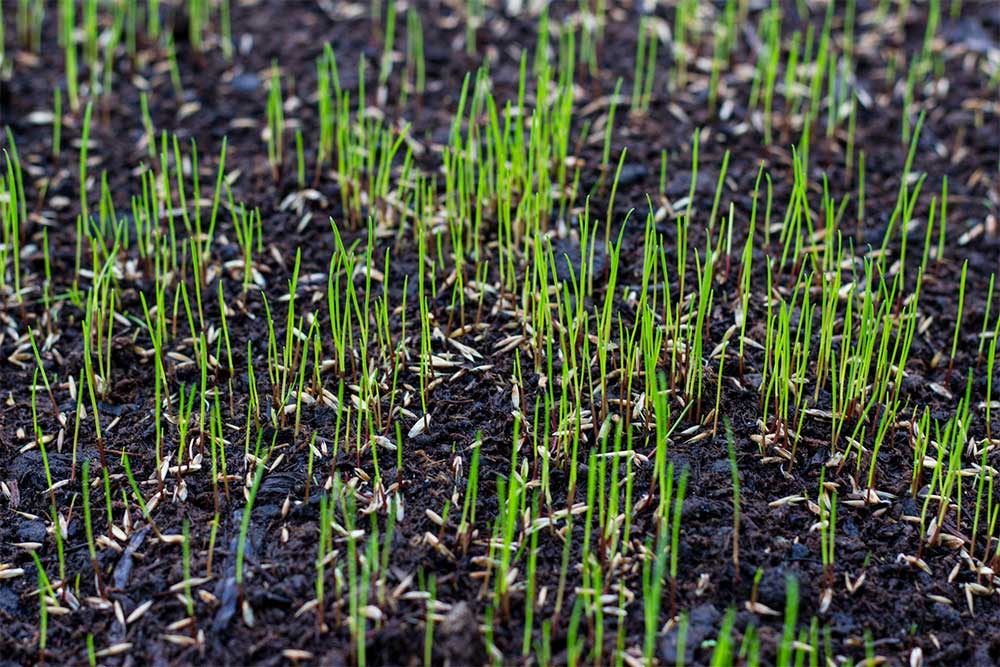
The answer depends on how your lawn was established. Seeded lawns need 6-8 weeks before the first mow. Sod lawns are ready in 2-3 weeks. In both cases, height matters more than time – wait until grass reaches 3-4 inches before running any mower over it.
Grass that looks green and full on the surface can still have shallow, fragile roots underneath. Mowing too early pulls seedlings out of the ground, scalps weak stems, and compacts soil that new roots are still trying to penetrate.
When to Mow a Lawn Grown From Seed
Seeded grass is ready for its first mow when it reaches 3-4 inches tall and the majority of the lawn has filled in. For most cool-season grasses like Kentucky bluegrass, tall fescue, and perennial ryegrass, that takes 6-8 weeks after germination (Scotts, 2024). Warm-season grasses like Bermuda and Zoysia may take slightly longer depending on soil temperature and rainfall.
Do not go by the calendar alone. A seeded lawn that germinated during a cold snap or drought will lag behind schedule. Walk the lawn and check for thin or bare patches – if more than 20-25% of the surface is still sparse, give it another week.
The first mow on a seeded lawn should cut grass down to 2-2.5 inches. Set your deck high and make one pass. Come back in 5-7 days for a second pass if needed.
What Happens If You Mow Seeded Grass Too Early?
Mowing before roots are established pulls young seedlings straight out of the soil. Even a well-tuned mower with a sharp blade creates enough suction and lateral force to uproot grass that has not anchored. The result is bare patches, uneven growth, and a lawn that takes weeks longer to fill in than it would have with a little patience.
When to Mow Sod for the First Time
Sod is ready to mow when the roots have knitted into the soil beneath and the grass has grown to 3-4 inches. That usually happens 2-3 weeks after installation (Pennington, 2023). The exact timeline depends on soil moisture, temperature, and how well the sod was laid.
Before mowing, do the tug test: grab a small section of sod and pull gently. If it lifts off the ground with little resistance, the roots have not anchored and the lawn needs more time. If it holds firm, you are ready to mow.
Set your mower deck to cut no lower than 2 inches on the first pass. Sod roots are still shallow, and a low cut stresses the grass at the worst possible time.
Seed vs. Sod: First Mow Timeline at a Glance
| Lawn Type | Ready to Mow | Minimum Height Before Mowing | First Cut Height |
|---|---|---|---|
| Seeded (cool-season) | 6-8 weeks after germination | 3-4 inches | 2-2.5 inches |
| Seeded (warm-season) | 8-10 weeks after germination | 3-4 inches | 2-2.5 inches |
| Sod | 2-3 weeks after installation | 3-4 inches | 2 inches |
The One-Third Rule: Apply It Every Time
Never remove more than one-third of the grass blade in a single mow. This applies to new lawns and established ones, but it matters most on a first mow when roots are still developing.
If your grass is 4 inches tall, cut it to 2.5-3 inches. If it grew faster than expected and hit 5 inches, cut it to 3.5 inches and mow again in a few days rather than scalping it in one pass.
Cutting more than one-third at once puts the plant into stress recovery mode. The grass stops root development and redirects energy to replacing lost leaf tissue – exactly the opposite of what a new lawn needs.
Mower Settings and Blade Condition for a New Lawn
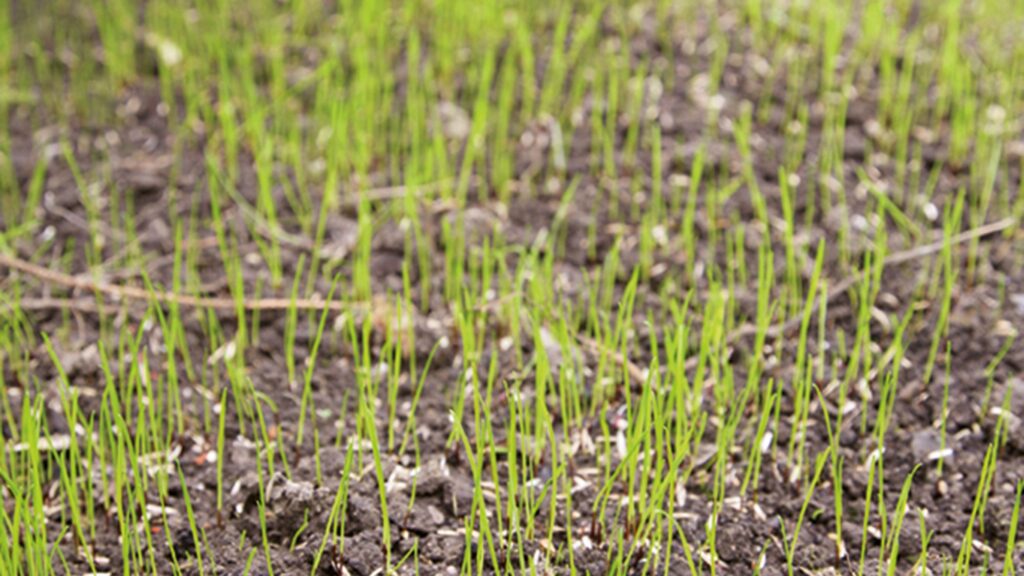
Use a sharp blade for every mow on a new lawn, but especially the first one. A dull blade tears grass instead of cutting it clean, leaving ragged edges that dry out and turn brown. On new grass with shallow roots, the tearing motion can also pull seedlings loose.
Check your mower’s blade before the first mow of the season. If it has not been sharpened since last year, sharpen it or replace it before you touch a new lawn.
Keep the mower deck at its highest or second-highest setting for the first two mows. Walk at a steady pace and avoid sharp turns that could scuff or roll the turf. On sod especially, pivot turns pull the leading edge of the sod out of position.
Common Mistakes That Set Back a New Lawn
- Mowing by the calendar instead of by height: A two-week-old sod lawn that is still at 2 inches is not ready, regardless of what the installation date was.
- Using a dull blade on the first cut: Tearing new grass causes browning and root disturbance that takes weeks to recover from.
- Cutting too low on the first pass: Scalping a new lawn removes the leaf area the grass needs to photosynthesize and recover. Start high.
- Mowing wet grass: Wet soil is soft and compacts easily under mower wheels. Wet blades clump and cut unevenly. Wait for a dry day, especially on new turf.
- Turning sharply on sod: Pivot turns on a riding mower or zero-turn can peel sod edges away from the soil. Make wide, gentle turns on new installations.
Frequently Asked Questions
When can I mow new grass after seeding?
Wait until seeded grass reaches 3-4 inches tall before the first mow, which typically takes 6-8 weeks for cool-season grasses and 8-10 weeks for warm-season varieties (Scotts, 2024). Height and root establishment matter more than days on the calendar.
How do I know if sod is ready to mow?
Do the tug test: grab a small section and pull gently. If the sod holds firm to the ground, roots have anchored and it is safe to mow. If it lifts easily, wait another 3-5 days and test again (Pennington, 2023).
What height should I set my mower for new grass?
Set the deck to its highest or second-highest setting for the first mow. For most new lawns, that means cutting down to 2-2.5 inches. Never cut more than one-third of the blade height in a single session.
Can I mow new grass when it is wet?
No. Wet soil compacts under mower wheels, which damages new root systems. Wet grass blades clump and cut unevenly. Wait for a dry day, ideally when the grass has not been watered or rained on for at least 24 hours.
What happens if I mow new grass too early?
Mowing before roots are established pulls seedlings out of the ground, causes uneven growth, and can create bare patches. On sod, early mowing lifts sod edges and disrupts root-to-soil contact. Both outcomes extend the time it takes for the lawn to fully establish.