How Long After Seeding Can You Mow: New Lawns and Overseeding

TL;DR
- Wait at least 3-4 weeks after seeding a new lawn before mowing – grass must reach 3 to 3.5 inches tall first
- Overseeded lawns need 2-3 weeks before the first mow, depending on germination speed
- Mowing too early pulls seedlings out by the roots before they anchor properly
- Set your blade no lower than 2.5 to 3 inches for the first few cuts
- Cool-season grasses (Kentucky bluegrass, tall fescue) and warm-season grasses (Bermuda, Zoysia) germinate at different rates – timing varies by seed type
How Long After Seeding Can You Mow a New Lawn?
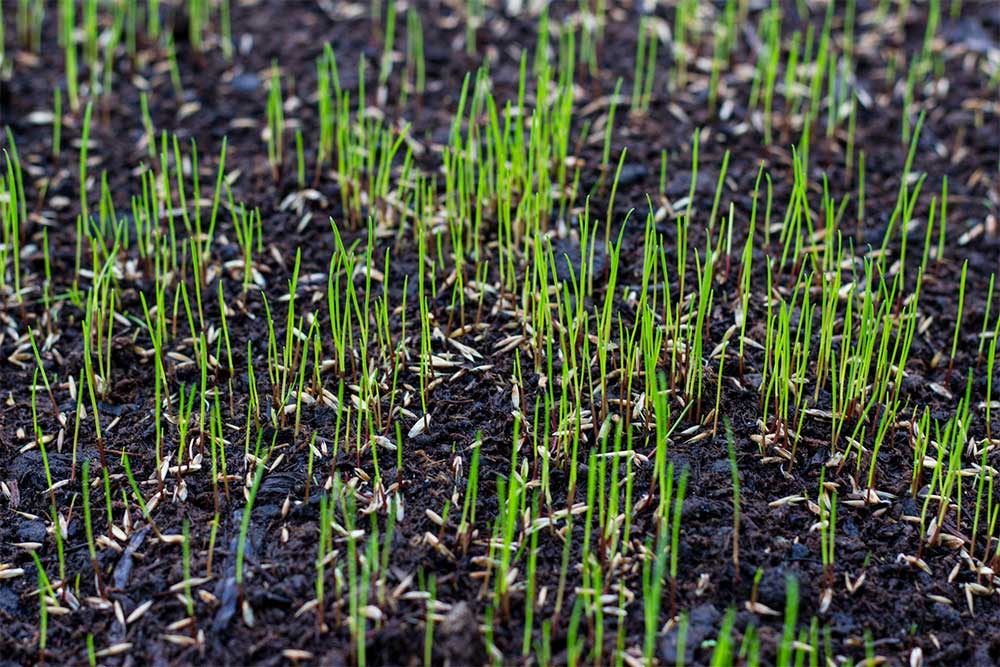
Credit: https://www.pennington.com/
Wait 3-4 weeks after seeding a new lawn before running a mower over it. The more reliable measure is grass height: once your new grass reaches 3 to 3.5 inches tall, it is ready for its first cut. Germination alone does not mean the grass is ready – young seedlings need time to develop a root system deep enough to hold against mower wheels and blade airflow.
Mowing before that point does not just clip the tops. It uproots seedlings, compacts wet soil with mower wheels, and sets the lawn back by weeks. A lawn that looked ready at day 18 can look patchy and thin by day 30 if you rush the first cut.
The 3-4 week window assumes normal growing conditions: soil temperatures between 50-65°F for cool-season grasses, consistent moisture, and no extreme heat. Slow germination pushes that timeline out further.
How Long to Wait After Overseeding an Existing Lawn
Overseeded lawns are ready for mowing in 2-3 weeks, but only if the new seedlings have reached 3 inches and are visibly anchored – meaning they resist a light tug rather than pulling free easily. The existing turf around them will likely be taller and may tempt you to mow sooner. Do not.
The existing grass can handle a cut. The new seedlings cannot. Mowing at week two when germination was slow risks scalping thin new growth before roots have set.
If the established turf is getting long while you wait, raise your mower deck to its highest setting and make one pass. Cutting the older grass tall – at 3.5 to 4 inches – reduces shade competition on new seedlings without putting stress on them directly.
How Grass Type Affects Your Mowing Timeline
Germination speed varies significantly by seed type, and that directly changes when you can mow.
| Grass Type | Germination Time | First Mow Timeline |
|---|---|---|
| Perennial Ryegrass | 5-10 days | 3 weeks after seeding |
| Tall Fescue | 7-12 days | 3-4 weeks after seeding |
| Kentucky Bluegrass | 14-21 days | 4-5 weeks after seeding |
| Bermudagrass | 10-30 days | 4-6 weeks after seeding |
| Zoysiagrass | 14-21 days | 4-6 weeks after seeding |
| Buffalograss | 14-30 days | 4-6 weeks after seeding |
Perennial ryegrass is the fastest to germinate and establishes quickly enough for a mow at the three-week mark in most conditions. Kentucky bluegrass is slow – rushing it at three weeks is a common mistake that thins out what would otherwise be a dense, healthy lawn.
What Happens If You Mow Too Early
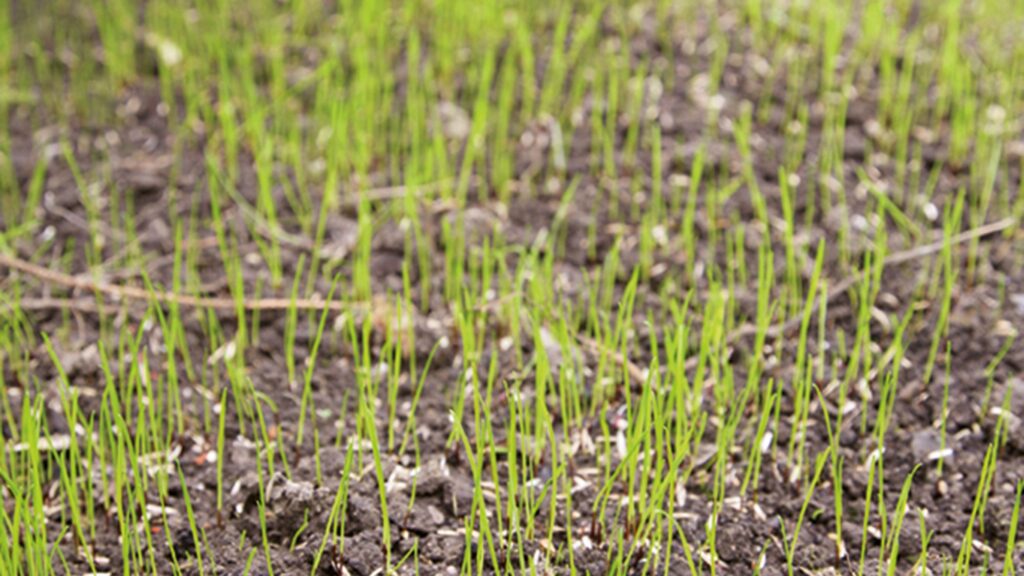
Credit: https://www.homesandgardens.com/
Mowing new seed too early causes three specific problems that are worth understanding.
First, mower wheels compact soft, freshly watered soil. Compacted soil reduces oxygen to germinating roots and slows establishment (Penn State Extension, 2023).
Second, blade airflow and physical contact uproot seedlings that have not yet developed secondary roots. A seedling with only a radicle – the first root – pulls free with almost no resistance.
Third, early mowing stress can trigger dormancy in warm-season grasses like Bermuda and Zoysia, stalling growth during the period when establishment momentum matters most (University of Georgia Turfgrass Extension, 2022).
How to Mow New Grass for the First Time Without Damaging It
The first mow on new seed requires a different approach than regular maintenance mowing.
- Blade height: Set the deck to 2.5-3 inches minimum. Never remove more than one-third of the blade height in a single pass – this is the one-third rule, and it applies even more strictly to new grass.
- Blade sharpness: A dull blade tears grass instead of cutting it cleanly. On new seedlings, tearing does more damage than on established turf. Sharpen the blade before the first cut if it has not been done recently.
- Soil moisture: Mow when the soil is dry enough to support mower weight without rutting. If your footprints sink more than half an inch, wait another day or two.
- Mower weight: A heavy riding mower on a newly seeded lawn compacts soil and risks wheel ruts. A push mower is better for the first cut on new seed areas.
Frequently Asked Questions
How long after seeding can I mow?
Wait 3-4 weeks for a newly seeded lawn, or until grass reaches 3 to 3.5 inches tall. Overseeded areas need a minimum of 2-3 weeks. Height is the more reliable indicator than calendar days alone.
What if my grass is uneven – some patches tall, some short?
Mow based on the slowest-germinating patches, not the tallest ones. Set the deck high and only cut the areas where seedlings are visibly established. Skip or hand-trim around thin spots if needed.
Can I use a riding mower on new seed?
Avoid riding mowers for the first cut on newly seeded areas. The weight compacts soft soil and the turning radius can tear out seedlings. Use a push mower with a sharp blade and dry soil conditions.
Does rain affect when I can mow new grass?
Yes. Wet soil compacts easily under mower wheels and increases the chance of ruts. After rain, wait until the surface firms up and your footprints no longer sink before mowing new seed areas.
How short should I cut new grass the first time?
Set your deck to 2.5-3 inches and follow the one-third rule – never cut more than one-third of the grass height in a single pass. For grass at 3.5 inches, that means cutting no lower than about 2.3 inches.
Will mowing new grass make it grow thicker?
Yes, over time. Regular mowing at the right height encourages lateral growth and tillering, which fills in thin spots. But this benefit only applies once the grass is established – early mowing before roots anchor does the opposite.