Why Is My Grass Growing in Clumps: Causes and Fixes

TL;DR
- Clumpy grass growth is most often caused by thatch buildup, soil compaction, clumping grass weeds like tall fescue or nutsedge, or uneven fertilizer application.
- Each cause looks slightly different – identifying which one you have determines the right fix.
- Tall fescue and crabgrass growing in a fine-blade lawn are the most common culprits in warm-season lawns across the Southeast and Midwest.
- Mowing wet grass is one of the fastest ways to create new clumps from an otherwise healthy lawn.
- Most clumping problems are fixable with the right seasonal timing – early fall for cool-season lawns, late spring for warm-season.
What Does It Mean When Grass Grows in Clumps?
Credit: https://yardandgarden.extension.iastate.edu/
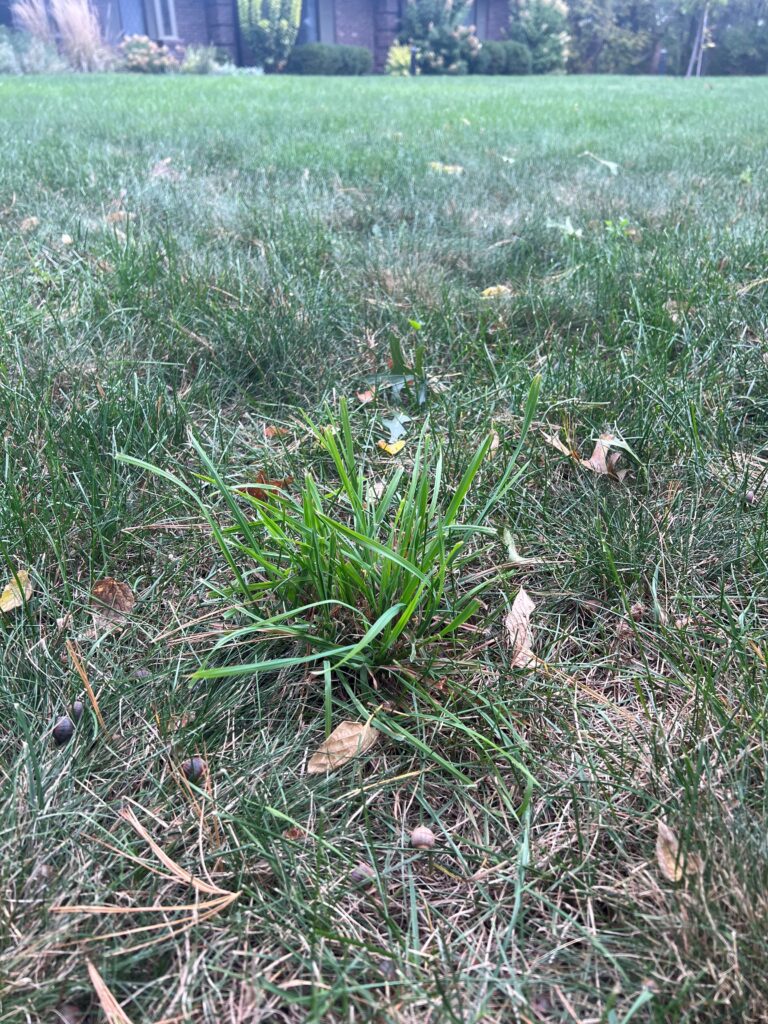
Clumpy grass means one area of your lawn is growing faster, thicker, or differently than the grass around it. The cause is almost always one of four things: a weed grass has taken hold, your soil is compacted or nutrient-uneven, thatch has built up underneath the surface, or you are mowing under conditions that clump cut grass onto the turf. Each one requires a different response, so the diagnosis comes first.
Weed Grasses Are the Most Common Cause
The most frequent reason for visible clumps is a coarser or faster-growing grass species growing inside your lawn. These are not broadleaf weeds – they look like grass, which is why homeowners miss them.
The most common offenders in US lawns:
- Tall fescue grows in wide, coarse clumps inside finer-bladed lawns like Kentucky bluegrass or bermudagrass. It stays green longer in fall, which makes the clumps even more visible as the surrounding lawn fades.
- Crabgrass spreads low and fast in summer, forming dense mats or finger-shaped clumps along edges and bare patches. It dies back in fall but leaves dead clumps behind.
- Nutsedge (also called nutgrass) grows faster than surrounding turf and sticks up above the lawn surface within days of mowing. It has a distinctive triangular stem and a lighter yellow-green color.
- Orchardgrass appears as large, blue-green clumps with a folded leaf structure. Common in lawns near pastures or in transitional zones.
The fix for weed grasses depends on the species. Crabgrass and nutsedge respond to targeted herbicides applied at the right growth stage. Tall fescue clumps in a fine-blade lawn generally require spot removal and reseeding – there is no selective herbicide that removes tall fescue from a bluegrass lawn without damaging the surrounding turf.
Uneven Fertilizer Application Creates Clumps Too
If the clumps appear in a pattern – stripes, circles, or following a path you walked – uneven fertilizer application is likely the cause. Over-fertilized spots get a surge of nitrogen that pushes faster growth. The grass in those areas outpaces the lawn around it and bunches up.
This is common when using a handheld spreader, overlapping passes unevenly, or applying granular fertilizer by hand. A broadcast spreader with consistent overlap eliminates most of this.
Clumps caused by fertilizer uneven application are not permanent. As the nitrogen levels out across the lawn, growth evens out – usually within two to four mowing cycles.
Thatch Buildup Can Push Grass Into Uneven Growth Patterns
Thatch is the layer of dead stems, roots, and organic matter that accumulates between the soil surface and the grass blades. When thatch exceeds half an inch, it starts to affect how water and nutrients reach the roots (University of Minnesota Extension, 2023).
Thick thatch creates uneven growing conditions across the lawn. Some areas get adequate moisture and nutrients; others sit on top of a dry, spongy layer that limits root depth. The result is patchy, uneven growth that can look like clumping from a distance.
You can check thatch depth yourself. Pull a small plug of turf and look at the cross section. A spongy brown layer between the grass and the soil surface is thatch. Anything over half an inch is enough to affect growth.
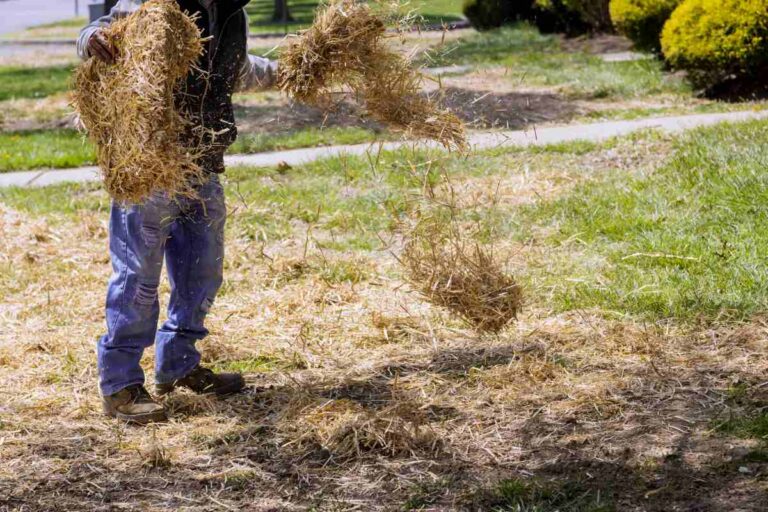
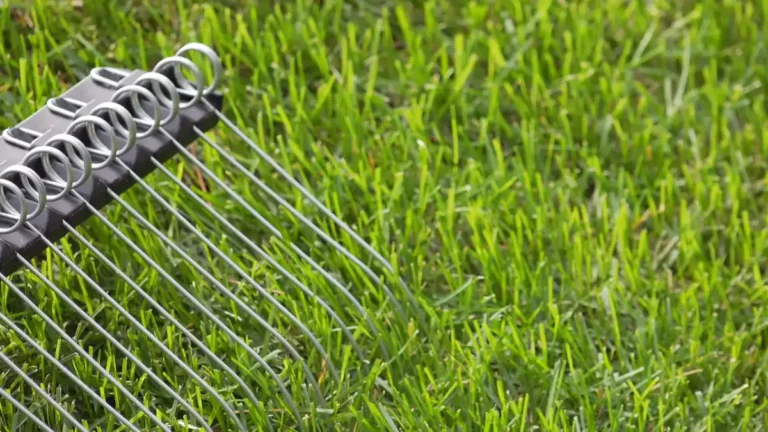
Dethatching in early fall for cool-season grasses or late spring for warm-season grasses brings growth back into balance.
Soil Compaction Produces Clumps in High-Traffic Areas
Credit: https://creeksideturfmanagement.com/
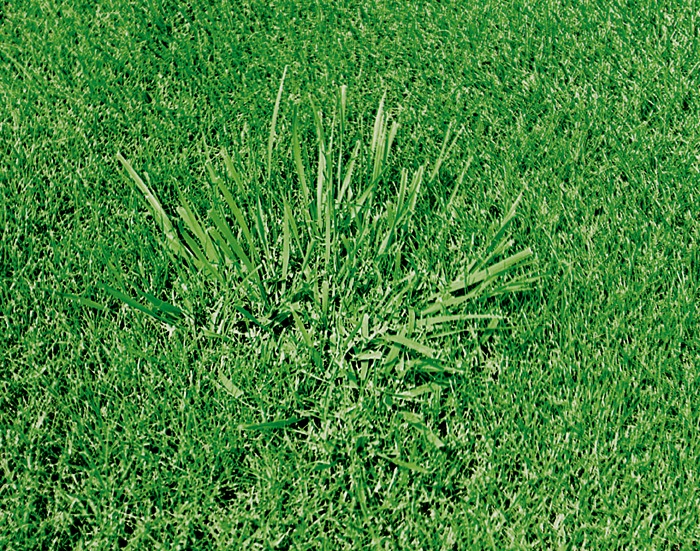
Compacted soil limits root spread and water absorption. Grass in compacted zones struggles to grow evenly, and the areas that do get enough air and moisture outgrow the surrounding stressed turf. Over time this creates a spotted, clumpy appearance – especially in high-traffic paths, near fence lines, or where equipment sits.
A simple screwdriver test works well here. Push a standard screwdriver into moist soil by hand. If it stops before six inches, the soil is compacted enough to affect grass growth (Penn State Extension, 2022).
Core aeration – pulling small plugs from the soil surface – is the standard fix. Early fall is the best window for cool-season lawns. Late spring works for warm-season varieties.
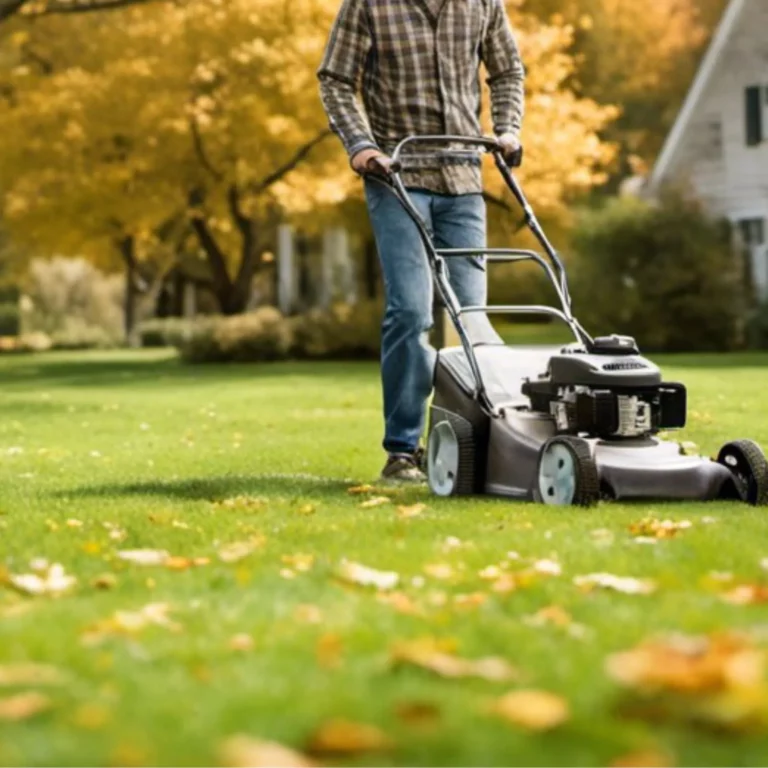
Mowing Wet Grass Deposits Clumps on the Surface
This is a different kind of clump – the grass itself is not growing unevenly, but cut clippings are clumping on top of the lawn after mowing. Wet grass sticks together as it is cut and falls in dense mats rather than scattering.
Those mats block light and trap moisture underneath, which can kill the grass below if left in place for more than a day or two.
The fix is straightforward: mow when the grass is dry. If you have to mow wet, slow your mowing speed and double-cut in a perpendicular direction to break up the clumps. Rake off any dense mats the same day.
How to Tell Which Problem You Have
| Clump Type | Visual Clue | Likely Cause |
|---|---|---|
| Coarser, darker green blades | Isolated patches, distinct texture | Weed grass (tall fescue, orchardgrass) |
| Yellow-green, grows back fast after mowing | Triangular stem, lighter color | Nutsedge |
| Stripes or circles following a path | Follows spreader or foot path | Uneven fertilizer |
| Spongy feel underfoot, patchy growth | Brown layer visible in soil plug | Thatch buildup |
| Clumps in high-traffic zones only | Near paths, gates, or parking | Soil compaction |
| Clumps on surface after mowing | Matted clippings on top of turf | Mowing wet grass |
Common Mistakes That Make Clumping Worse
- Mowing too short: Cutting below the recommended height for your grass type stresses the lawn unevenly and creates weak spots where weed grasses establish faster.
- Ignoring clumps as cosmetic: Surface clipping mats that are not removed can smother grass within 48 hours in warm, humid conditions.
- Applying post-emergent herbicide to dormant weed grass: Crabgrass and nutsedge must be actively growing for herbicide to work. Applying too early or too late wastes product and leaves the problem in place.
- Aerating at the wrong time: Aerating a warm-season lawn in fall or a cool-season lawn in midsummer puts the grass under stress when it is least able to recover.
Frequently Asked Questions
Why does my grass grow in clumps after mowing?
Clumps on the surface after mowing are almost always from cutting wet grass. Wet clippings stick together instead of dispersing. Let the lawn dry before mowing, or use a second mowing pass at a perpendicular angle to break up any mats that form.
What grass grows in clumps inside a regular lawn?
Tall fescue, orchardgrass, nutsedge, and crabgrass are the most common clump-forming grasses in US lawns. Tall fescue is the most widespread in cool-season lawns. Nutsedge is the most common in warm-season lawns across the South.
Can I fix clumpy grass without reseeding?
It depends on the cause. Fertilizer unevenness and thatch buildup resolve without reseeding. Weed grass clumps – especially tall fescue in a bluegrass or bermudagrass lawn – generally require spot removal and reseeding because no selective herbicide removes them cleanly.
How do I know if my clumps are nutsedge?
Nutsedge has a triangular stem – roll it between your fingers and it has three distinct edges. It is yellow-green in color, lighter than most lawn grasses, and grows noticeably faster than surrounding turf, often sticking up above the lawn surface within two to three days of mowing.
When is the best time to fix clumpy grass?
Early fall is the best window for cool-season lawns (Kentucky bluegrass, tall fescue, perennial ryegrass). Late spring, once soil temperatures stay above 65 degrees Fahrenheit, is the right time for warm-season lawns (bermudagrass, zoysia, St. Augustine). Timing repairs outside these windows reduces recovery odds significantly.
Does clumpy grass mean my soil is bad?
Not always. Clumping from weed grasses or wet mowing has nothing to do with soil quality. Clumping tied to compaction or uneven thatch can indicate a soil health issue worth addressing, but a screwdriver test and a thatch depth check will tell you quickly whether soil is actually the problem.