Push Mower Smoking White: What It Means and How to Fix It

TL;DR
- White smoke from a push mower almost always means the engine is burning oil
- The most common cause is overfilled oil – check the dipstick before anything else
- Tipping the mower on its side (the wrong way) can flood the engine with oil and cause temporary white smoke
- A worn or damaged head gasket is the most serious cause and may need a shop visit
- In most cases, the fix is simple and costs nothing or under $20
Why Is My Push Mower Blowing White Smoke?

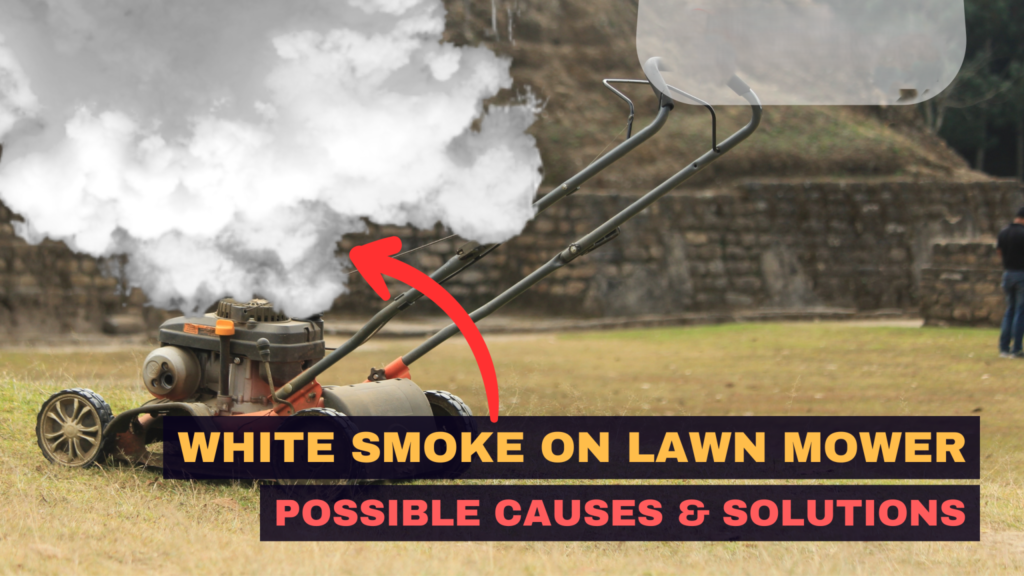
White smoke from a push mower means oil is getting into the combustion chamber and burning alongside the fuel. This is different from blue smoke (also oil-related but from worn piston rings) and black smoke (which points to a rich fuel mixture). White smoke is almost always an oil problem, and in most cases it is easy to fix yourself.
The smoke itself is not the problem – it is a symptom. The question is how the oil got somewhere it should not be.
The 5 Most Common Causes of White Smoke
1. Too Much Oil in the Engine
Overfilling the oil is the most frequent cause of white smoke in a push mower. When oil sits above the full mark on the dipstick, excess oil gets pulled into the combustion chamber and burns off as white or bluish-white smoke.
Check the dipstick first, every time. If the oil level is above the full line, drain the excess until it reads between the low and full marks. Most walk-behind mowers take between 15 and 20 oz of oil – check your owner’s manual for the exact amount.
2. Mower Was Tipped the Wrong Way
If you tipped the mower on its side to clean the deck or sharpen the blade, and you tipped it with the air filter side facing down, oil flows into the air filter and sometimes into the cylinder. When you restart the engine, that oil burns off as a cloud of white smoke.
The fix is to let the mower run at low throttle for a few minutes. The smoke should clear on its own as the oil burns off. Going forward, always tip the mower with the air filter and carburetor side facing up.
3. Dirty or Oil-Soaked Air Filter
If oil reached the air filter – either from tipping or from a chronic overfill – the filter gets saturated and the engine draws oil vapor into the intake. This produces steady white smoke and also chokes airflow to the engine.
Pull the air filter and inspect it. A paper filter that is wet with oil needs to be replaced – you cannot clean it out. Foam filters can sometimes be washed with dish soap, dried completely, and lightly re-oiled with fresh engine oil before reinstalling. A replacement paper air filter typically costs $5 to $10 at any hardware store.
4. Blown or Failing Head Gasket
A head gasket seals the engine block and the cylinder head together. When it fails, oil leaks into the combustion chamber and burns as white or gray-white smoke. This is the most serious cause on this list.
Signs it may be the head gasket: the smoke is heavy and continuous, does not clear after a few minutes of running, and the mower may run rough or lose power. If you are not comfortable with small engine repair, this is a job for a shop. A head gasket replacement on a small push mower engine typically costs $75 to $150 in labor at a small engine shop (Angi, 2024).
5. Engine Running on Its Side or at a Sharp Angle
Running a push mower on a steep slope can shift oil inside the crankcase toward the cylinder, causing temporary white smoke. This is more common on older engines with higher oil levels. If the smoke stops once the mower is back on level ground, the angle was the cause.
Quick Diagnosis: Which Cause Is Most Likely?
| Symptom | Most Likely Cause | Fix |
|---|---|---|
| Smoke right after an oil change | Overfilled oil | Drain excess oil to the full mark |
| Smoke after tipping the mower | Oil entered cylinder or air filter | Run it out or replace air filter |
| Smoke from the start, clears after 5 min | Tipping or overfill, minor | Let it burn off, recheck oil level |
| Smoke is heavy and does not clear | Head gasket or serious overfill | Drain oil, check gasket, see a shop |
| Smoke only on slopes | Oil shifting at angle | Lower oil level slightly, check grade |
How to Check and Fix an Overfilled Oil Level
- Let the engine cool completely before checking oil
- Wipe the dipstick clean, reinsert it fully, pull it out, and read the level
- If it is above the full mark, use a turkey baster or oil extractor to remove the excess
- Recheck until the level sits between the low and full marks
- Restart the mower – smoke should stop within 1 to 2 minutes of running
Most 4-stroke push mower engines use SAE 30 oil in warm weather or 10W-30 for variable temperatures. Check your owner’s manual before adding oil.
Frequently Asked Questions
Is white smoke from a push mower dangerous?
White smoke itself is not a fire hazard, but it means oil is burning where it should not be. Running the engine in this condition for long periods can cause wear or damage, so diagnose the cause before using the mower for a full session.
How do I know if it is the head gasket or just an overfill?
Drain the oil to the correct level and run the mower for 5 minutes. If the smoke clears, it was an overfill. If smoke continues heavy and steady, the head gasket is the more likely cause.
Can I still mow with white smoke coming out?
For minor causes like a fresh overfill or tipping residue, running the mower briefly to burn off the excess is fine. Do not run it for a full mow session with heavy continuous white smoke – that points to a more serious issue.
How much does it cost to fix white smoke from a push mower?
Most causes cost nothing or under $20 to fix yourself. A new air filter runs $5 to $10. If the head gasket needs replacement, expect $75 to $150 at a small engine repair shop (Angi, 2024).
How do I prevent white smoke from coming back?
Check the oil level before every mow using the dipstick. Always tip the mower with the carburetor and air filter facing up. Change the oil once a season or every 50 hours of use – whichever comes first.