Why Use Lime on Grass: What It Does and When Your Lawn Actually Needs It

TL;DR
- Lime raises soil pH, which lets grass absorb nitrogen, phosphorus, and potassium from fertilizer instead of locking them out.
- Most lawns do best at a soil pH between 6.0 and 7.0; below 5.5, grass struggles even with regular feeding (Penn State Extension, 2023).
- A soil test is the only reliable way to know if your lawn needs lime – applying it without testing can cause as many problems as it solves.
- Pelletized lime is easier to spread accurately than powdered agricultural lime for most homeowners.
- Fall is the best time to apply lime in most U.S. climates; it takes 2-3 months to change soil pH.
What Lime Does to Your Lawn Soil
credit: https://www.barefootorganicsllc.com/
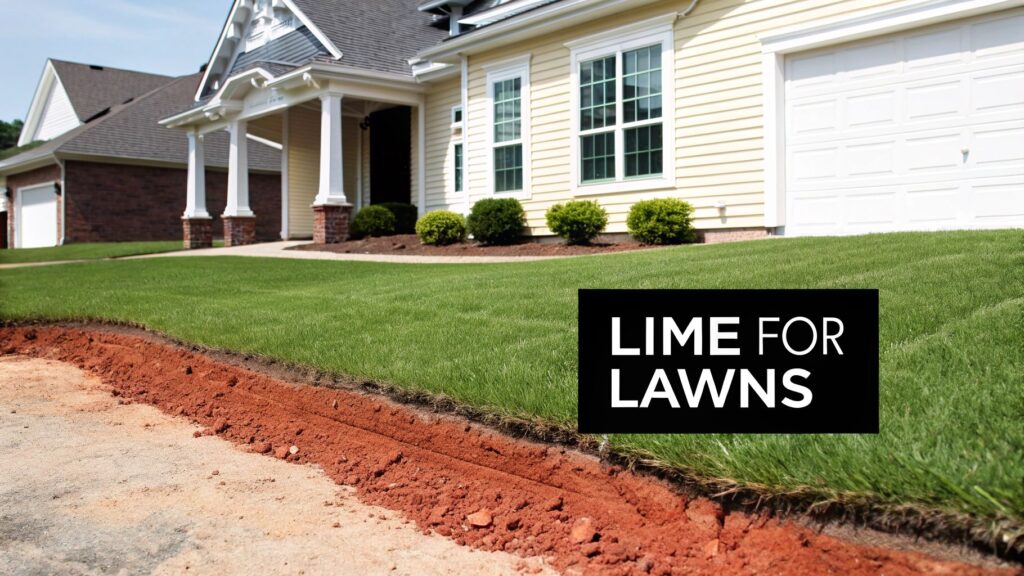
Lime raises the pH of acidic soil, making it less acidic. That matters because grass cannot absorb the nutrients already in your soil – or the fertilizer you’re adding – when the pH is too low.
Think of soil pH as a gate. At the right pH (6.0 to 7.0), the gate is open and roots pull in nitrogen, phosphorus, potassium, and the trace minerals grass needs to stay thick and green. Drop below 5.5, and the gate locks. You can pour on fertilizer all season and get almost nothing back. The nutrients are there, but the chemistry won’t let the plant use them.
Lime is calcium carbonate (or magnesium carbonate in dolomitic lime). When it dissolves into the soil, it neutralizes the hydrogen ions that make soil acidic and raises pH toward neutral.
How to Know If Your Lawn Needs Lime
The only accurate way to know if your lawn needs lime is a soil test. Visual symptoms are unreliable on their own.
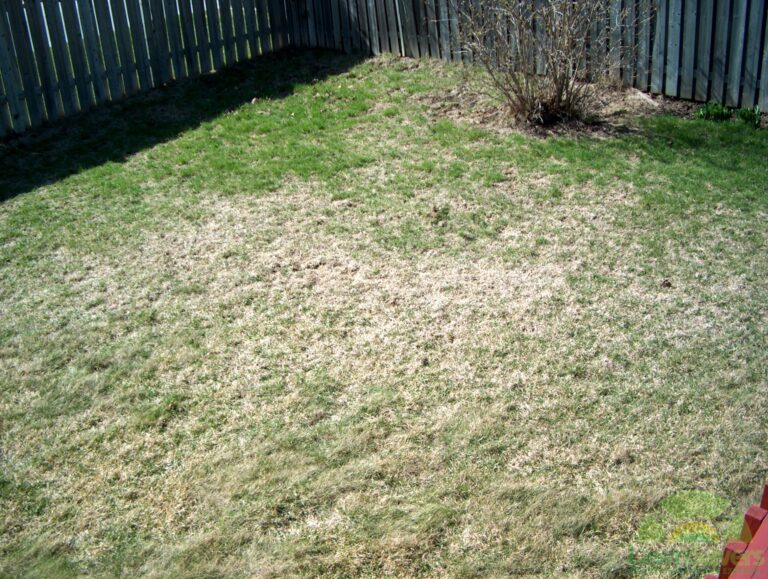
Common signs that often go with acidic soil include moss taking over in thin spots, yellow or pale grass despite regular feeding, and fertilizer that seems to do nothing. But those symptoms also match compacted soil, drought stress, or shade. Without a test, you’re guessing.
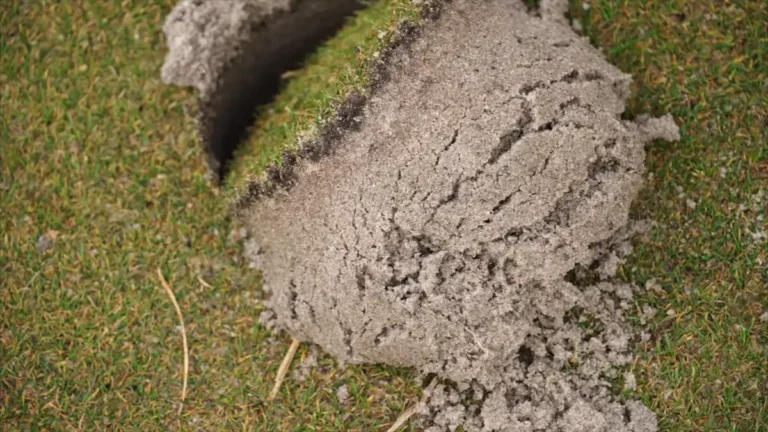
A basic soil test from your local cooperative extension office costs $10 to $20 and tells you your current pH plus a lime recommendation in pounds per 1,000 square feet (University of Massachusetts Extension, 2024). Big-box garden centers also sell DIY test kits for around $10, though lab tests from an extension service are more precise.
What Soil pH Range Does Grass Actually Need?
Most cool-season grasses (Kentucky bluegrass, tall fescue, perennial ryegrass) do best between pH 6.0 and 7.0. Most warm-season grasses (Bermuda, zoysia, centipede) are slightly more tolerant of acidity, but centipede grass is an exception – it actually prefers a lower pH around 5.0 to 6.0 and can be damaged by lime.
| Grass Type | Ideal pH Range | Notes |
|---|---|---|
| Kentucky Bluegrass | 6.0 – 7.0 | Common in northern lawns |
| Tall Fescue | 5.5 – 7.0 | Tolerates slight acidity |
| Perennial Ryegrass | 6.0 – 7.0 | Often mixed with bluegrass |
| Bermuda Grass | 6.0 – 6.5 | Warm-season, full sun |
| Zoysia Grass | 6.0 – 6.5 | Warm-season, good heat tolerance |
| Centipede Grass | 5.0 – 6.0 | Do NOT lime without a test first |
Source: Penn State Extension, 2023
When to Apply Lime for the Best Results
Fall is the best time to apply lime on most U.S. lawns. Lime takes 2-3 months to work its way through the soil and change pH. Applying in September or October lets it do its job before spring growth starts.
Spring application works too, but give lime at least 4-6 weeks before any seeding. Lime and grass seed can go down in the same season, but you want the pH shift to be underway before new seedlings are trying to establish roots.
Do not apply lime in the middle of summer heat stress. Disturbing the soil surface when grass is already struggling adds unnecessary strain. Wait for a cooler period.
How Much Lime to Apply to Your Lawn
credit: https://gardenermag.com/
Your soil test result will give you a specific recommendation in pounds of lime per 1,000 square feet. As a general reference, sandy soils typically need less lime to raise pH than heavy clay soils, because clay has more buffering capacity (Purdue Extension, 2022).
A common starting rate for moderately acidic soil (pH around 5.5) is 50 pounds of pelletized lime per 1,000 square feet. Never apply more than 50 pounds per 1,000 square feet in a single application – split heavy applications across two seasons to avoid overshooting into alkaline territory.
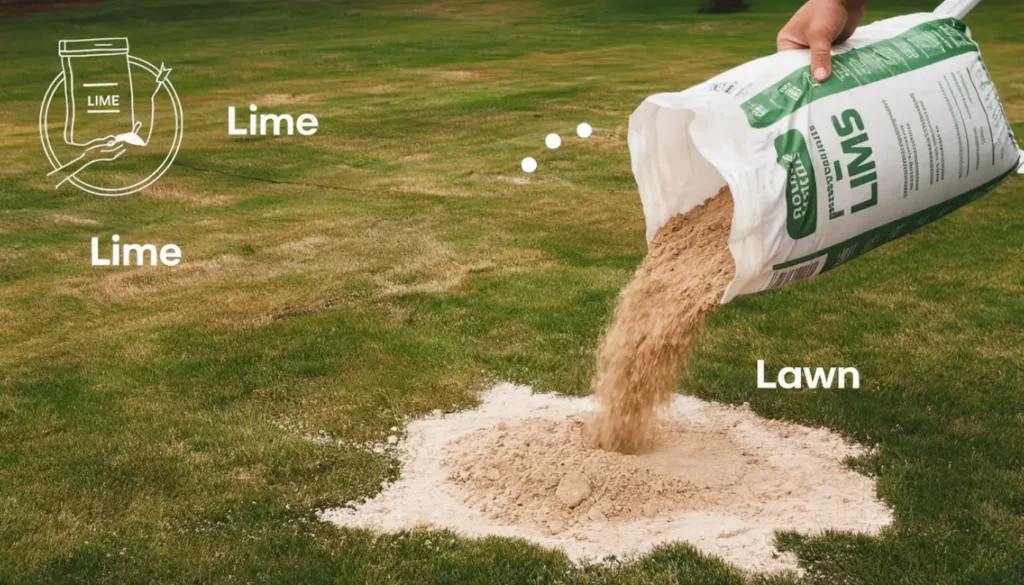
Pelletized lime is easier to apply with a standard broadcast spreader than powdered agricultural lime. Brands like Pennington Fast Acting Lime or Encap Fast Acting Lime are widely available at Home Depot and Lowe’s for roughly $12 to $20 per 30-pound bag (retailer pricing, 2024).
What Happens If You Skip Lime on Acidic Soil
If your soil is below pH 5.5 and you skip lime, fertilizer money is largely wasted. Nitrogen becomes less available to grass roots. Phosphorus binds to aluminum and iron in acidic soil and locks out almost entirely. Moss and weeds that tolerate acidity – clover, sorrel, plantain – start to out-compete your grass.
Over several seasons, untreated acidic soil also leads to thinner turf that is more prone to disease and drought damage, because the root system can’t pull in the minerals it needs to build strong cell walls.
Mistakes Homeowners Make with Lawn Lime
- Applying lime without a soil test: If your soil is already near neutral or slightly alkaline, adding lime pushes it higher and makes iron and manganese unavailable to grass. The lawn can yellow just as badly as with too little lime.
- Using the wrong lime for centipede grass: Centipede grass prefers acidic conditions. Liming a centipede lawn without a test showing pH below 5.0 can seriously damage it.
- Expecting fast results: Lime takes 2-3 months to measurably change soil pH. Applying it and expecting green-up in two weeks will disappoint.
Frequently Asked Questions
Why would you use lime on grass if you already fertilize?
Fertilizer adds nutrients, but lime controls whether your grass can actually use them. At pH below 5.5, most of the nitrogen and phosphorus in your fertilizer becomes chemically unavailable to grass roots. Lime adjusts the pH so the nutrients you’re already applying can do their job.
How often should you apply lime to a lawn?
Most lawns need lime every 2-3 years, but that depends entirely on your soil type and local rainfall. Acidic rainfall and sandy soils drive pH down faster. The only way to know is to test your soil every 2-3 years and apply only when the results call for it (Penn State Extension, 2023).
Can you apply lime and fertilizer at the same time?
Yes, in most cases. Apply them separately through your spreader rather than mixing them together, and water both in after application. There’s no harmful reaction between lime and most granular fertilizers when applied to turf.
How long does lime take to work on grass?
Lime typically takes 2-3 months to raise soil pH by a meaningful amount. You won’t see a visible response in your lawn until pH actually shifts, which is why fall application is recommended – the lime works through winter and the lawn benefits by spring.
Is pelletized lime better than powdered lime for lawns?
Pelletized lime is easier to spread evenly with a standard drop or broadcast spreader, and it’s less dusty to handle. Powdered agricultural lime (aglime) is cheaper per pound but harder to apply accurately without professional equipment. For most homeowners spreading 1,000 to 5,000 square feet, pelletized lime is the practical choice.