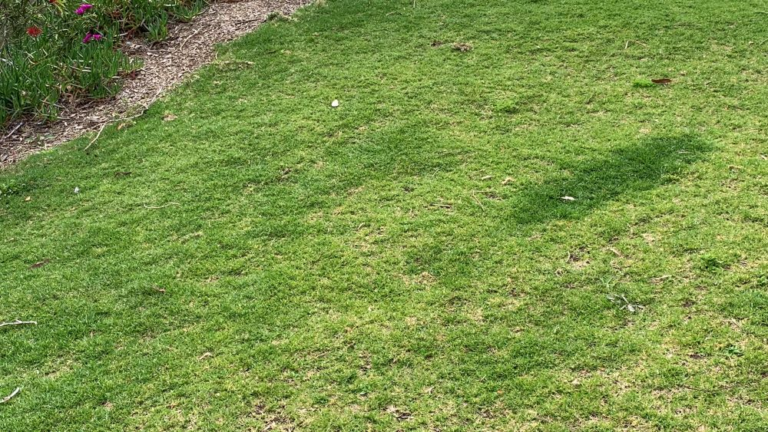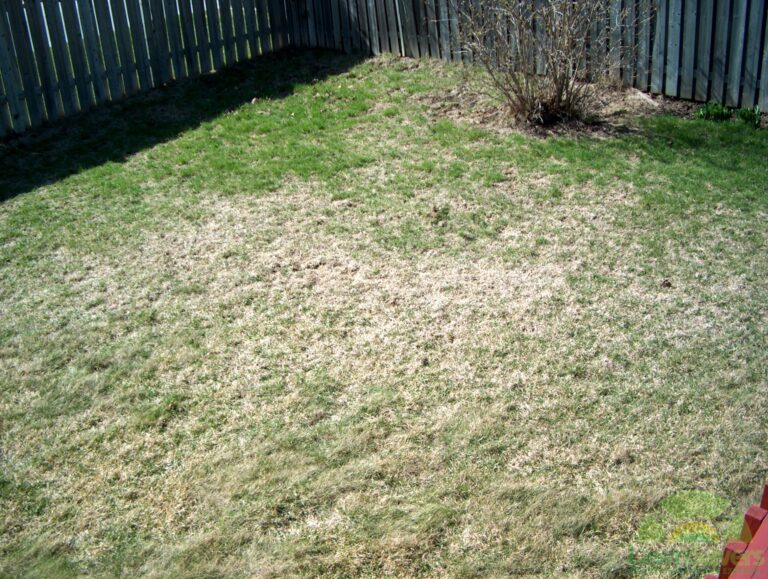
Why Is My Grass Not Growing? 7 Causes and How to Fix Them

TL;DR
- Grass stops growing or fails to establish for seven main reasons: poor soil pH, compaction, shade, wrong seed timing, drought stress, thatch buildup, or bad seed quality
- A simple soil test ($15-$30 at most garden centers) identifies the most common culprits in one step
- Cool-season grasses like Kentucky bluegrass go dormant above 90°F – that is not death, that is survival mode
- Warm-season grasses like Bermuda will not germinate below 65°F soil temperature, regardless of how much seed you put down
- Most grass growth problems are fixable without calling a landscaper
What Stops Grass from Growing in the First Place?
credit: https://www.shrekfeet.com/
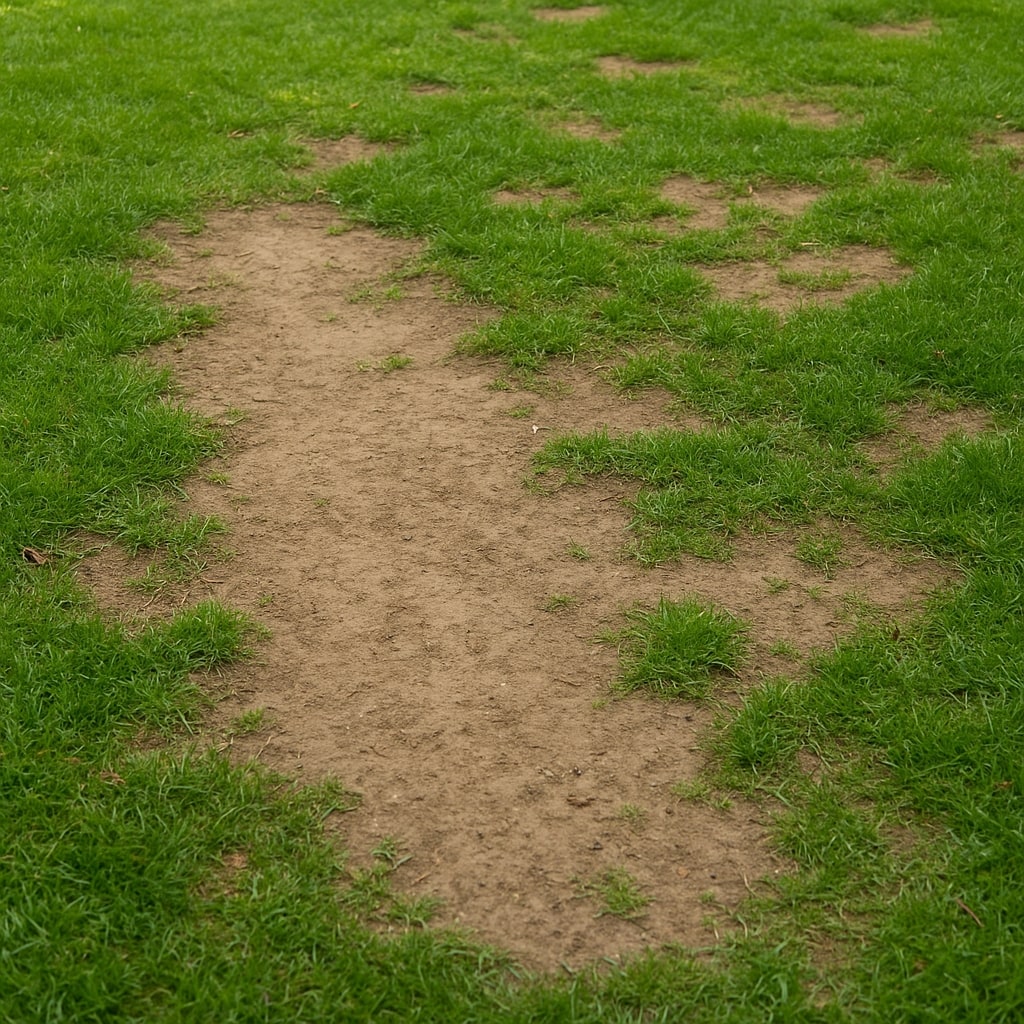
Grass fails to grow when one or more of its basic requirements are missing: adequate sunlight, the right soil conditions, correct soil temperature, and enough moisture. If any of these fall outside the acceptable range for your grass type, growth slows or stops entirely – even if everything else looks fine from the surface.
Before you reseed, fertilize, or water more, diagnose first. Throwing more seed or fertilizer at the wrong problem wastes money and can make things worse.
The 7 Most Common Reasons Your Grass Is Not Growing
1. Soil pH Is Out of Range
Grass grows best in soil with a pH between 6.0 and 7.0. Outside that range, nutrients like nitrogen and phosphorus lock up in the soil and become unavailable to the plant – even if you fertilize regularly. The grass essentially starves while sitting on top of food it cannot use.
A basic soil test from your local cooperative extension office or a garden center costs $15-$30 and tells you exactly where your pH sits (University of Minnesota Extension, 2023). If it is too acidic, apply ground limestone. If it is too alkaline, apply sulfur. Neither fix is instant – plan for 3-6 months to see a shift.
2. Soil Compaction Is Blocking Root Growth
Compacted soil – common in high-traffic areas, clay-heavy yards, or any lawn that gets driven or walked on repeatedly – does not allow roots to penetrate or air and water to move through. Grass blades may survive above the surface but roots stay shallow and weak, and new seed never establishes.
The fix is core aeration: a machine pulls small plugs of soil out of the ground, opening up channels for air, water, and root growth. Most homeowners rent a core aerator for $60-$90 per day (Home Depot Tool Rental, 2025). Do this in early fall for cool-season lawns or late spring for warm-season grasses.
3. Wrong Seed Timing
Grass seed requires a specific soil temperature window to germinate. Cool-season grasses – Kentucky bluegrass, tall fescue, perennial ryegrass – need soil temperatures between 50°F and 65°F, which typically means late summer to early fall or early spring. Warm-season grasses – Bermuda, Zoysia, St. Augustine – need soil above 65°F, usually late spring through early summer.
Plant outside that window and the seed either sits dormant until conditions change or dies before it ever sprouts. Soil temperature is not the same as air temperature. A $10 soil thermometer takes the guesswork out entirely.
4. Too Much Shade
All common lawn grasses need at least 4-6 hours of direct sunlight per day. Standard varieties like Bermuda and Kentucky bluegrass need closer to 6-8 hours. If your grass is thinning or refusing to fill in under trees, along a fence line, or on a north-facing slope, shade is likely the cause – not a lack of water or fertilizer.
In heavily shaded areas, switch to a shade-tolerant variety like fine fescue or St. Augustine (in warm climates), or accept that turf grass will not thrive there and plant a shade-tolerant ground cover instead.
5. Drought Stress or Overwatering
Grass in drought stress goes dormant and turns brown. That brown is not dead grass in most cases – it is the plant conserving energy. Most established cool-season lawns can survive 4-6 weeks of drought dormancy and recover when rain returns (Purdue Extension, 2022).
Overwatering causes its own problems: shallow roots, fungal disease, and oxygen deprivation in the root zone. Grass needs about 1 inch of water per week, including rainfall. A tuna can set on the lawn measures sprinkler output accurately and for free.
6. Thatch Buildup Over Half an Inch
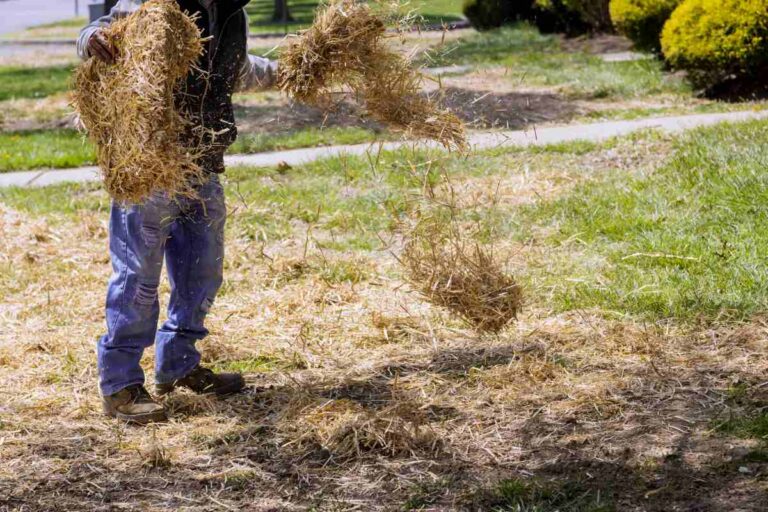
Thatch is the layer of dead organic material between the grass blades and the soil surface. Up to half an inch is normal and even beneficial. Above that, it blocks water and fertilizer from reaching the roots and creates an environment where fungal disease spreads easily.
Dethatch in early fall for cool-season lawns using a dethatching rake or a power dethatcher rented for around $50-$70 per day. After dethatching, water thoroughly – the lawn will look rough for a week or two before it recovers.
7. Low-Quality or Old Seed
Grass seed has a shelf life. Seed stored for more than 2-3 years loses germination viability significantly – a bag rated at 85% germination in year one may be down to 30-40% by year three (Oregon State University Extension, 2021). Cheap seed blends also often contain filler species or weed seed that crowds out the grass you actually want.
Buy seed with a current germination test date on the label and a germination rate of 85% or higher. For most homeowners, that means buying fresh seed each season rather than using what is left in the garage from two springs ago.
Quick Diagnostic Table
| Symptom | Most Likely Cause | First Fix |
|---|---|---|
| Thin or bare spots in shade | Too little sunlight | Switch to shade-tolerant variety |
| Seed planted but nothing sprouts | Wrong soil temperature or old seed | Check soil temp; buy fresh seed |
| Grass yellow despite fertilizing | Soil pH out of range | Get a soil test |
| Bare spots in high-traffic areas | Compaction | Core aerate in fall or spring |
| Brown lawn in summer heat | Drought dormancy | Water 1 inch per week or wait for rain |
| Slow growth despite watering | Thatch over 0.5 inches | Dethatch and aerate |
| Patchy germination after reseeding | Uneven soil contact or old seed | Rake seed in; use fresh seed next time |
Frequently Asked Questions
Why is my grass seed not growing after 2 weeks?
credit: https://www.whygoodnature.com/
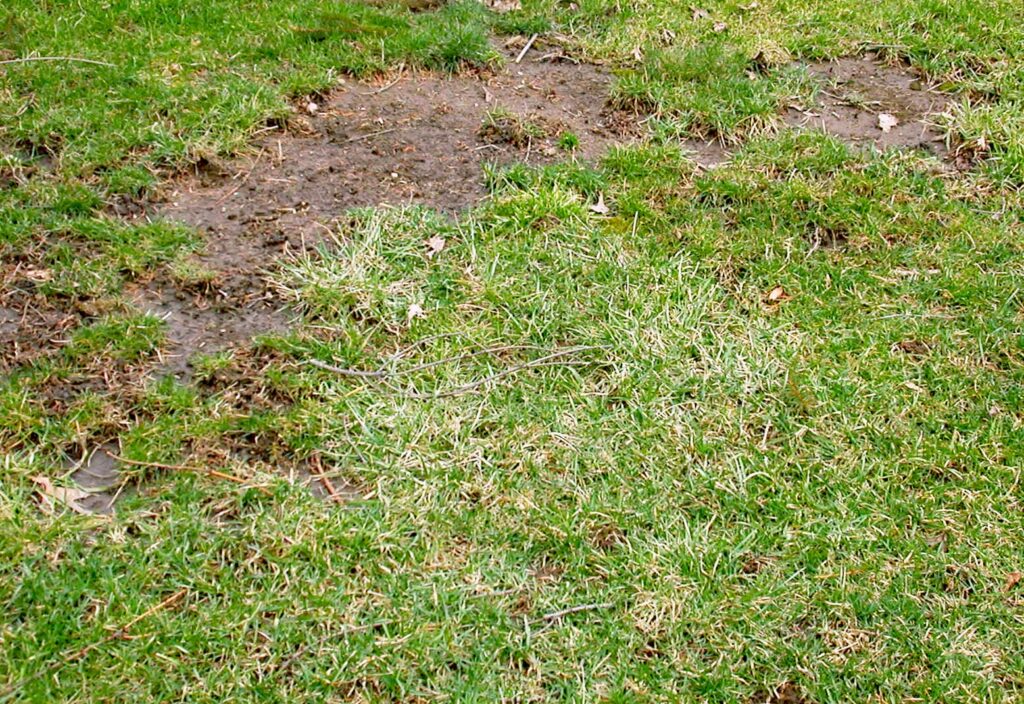
Most grass seed takes 7-21 days to germinate depending on the variety and soil temperature. If nothing has sprouted after 3 weeks, check soil temperature first – cool-season seed planted in warm soil or warm-season seed planted in cold soil will not germinate on schedule. Also confirm the seed had good soil contact and consistent moisture.
Can grass grow back after it turns brown?
In most cases, yes. Brown grass during summer heat or drought is usually dormant, not dead. Cool-season grasses can survive 4-6 weeks of dormancy and recover once temperatures drop or rain returns (Purdue Extension, 2022). If the crown of the plant – just below the soil surface – is still firm and pale green, the grass is alive.
How do I know if my soil is too compacted?
Push a screwdriver or a 6-inch nail into the soil by hand. If it goes in easily, compaction is not your problem. If you have to push hard or it stops before 4-6 inches, the soil is compacted and aeration will help.
How much does it cost to fix a lawn that is not growing?
A soil test costs $15-$30. Core aeration runs $60-$90 for a rental machine or $75-$200 if you hire a service (Angi, 2025). Fresh grass seed runs $3-$8 per pound depending on variety. Most homeowners can diagnose and treat the problem for under $100 without professional help.
What grass grows best in full shade?
Fine fescues – creeping red fescue, hard fescue, chewings fescue – are the most shade-tolerant cool-season options available. In warm climates, St. Augustine handles shade better than Bermuda or Zoysia. No grass thrives in full shade with less than 3-4 hours of filtered light per day.