Why Do You Put Straw Over Grass Seed? The Real Reason It Works

TL;DR
- Straw holds moisture against the soil surface so grass seed doesn’t dry out before it germinates.
- It also slows runoff, blocks birds, and moderates soil temperature during the germination window.
- Use one bale of straw per 1,000 square feet – spread thin enough that you can still see about 50% of the soil underneath.
- Wheat straw is the standard choice; avoid hay, which contains weed seeds.
- You don’t need to remove straw once grass sprouts – it breaks down on its own within a few weeks.
What Straw Actually Does for Grass Seed
credit: https://yardandgardenguru.com/
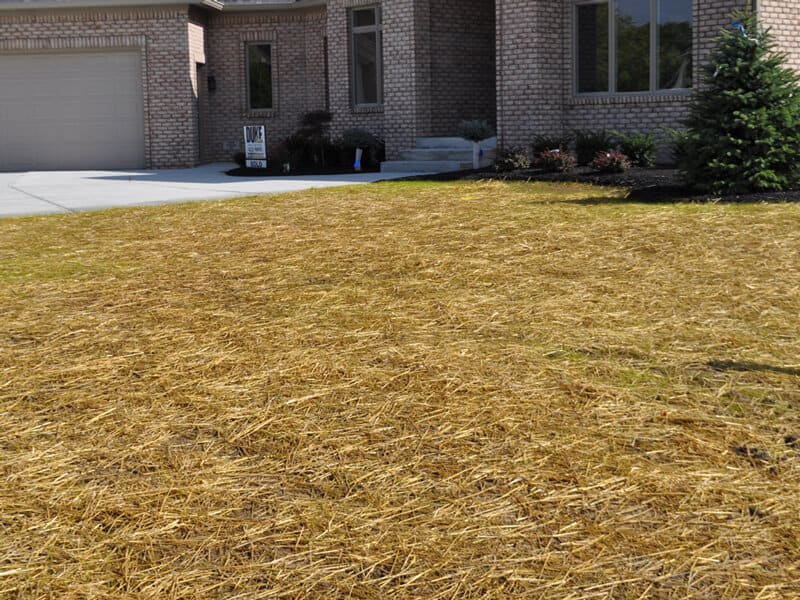
Straw holds moisture at the soil surface, where grass seed needs it most during the first 10-21 days of germination. Seed sitting on bare, exposed soil dries out fast – especially in wind or direct sun – and dry seed doesn’t sprout. A thin layer of straw acts like a loose blanket that slows evaporation without blocking light or airflow.
It does a few other jobs at the same time. Straw absorbs the impact of rain, so seeds don’t wash into low spots or off slopes. It also makes the seedbed less visible to birds, which will absolutely eat freshly broadcast grass seed if given easy access.
How Much Straw to Put Over Grass Seed
One bale of straw covers roughly 1,000 square feet, spread at the right thickness. The target is a light, see-through layer – you should still be able to see about 50% of the soil through it when you’re done.
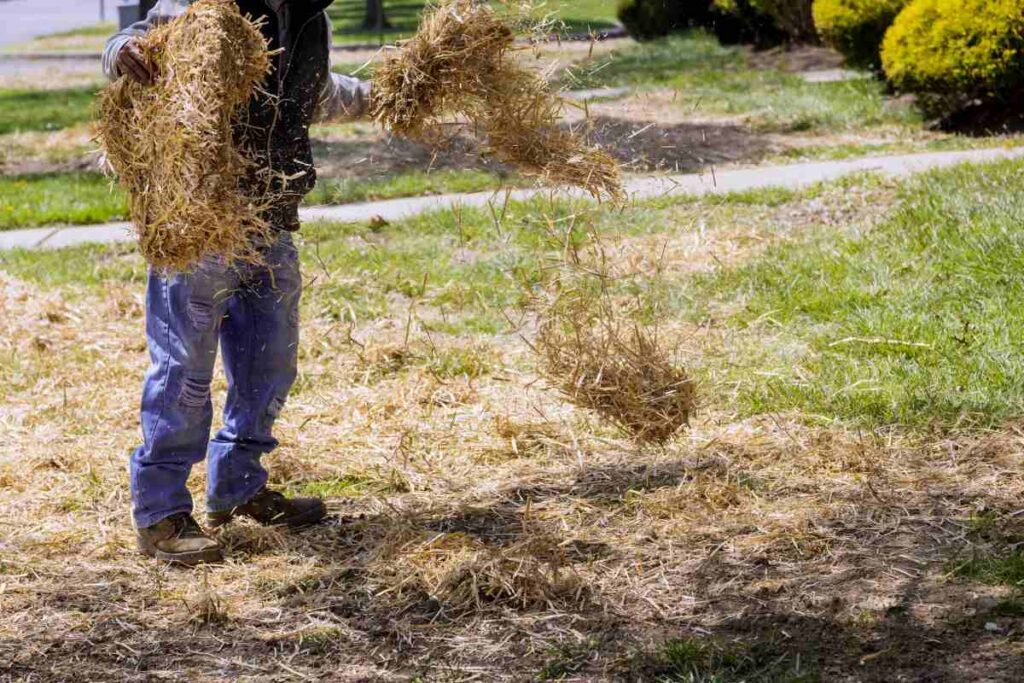
Too little straw and the moisture benefit disappears. Too much and you block the light and airflow that germinating grass needs. A common mistake is piling it on thick because it “looks better covered.” Thicker is not better here.
For slopes, go slightly heavier – up to 75% coverage – to slow water running downhill before the roots establish.
What Kind of Straw to Use (and What to Avoid)
Wheat straw is the standard for seeding. It’s dry, light, low in weed seeds, and breaks down within a few weeks once the lawn gets going.
Avoid hay. Hay is cut before it fully dries and contains seeds from whatever grasses and plants were growing in the field. Spread hay over a freshly seeded lawn and you’re likely adding a weed problem on top of your seed project.
Oat straw works fine if wheat straw isn’t available. Rice straw is also used in some regions and breaks down quickly.
Straw vs. Other Seed Cover Options
Straw is cheap and widely available, but it’s not the only option. Here’s how it compares to the most common alternatives.
| Cover Material | Cost per 1,000 sq ft | Weed Seed Risk | Stays in Place on Slopes | Breaks Down on Its Own |
|---|---|---|---|---|
| Wheat straw | $3 – $8 | Low | Moderate | Yes (2-4 weeks) |
| Erosion control blanket | $25 – $60 | None | Excellent | Yes (biodegradable types) |
| Peat moss | $15 – $30 | None | Poor | Yes |
| Compost topdress | $10 – $25 | Low-moderate | Poor | Yes |
| Hydromulch (professional) | $80 – $200 | None | Excellent | Yes |
For flat residential lawns, straw is the practical default. For slopes steeper than 15-20 degrees, an erosion control blanket like a Penn Mulch mat or a biodegradable jute netting holds much better under rain.
Do You Need to Remove Straw After Grass Grows In?
No. Leave it. Wheat straw breaks down within 2-4 weeks once the lawn gets regular water and the soil warms up. It adds a small amount of organic matter as it decomposes, which isn’t harmful.
The only reason to rake straw off is if you applied it too thick and it’s sitting in dense clumps that are matting down and blocking new grass. In that case, do a light raking once the grass is about an inch tall to break up any thick spots.
Common Mistakes That Cause Seeding to Fail
credit: https://www.lawnstarter.com/
- Applying straw too thick: clumps block light and trap excess moisture, which can cause damping-off (a fungal condition that kills seedlings at the soil line).
- Using hay instead of straw: the weed seeds in hay germinate faster than your grass seed and compete directly for water and light.
- Skipping straw on slopes: seed washes into windrows at the bottom of the slope after the first hard rain, leaving bare patches at the top.
- Watering too infrequently after straw is down: straw slows drying but doesn’t eliminate it. The seedbed still needs light watering 1-2 times per day until germination, then tapering off as roots deepen.
Frequently Asked Questions
Why do you put straw over grass seed instead of just watering more?
Straw holds moisture at the surface between waterings, which is where the seed sits. Watering more frequently doesn’t fully compensate – soil surface dries out fast in wind or sun, and no one waters every hour. Straw bridges the gaps between waterings during the 10-21 day germination window.
Can you put too much straw over grass seed?
Yes. A layer thick enough to block sunlight or mat down after rain will slow germination and can cause fungal issues in the seedbed. You should be able to see roughly half the soil through the straw after spreading.
Does straw need to be removed before mowing?
No. By the time new grass is long enough to mow (typically 3-4 inches, mow at 2.5-3 inches), the straw has broken down enough that it’s not a mowing issue. Don’t mow until the grass is established enough that pulling on it meets resistance.
Will straw blow away before the grass comes up?
On flat ground it mostly stays put. On slopes or in windy areas, lightly rake it in one direction after spreading so individual stalks lie flatter, or use a biodegradable erosion mat instead for better hold.
Can I use wood chips or shredded leaves instead of straw?
Wood chips are too dense and block germination. Shredded leaves can work in a thin layer if they’re dry and not matted, but they tend to clump and seal the surface when wet. Straw, peat moss, or a thin compost layer are more reliable for home seeding projects.