Good Time to Mow the Lawn: The Best and Worst Windows in 2026

TL;DR
- Mid-morning (8 a.m. to 10 a.m.) is the best time to mow for most homeowners – dew has dried and heat has not peaked.
- Avoid mowing in the early morning (before 8 a.m.) because wet dew damages the cut and disturbs neighbors.
- Avoid mowing in the midday heat (11 a.m. to 2 p.m.) – it stresses the freshly cut grass and tires the person mowing.
- Late afternoon (4 p.m. to 6 p.m.) is the second-best window if mid-morning is not possible.
- Never mow after 7 p.m. – grass stays damp overnight and fungal disease spreads more easily on evening-cut lawns.
What Is the Best Time of Day to Mow the Lawn?
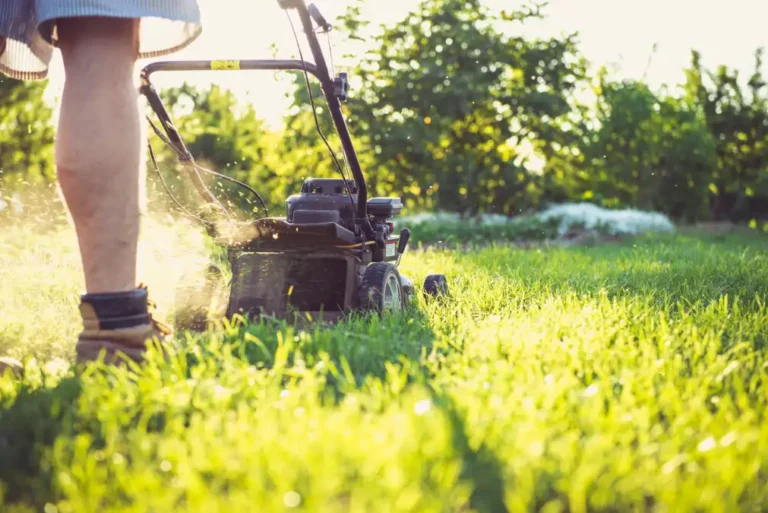
Mid-morning – roughly 8 a.m. to 10 a.m. – is the best time to mow your lawn. By that window, morning dew has dried off the grass blades, temperatures are still cool enough to limit heat stress on the turf, and the mower noise falls well within standard residential noise limits. Most turf care programs from U.S. cooperative extension services recommend this window as the default for residential lawn mowing.
The logic is straightforward: dry grass cuts cleanly, cool temperatures reduce post-cut stress, and mowing before the day heats up gives the grass several hours of moderate conditions to begin recovering before evening.
Why Timing Your Mow Actually Matters
Mowing at the wrong time of day causes real, measurable damage to your lawn – not just minor inconvenience. Here is what goes wrong at each bad window.
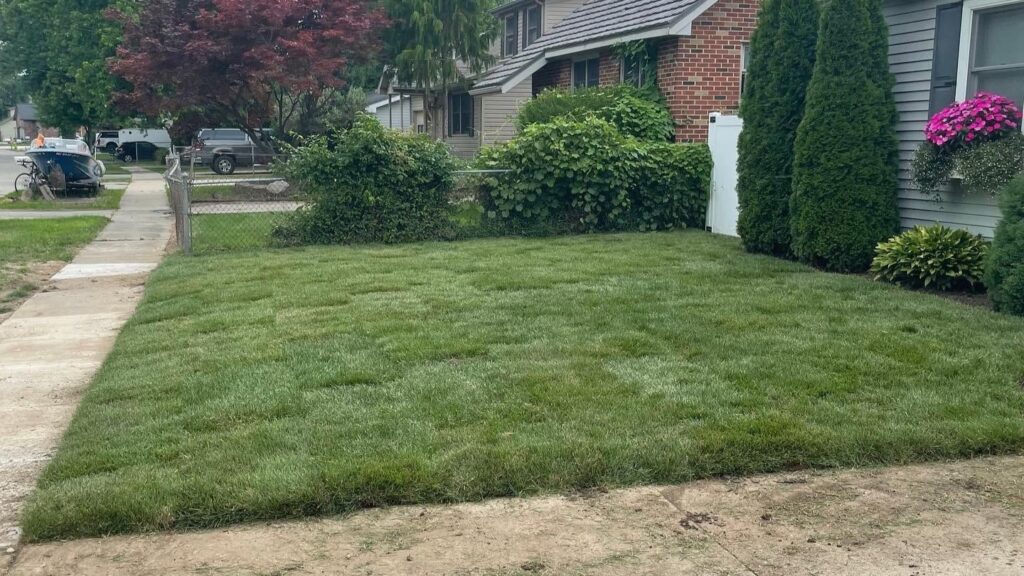
Wet grass (early morning dew) tears instead of cuts. Grass blades coated in dew bend sideways under their own weight. A mower blade moving at speed tears through bent, wet tissue rather than slicing cleanly. Torn tips turn brown within 24 to 48 hours – a condition called tip burn – and create open wounds that fungal spores can enter.
Midday heat doubles the recovery time. When you cut grass in peak heat, the plant loses water from the fresh cut at the same time it is already stressed by high temperatures. According to the University of Georgia Extension (UGA, 2026), grass cut during midday heat takes up to twice as long to recover compared to grass cut in mid-morning or late afternoon under the same conditions.
Evening mowing leaves the lawn damp overnight. Mowing in the evening – especially after 7 p.m. – means the grass sits in a slightly stressed, freshly cut state through the night while dew accumulates. That combination of open tissue and prolonged moisture is exactly what lawn fungi need to establish. Brown patch and dollar spot are both more common on lawns mowed regularly in the evening.
The Best and Worst Times to Mow: A Full-Day Breakdown
| Time Window | Conditions | Verdict |
|---|---|---|
| Before 7 a.m. | Grass wet with dew, neighbors asleep | Avoid |
| 7 a.m. – 8 a.m. | Dew still present in many climates | Avoid unless dew has cleared |
| 8 a.m. – 10 a.m. | Dew dried, temperatures cool | Best window |
| 10 a.m. – 11 a.m. | Acceptable if mid-morning is missed | Acceptable |
| 11 a.m. – 2 p.m. | Peak heat, high UV, maximum stress on turf | Avoid |
| 2 p.m. – 4 p.m. | Heat still elevated in most climates | Avoid in summer |
| 4 p.m. – 6 p.m. | Temperatures dropping, grass dry | Second-best window |
| After 7 p.m. | Dew begins forming, overnight fungal risk | Avoid |
Mid-Morning (8 a.m. to 10 a.m.): Why This Window Works
Three conditions align in mid-morning that do not align at any other point in the day.
The dew has dried. Morning dew typically clears by 8 a.m. to 8:30 a.m. in most U.S. climates during summer, depending on humidity. Dry grass blades stand upright, which means the mower blade makes a clean, even cut across the full surface rather than tearing bent, wet tissue.
Temperatures are still moderate. Air temperature between 65°F and 80°F is low enough that the grass does not lose excessive moisture through the fresh cut. The plant can begin recovering while conditions are still favorable.
The lawn has the full day to recover. Grass cut in the morning has six to eight hours of daylight and moderate temperatures ahead of it before evening. That recovery window matters – photosynthesis continues, the cut tips begin sealing, and the plant stabilizes before overnight conditions arrive.
Late Afternoon (4 p.m. to 6 p.m.): The Second-Best Option
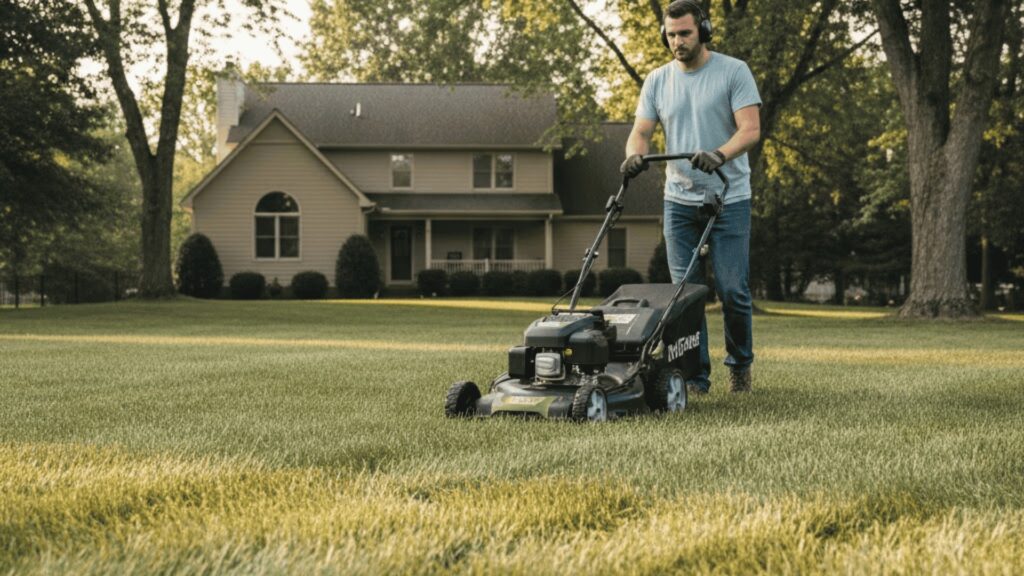
If mid-morning is not possible, late afternoon is a solid alternative. By 4 p.m., the peak heat of the day has passed in most climates, the grass is dry from the day’s sun, and there is still enough daylight for the lawn to begin recovering before dusk.
The main risk with late afternoon mowing is cutting it too close to evening. If you finish mowing after 6:30 p.m. in humid climates, the lawn may not have enough time to dry before overnight dew sets in. Aim to finish by 6 p.m. to give the grass at least one to two hours of dry conditions before nightfall.
Late afternoon mowing is also more physically comfortable in summer. Air temperature at 4 p.m. to 6 p.m. is meaningfully lower than at noon, and UV exposure is reduced – both of which matter for the person doing the mowing.
Why You Should Avoid Mowing in Midday Heat
Mowing between 11 a.m. and 2 p.m. in summer puts the lawn under two simultaneous stressors: heat and the physical damage of cutting.
Grass loses water rapidly through fresh cut tips when temperatures are high. At the same time, high soil surface temperatures slow root activity and reduce the plant’s ability to take up water to compensate. The result is a lawn that wilts, browns at the tips, and takes noticeably longer to recover than if the same cut had been made in the morning.
This is not a minor difference. UGA Extension (2026) data shows recovery time for midday-cut grass in summer heat can stretch to 48 to 72 hours, compared to 12 to 24 hours for morning-cut grass under the same conditions. Repeated midday mowing across a full summer visibly weakens the turf over time.
There is also the matter of personal safety. The Occupational Safety and Health Administration (OSHA, 2026) lists lawn care as one of the high-risk outdoor occupations for heat-related illness during summer months. Mowing in midday sun with a walk-behind mower in 90°F heat is a genuine health risk, not just an inconvenience.
How Season Changes the Best Mowing Window
The mid-morning rule applies consistently across the year, but what counts as “mid-morning” shifts with the seasons.
Spring and fall. Dew clears later in cooler months – sometimes as late as 9 a.m. or 9:30 a.m. The peak heat concern is minimal, so the acceptable mowing window widens. Any time from 9 a.m. to 5 p.m. is generally fine in spring and fall as long as the grass is dry.
Summer. The mid-morning window (8 a.m. to 10 a.m.) and the late afternoon window (4 p.m. to 6 p.m.) are the two reliable options. Midday mowing in summer carries the highest risk of turf stress and should be avoided.
Winter. Most cool-season grasses go dormant in winter and do not need mowing. If your lawn is still growing in a mild winter climate, mow any time between 10 a.m. and 3 p.m. when temperatures are at their warmest and frost has fully cleared.
What About Noise Rules and Neighbors?
Lawn mower noise runs between 75 dB (electric) and 95 dB (gas) – loud enough to be disruptive before most households are awake. Most U.S. municipalities restrict outdoor power equipment to between 7 a.m. and 8 p.m. or 9 p.m. on weekdays, with later start times on weekends.
Check your local ordinance before mowing early. Even if your city allows mowing from 7 a.m., starting at that hour on a weekend is likely to create friction with neighbors regardless of legality. The practical window that avoids both noise complaints and lawn damage is 8 a.m. onward on weekdays and 9 a.m. onward on weekends.
Common Mistakes Homeowners Make About Mowing Time
- Mowing first thing in the morning to beat the heat. The intent is correct but the execution causes damage. Mowing at 6 a.m. or 7 a.m. means cutting wet, dew-covered grass. Waiting until 8 a.m. to 8:30 a.m. costs very little time and avoids the torn-blade damage that early morning mowing causes.
- Mowing in the evening to avoid the sun. Evening mowing sidesteps the heat but creates overnight fungal risk. Late afternoon is the better compromise – cooler than midday, but early enough that the grass dries before dusk.
- Applying the same timing year-round. The mid-morning rule is consistent, but what qualifies as dry grass in spring (when dew lingers longer) differs from summer. Check the grass by hand before mowing rather than relying solely on the clock.
- Mowing right after irrigation. Running your sprinklers and then immediately mowing creates the same wet-grass problems as early morning dew. Wait at least two hours after irrigation before mowing – longer in humid climates where the grass dries slowly.
Frequently Asked Questions About the Best Time to Mow the Lawn
What is the best time of day to mow the lawn?
Mid-morning, between 8 a.m. and 10 a.m., is the best time. Morning dew has dried by then, temperatures are still moderate, and the lawn has the rest of the day to recover before evening. Late afternoon (4 p.m. to 6 p.m.) is the second-best option if mid-morning is not available.
Is it bad to mow the lawn in the evening?
Yes, for most lawns. Mowing after 7 p.m. leaves freshly cut grass sitting with open tissue as overnight dew accumulates. That combination creates conditions where fungal diseases like brown patch and dollar spot establish and spread. Finish mowing by 6 p.m. at the latest to give the grass time to dry before nightfall.
Can I mow the lawn in the morning before work?
Yes, if you wait until at least 8 a.m. Mowing before 8 a.m. risks cutting dew-covered grass, which leads to tip burn and uneven cuts. It also risks violating local noise ordinances or disturbing neighbors. If you need to mow early, check that the dew has cleared by pressing your hand flat on the grass – if the blades stand upright and feel dry, it is safe to mow.
Is it okay to mow the lawn in the middle of the day?
Avoid mowing between 11 a.m. and 2 p.m. in summer. Peak heat doubles the recovery time for freshly cut grass and puts both the lawn and the person mowing under unnecessary heat stress. In spring or fall when temperatures are moderate, midday mowing carries much less risk.
How long after rain should I wait before mowing?
Wait at least 24 hours after significant rainfall. The grass needs to be dry enough that the blades stand upright on their own and the ground feels firm, not spongy, underfoot. Mowing wet post-rain grass causes the same clumping, tearing, and fungal risk as mowing morning dew – just more severe.
Does the best mowing time change in summer vs winter?
Yes. In summer, stick to the 8 a.m. to 10 a.m. or 4 p.m. to 6 p.m. windows to avoid heat stress. In spring and fall, the acceptable window widens to most of the day once the dew clears. In winter, most cool-season grasses are dormant and do not need mowing. If mowing is needed in winter, aim for mid-morning when any frost has fully cleared.
Key Takeaways
- Mid-morning (8 a.m. to 10 a.m.) is the best mowing window – dry grass, moderate temperatures, and a full day of recovery ahead.
- Late afternoon (4 p.m. to 6 p.m.) is the second-best option; finish by 6 p.m. to avoid overnight fungal risk.
- Never mow in peak midday heat (11 a.m. to 2 p.m.) in summer – recovery time for the grass doubles compared to morning mowing.
- Never mow after 7 p.m. – overnight dew on freshly cut grass creates ideal conditions for fungal disease.
- In spring and fall, the window widens; in winter, most cool-season grasses do not need mowing at all.