Lawn Mower Muffler: What It Does, When to Replace It, and What It Costs in 2026

TL;DR
- A lawn mower muffler reduces engine noise and routes exhaust gases safely away from the engine
- Signs it needs replacing: loud popping or roaring noise, visible rust or cracks, smoke near the engine block
- Replacement muffler parts cost $10-$60 for most walk-behind mowers; riding mower mufflers run $30-$100+
- DIY replacement takes 30-60 minutes with basic hand tools and costs a fraction of shop labor
- Shop labor rates run $55-$135 per hour nationally (LawnStarter, 2025) – on a simple muffler swap, most jobs take under an hour
What Does a Lawn Mower Muffler Do?
Credit: https://www.walmart.com/
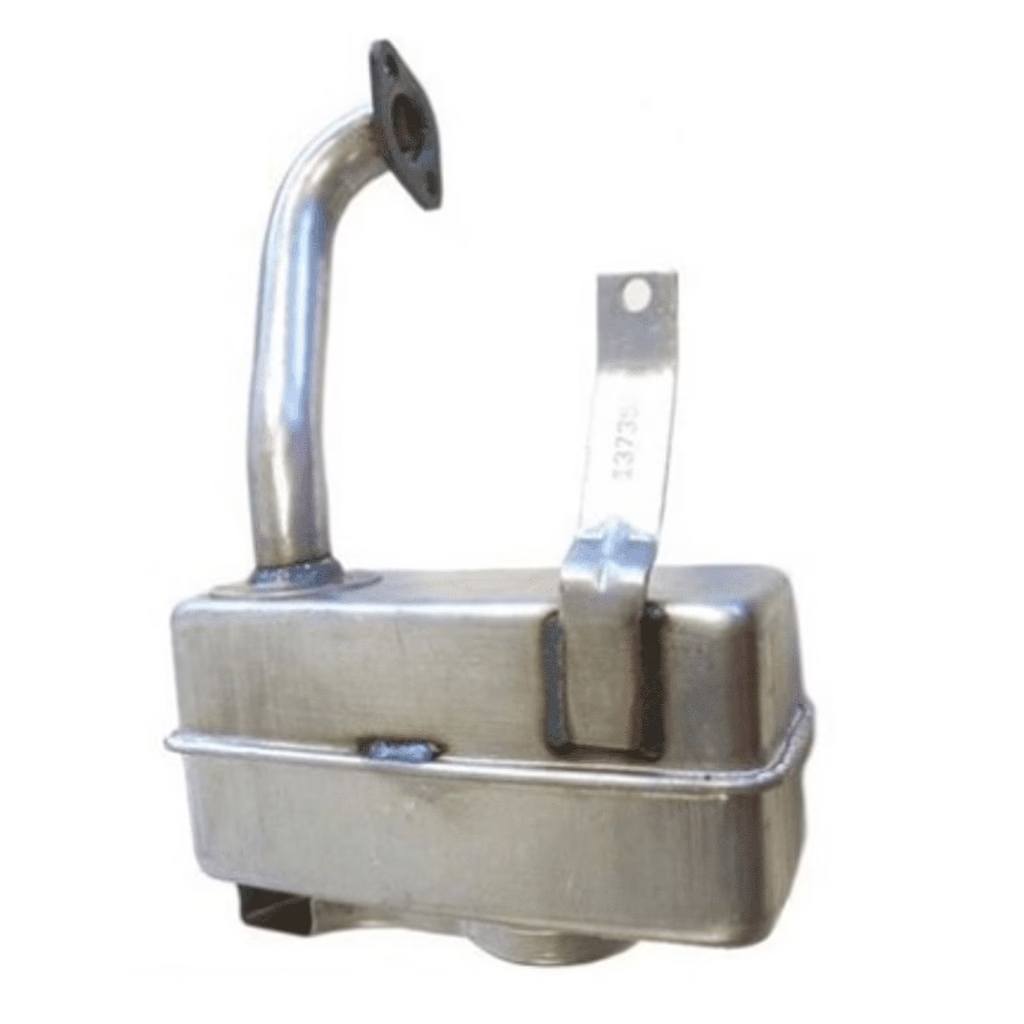
A lawn mower muffler has two jobs: quiet the engine exhaust and direct hot combustion gases away from the operator. Without it, a small gas engine sounds like a go-kart with no exhaust – loud, sharp, and unpleasant for you and every neighbor on the block.
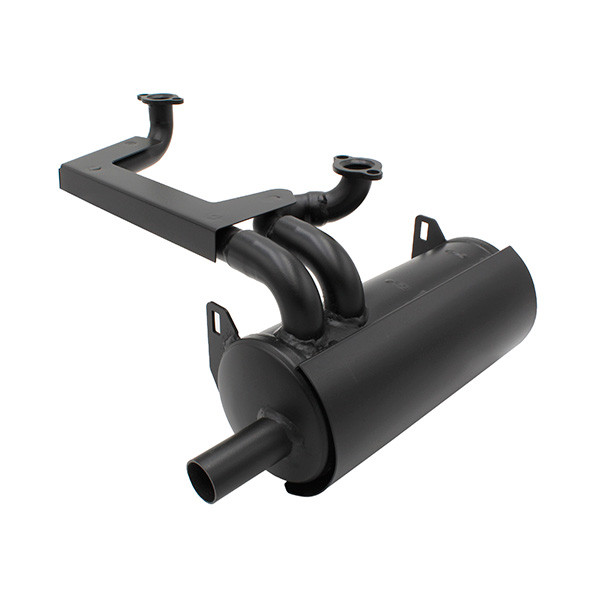
The muffler sits at the engine’s exhaust port, typically on the side or rear of the engine block. On most walk-behind mowers with a Briggs & Stratton 675exi or Honda GCV160, it is a small cast-iron or steel canister roughly the size of a large soup can. On riding mowers with Kohler or Kawasaki twin-cylinder engines, the muffler is noticeably larger and sometimes runs a heat shield around it.
Hot exhaust gas passes through the muffler’s internal baffles, which slow and cool the gas before it exits through the exhaust outlet. That process is what drops the noise from a sharp crack to the low rumble you are used to hearing.
Signs Your Lawn Mower Muffler Needs to Be Replaced
Your muffler tells you when it is done. The signals are hard to miss once you know what to look for.
- Louder-than-usual engine noise – a sudden roaring or popping sound that was not there last season almost always means a cracked muffler body or a failed exhaust gasket at the mounting port
- Visible rust or holes – surface rust is normal on older mufflers; through-rust or visible holes mean exhaust is escaping before it should
- Smoke near the engine block – if exhaust is leaking at the gasket joint, you will see or smell smoke close to the engine, not just at the exhaust tip
- Loose or rattling hardware – muffler mounting bolts corrode and work loose over time; a rattling sound at startup is a sign worth checking before it becomes a crack
A cracked muffler is also a fire risk near dry grass. If you see through-rust or a split in the body, stop mowing and replace it before the next cut.
How Much Does a Lawn Mower Muffler Cost?
A replacement muffler for most walk-behind mowers costs $10-$60 for the part alone. Riding mower mufflers run $30-$100+, depending on engine type and whether you need a single- or twin-cylinder fitment.
| Mower Type | Part Cost (DIY) | Shop Total (Parts + Labor Est.) |
|---|---|---|
| Walk-behind (push), single-cylinder | $10-$35 | $65-$130 |
| Self-propelled walk-behind | $15-$50 | $70-$150 |
| Riding mower, single-cylinder engine | $30-$70 | $100-$200 |
| Riding mower, twin-cylinder engine | $50-$120 | $150-$280 |
Shop labor rates nationally run $55-$135 per hour (LawnStarter, 2025). A muffler swap on a walk-behind is straightforward – most experienced technicians handle it in 30-45 minutes. On a riding mower where the muffler is tucked under a shroud or near the frame, expect 45-90 minutes of labor.
If you buy the part yourself at a retailer like RepairClinic or Home Depot and hand it to the shop, you will often pay less than if the shop sources it – parts markup at small engine shops is real.
DIY Muffler Replacement: Is It Worth Doing Yourself?
Credit: https://hustler.lawnmowers.parts/
For most homeowners, yes. Replacing a muffler on a walk-behind mower is one of the more DIY-friendly small engine repairs. You do not need specialty tools, and the job does not require touching the fuel system or anything inside the engine.
What you will need:
- A socket set or wrench (typically 3/8″ or 7/16″ for mounting bolts)
- A new muffler matched to your engine model number
- A replacement exhaust gasket (cheap – under $5 at most retailers, often included with the muffler)
- Anti-seize compound for the new mounting bolts – optional but worth it on any mower over two seasons old
The basic process: let the engine cool completely, disconnect the spark plug wire, unbolt the old muffler (usually two bolts at the exhaust port), scrape the old gasket material clean, fit the new gasket and muffler, and torque the bolts snug – not overly tight, as cast iron cracks.
The one thing that trips people up is a frozen bolt. Exhaust heat and moisture weld mounting hardware to the engine block over time. If a bolt snaps, you are into a more involved repair. Hit old muffler bolts with penetrating oil the night before you plan to work.
How to Match the Right Replacement Muffler to Your Mower
The fastest way to get the wrong part is to search by mower brand alone. Mufflers are engine-specific, not mower-specific. A Husqvarna riding mower might have a Briggs & Stratton engine or a Kohler engine depending on the year and model – and those take completely different mufflers.
Find your engine model number – it is stamped directly on the engine block, not on the mower deck sticker. On Briggs & Stratton engines it is a five-to-seven digit number near the valve cover. On Honda engines it is on the crankcase. On Kohler engines it is on the data plate near the air filter.
Search that engine model number at RepairClinic.com, Jack’s Small Engines, or Amazon. You will get exact OEM or aftermarket fitments instead of guessing.
Common Mistakes That Cost You More
- Skipping the gasket replacement: the old gasket is compressed and will not seal properly when reused. A $3 gasket left out means an exhaust leak from day one.
- Over-torquing the mounting bolts: muffler flanges are cast iron or aluminum. Crank them too hard and you crack the flange. Snug plus a quarter turn is enough.
- Buying by mower brand instead of engine number: this is the single most common cause of returned parts. Always match to the engine.
- Ignoring a loose muffler: a muffler that rattles but is not yet cracked will crack soon. Tighten loose bolts during spring startup before they work all the way out.
Frequently Asked Questions
How much does a lawn mower muffler replacement cost?
A replacement muffler part costs $10-$60 for most walk-behind mowers and $30-$120 for riding mowers. If you take it to a shop, expect to pay the part cost plus $55-$135 per hour in labor (LawnStarter, 2025). Most shop muffler jobs run under an hour, so total shop cost typically lands between $75-$200 depending on mower type and your region.
How do I know if my lawn mower muffler is bad?
The clearest sign is a sudden increase in engine noise – a sharp roaring or popping that is louder than normal. You may also see visible rust-through, cracks in the muffler body, or smoke near the engine block rather than at the exhaust outlet. If you see any of these, inspect the muffler before mowing again.
Can I run my lawn mower without a muffler?
Technically the engine will run, but it is not a good idea. Without a muffler, exhaust gases exit directly at the engine – putting heat and combustion byproducts close to your hands and near dry grass. The noise level is also significant. Most areas have local noise ordinances that a bare-engine mower will violate. Replace it before the next cut.
How long does a lawn mower muffler last?
Most mufflers on residential mowers last 5-10 years with normal use. Corrosion from moisture is the primary cause of failure, not mileage. Mowers stored outside, in damp conditions, or without covering tend to see muffler rust-through faster than garage-stored equipment.
Do I need to match the muffler to my mower brand or my engine?
Always match to your engine model, not your mower brand. The engine model number is stamped on the engine block itself. A Toro walk-behind with a Honda GCV160 takes a Honda-spec muffler. A Craftsman riding mower with a Briggs & Stratton 19.5 HP engine takes a Briggs-spec muffler. Brand name on the hood is irrelevant for parts matching.
Is a cracked muffler dangerous?
Yes. A cracked muffler routes exhaust gases in the wrong direction – potentially toward your hands, your feet, or dry grass near the deck. It is also a leading cause of grass fires on hot, dry days. Treat a cracked or rusted-through muffler as an immediate repair, not a “fix it later” item.