Lawn Mower Hitch: What It Is, What It Tows, and What Fits Your Mower

TL;DR
- A lawn mower hitch is a steel bracket that bolts to the rear frame of a riding mower or zero-turn mower, adding a tow point for carts and attachments
- Most residential riding mowers have a towing capacity between 250 and 500 lbs (manufacturer specs vary by model)
- Many riding mowers come with a hitch pre-installed; zero-turn models usually require an add-on hitch kit
- Common attachments include utility carts, lawn rollers, broadcast spreaders, plug aerators, and dethatchers
- Always check your mower’s manual for the exact towing capacity before loading any attachment
What Is a Lawn Mower Hitch?

A lawn mower hitch is a metal bracket that mounts to the rear of a riding mower or zero-turn mower and gives you a tow point for pulling attachments. It works the same basic way a trailer hitch works on a truck – except the loads are lighter and the speeds are measured in miles per hour, not tens of them.
Most hitches use a standard 1/2-inch hitch pin that drops through the bracket and the attachment’s tongue. Some models use a ball-and-coupler setup for carts that need to pivot on uneven ground.
Do Riding Mowers Come with a Hitch Already Installed?
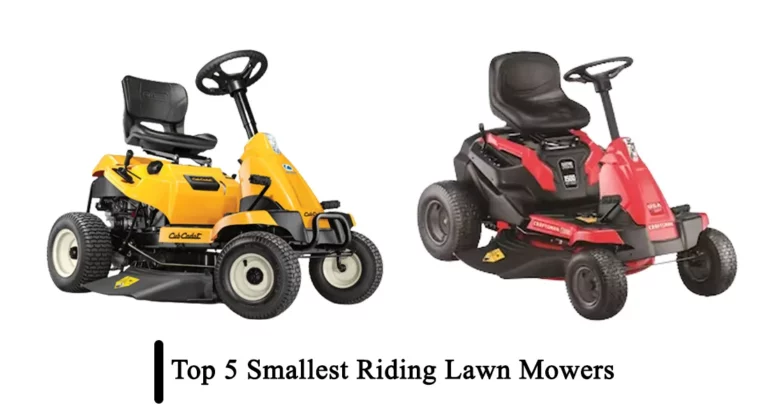
Most riding mowers in the $1,500 to $3,500 range ship with a rear hitch bracket already welded or bolted to the frame. John Deere E-series, Husqvarna YTH series, Craftsman T-series, and Cub Cadet XT1 models all include a rear hitch as standard equipment.
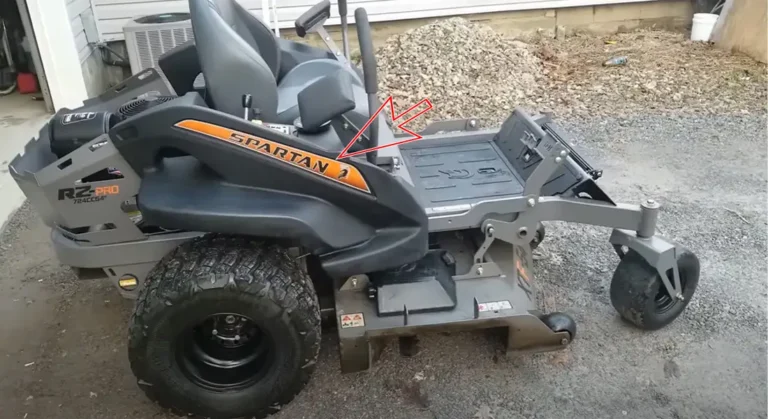
Zero-turn mowers are a different story. Most residential zero-turns do not include a hitch from the factory. You’ll need a brand-specific hitch kit, which typically runs $40 to $90 and bolts to the rear frame in under 30 minutes. Husqvarna, Toro, and Ariens each sell hitch kits designed for their own zero-turn models – using a universal kit on a zero-turn frame can cause fitment problems, so stick with the OEM part when possible.
How Much Can a Lawn Mower Hitch Tow?
Towing capacity on a residential riding mower is typically 250 to 500 lbs, depending on engine size, transmission type, and whether the terrain is flat or sloped. Zero-turn mowers generally sit on the lower end of that range for towing because their rear-wheel drive layout isn’t designed for heavy pulling.
Here’s a general breakdown by mower category:
| Mower Type | Typical Towing Capacity | Notes |
|---|---|---|
| Residential riding mower (hydrostatic) | 350-500 lbs | Most common setup for homeowners |
| Residential riding mower (gear drive) | 250-400 lbs | Lower limit on slopes |
| Zero-turn mower (residential) | 250-350 lbs | Towing can affect steering control |
| Lawn tractor (mid-range) | 400-600 lbs | Larger engines handle heavier loads |
| Garden tractor (commercial-grade) | 600-800 lbs | Built for heavier attachment use |
Always confirm your specific model’s limit in the owner’s manual or on the manufacturer’s website before hooking anything up. Overloading a residential mower hitch can damage the transmission, especially on slopes.
What Can You Tow with a Lawn Mower Hitch?
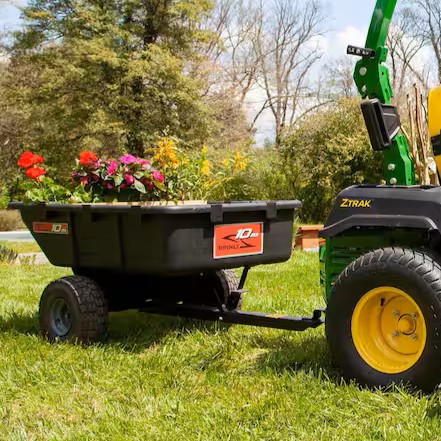
A hitch turns your riding mower into a useful yard workhorse beyond just cutting grass. These are the most common attachments homeowners actually use:
- Utility cart: A two-wheel dump cart for hauling mulch, soil, firewood, or debris. A 10 cubic foot cart from Agri-Fab or Ohio Steel runs $100 to $200 and fits any standard hitch pin.
- Broadcast spreader (tow-behind): Spreads fertilizer, grass seed, or ice melt across large areas faster than a push spreader. Scotts and Agri-Fab both make tow-behind models in the $80 to $150 range.
- Plug aerator: Pulls soil cores to reduce compaction. Most tow-behind aerators require adding weight (water or concrete blocks) to drive the tines in. Agri-Fab’s 48-inch plug aerator is a common residential choice at around $180 to $220.
- Lawn roller: Levels uneven ground or presses in new sod. Filled with water for weight, typically 18 to 24 inches wide for residential use.
- Dethatcher (tow-behind): Removes thatch buildup with spring tines. Best used in early fall or spring when the lawn is growing actively.
Hitch Pin vs. Ball Hitch: Which One Does Your Attachment Need?
Most lawn and garden attachments use a hitch pin setup – a flat tongue with a hole that slides over the mower’s receiver, secured by a pin and clip. This is simple, cheap, and universal.
Some utility carts use a ball-and-coupler system – a 1 7/8-inch ball on the mower and a matching coupler on the cart. This setup allows the cart to pivot side to side, which helps on uneven ground and reduces the chance of tipping on slopes.
If you’re buying a cart, check the coupler type before you buy. Most carts specify which hitch style they require.
Common Mistakes That Cost You More in the Long Run
- Exceeding towing capacity on hills: A 400 lb load that’s fine on flat ground can overheat a hydrostatic transmission on a 10-degree slope. Stay well under the rated limit when towing on any incline.
- Using a universal hitch kit on a zero-turn without checking frame compatibility: Zero-turn frames vary significantly between brands and model years. A kit that fits a Husqvarna Z254 will not fit a Toro TimeCutter with the same frame dimensions. Confirm part numbers before ordering.
- Forgetting to check hitch pin condition each season: Hitch pins sit exposed to weather all year. A rusted or bent pin can fail mid-tow. Replace them at the start of each season – they cost under $5 at any hardware store.
Frequently Asked Questions
What is a lawn mower hitch used for?
A lawn mower hitch lets you tow attachments behind a riding mower or zero-turn mower. Common uses include pulling utility carts, broadcast spreaders, plug aerators, lawn rollers, and dethatchers across your yard.
How much weight can a lawn mower hitch tow?
Most residential riding mowers can tow between 250 and 500 lbs, depending on the model and engine size. Check your owner’s manual for the exact towing capacity – overloading the hitch, especially on slopes, can damage the transmission.
Can you add a hitch to a zero-turn mower?
Yes. Most zero-turn mowers don’t include a hitch from the factory, but brand-specific hitch kits are available from manufacturers like Husqvarna, Toro, and Ariens. These bolt to the rear frame and typically cost $40 to $90.
What size hitch pin do most lawn mower attachments use?
Most tow-behind lawn and garden attachments use a 1/2-inch hitch pin. Some utility carts use a 1 7/8-inch ball-and-coupler setup instead. Check the attachment’s specs before buying.
Do I need a special hitch for a John Deere riding mower?
Most John Deere E-series and S-series riding mowers include a rear hitch bracket as standard equipment. If yours is missing or damaged, John Deere sells replacement hitch kits through their dealer network and on their website. Universal aftermarket kits can fit some models, but OEM parts are the more reliable fit.
Is towing with a zero-turn mower safe?
It can be, within the manufacturer’s towing limit and on reasonably flat ground. Towing heavy loads with a zero-turn affects steering response because the weight shifts toward the rear drive wheels. Keep loads light and avoid sharp turns with a full cart.