Lawn Mower Pull String Stuck: 5 Causes and How to Fix Each One

TL;DR
- A stuck pull string is most often caused by a hydrolocked engine, engaged blade brake, or seized piston — all fixable at home.
- Start with the simplest check: remove the spark plug and pull the cord to release hydraulic pressure.
- A completely seized engine from sitting with old oil or a thrown rod is not a DIY fix — that mower needs a shop or a replacement.
- Applies to walk-behind and riding mowers with recoil starters, including Briggs & Stratton, Honda GCV, Toro, and Craftsman engines.
- Most homeowners can diagnose and fix a stuck pull string in under 30 minutes with basic hand tools.
Why Your Lawn Mower Pull String Is Stuck
Credit: https://www.familyhandyman.com/
A stuck pull string means something is physically stopping the engine from rotating. The cord is not broken and the recoil is not the problem — the engine itself cannot turn over. That resistance is coming from one of five places: hydraulic lock from oil in the cylinder, an engaged blade brake or flywheel brake, a seized piston from lack of lubrication, a bent crankshaft from a blade strike, or a failed recoil starter mechanism.
Walk through the causes in order from most common to least. Start with the free fix before assuming the worst.
What You Need Before You Start
Tools:
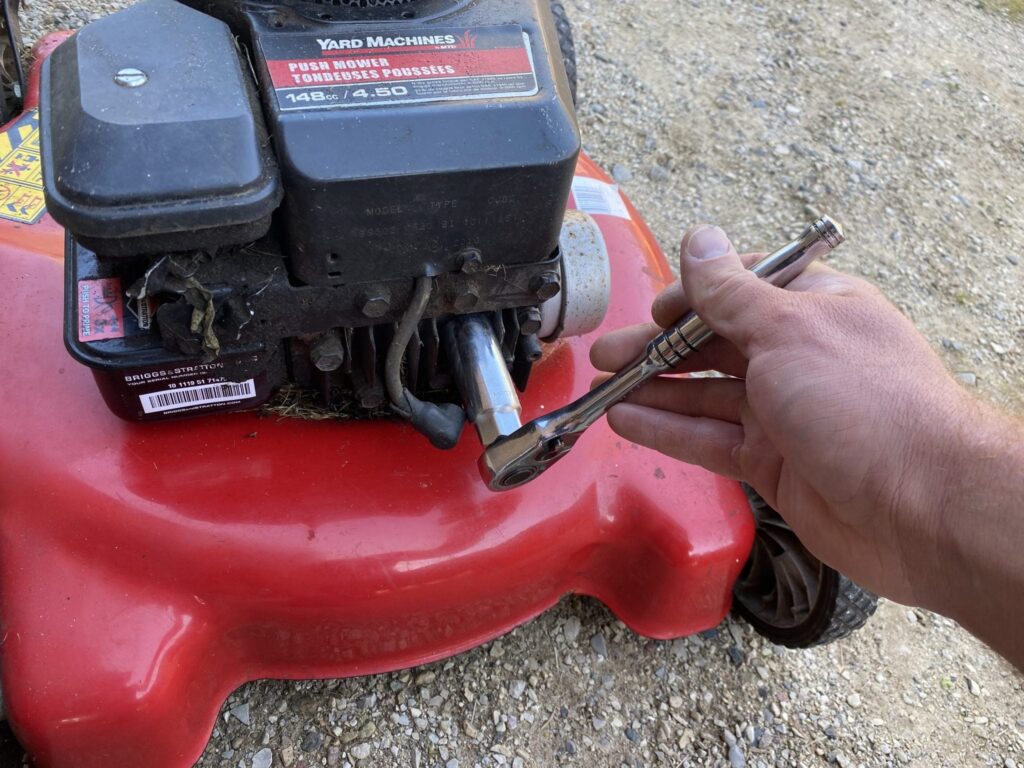
- Socket wrench with spark plug socket (typically 5/8″ or 13/16″)
- Flathead and Phillips screwdriver
- Work gloves
Safety steps:
- Disconnect the spark plug wire before touching the blade or reaching under the deck — on any mower, every time.
- Tilt the mower with the air filter side up if you need to tip it — tilting the other way floods the carburetor with oil.
- On a riding mower, engage the parking brake and remove the ignition key before any inspection.
Step 1: Check for a Hydrolocked Engine
Hydraulic lock is the most common reason a lawn mower pull string is stuck. It happens when engine oil or fuel seeps into the cylinder while the mower is stored on its side or tipped incorrectly. Liquid does not compress, so the piston cannot move.
Remove the spark plug with a spark plug socket. Point the hole away from you and pull the starter cord three or four times. Fluid will spray out of the spark plug hole. Wipe out any visible oil with a clean rag, reinstall the plug, and try the cord again. This fix works the majority of the time on Honda GCV160 and Briggs & Stratton 675exi engines.
Step 2: Check the Blade Brake and Safety Interlock
Most modern walk-behind mowers have a blade brake control — the bar on the handle you must hold down to run the mower. If that system is stuck engaged, it locks the blade and sometimes the engine rotation.
Check that the blade brake lever moves freely and fully releases. Inspect the cable running from the handle to the engine for kinks, fraying, or a cable that has slipped its bracket. On Toro Recycler and Craftsman M105 models, the cable anchor point near the engine is a common failure spot. Straighten or reseat the cable and test the cord again.
On riding mowers, check that the seat safety switch and blade engagement lever are both in the off position. A faulty seat switch can prevent the engine from turning freely on some John Deere E100 and Husqvarna 100 series models.
Step 3: Try Manually Rotating the Flywheel
If the cord is still stuck, access the flywheel — the large fan-shaped component under the engine cover or recoil housing. On a walk-behind mower, remove the recoil starter cover (usually 3-4 bolts). Try rotating the flywheel by hand with work gloves on.
If it moves slightly but springs back, the recoil spring inside the starter assembly may be wound too tight or tangled. Recoil starter replacements for most Briggs & Stratton or Honda engines run $15-$30 at any hardware store and swap out in about 20 minutes.
If the flywheel does not move at all, the problem is internal. Move to Step 4.
Step 4: Check for a Seized Engine or Bent Crankshaft

A seized engine means the piston has fused to the cylinder wall, usually from running without oil or from sitting dry for years. A bent crankshaft comes from hitting a rock, stump, or curb at speed — the blade stops instantly but the crankshaft does not.
To check for a bent crankshaft: tip the mower and inspect the blade. If the blade wobbles or sits visibly crooked, the crankshaft is bent. This is not a DIY repair. Crankshaft replacement on a push mower often costs more than the mower is worth.
To check for seizure: with the spark plug removed, attempt to rotate the flywheel by hand with firm, steady pressure. No movement at all, no give in either direction — that engine is seized.
| Symptom | Likely Cause | DIY Fix? |
|---|---|---|
| Cord pulls slightly then locks | Hydrolocked cylinder | Yes – remove spark plug |
| Cord feels springy but won’t pull | Blade brake engaged or recoil tangled | Yes – check cable or replace recoil |
| Cord pulls an inch then stops hard | Bent crankshaft | No – shop repair or replace |
| Flywheel will not turn at all | Seized engine | No – engine replacement |
| Cord loose but engine won’t crank | Broken recoil spring | Yes – replace recoil starter |
Step 5: Replace the Recoil Starter if the Cord Itself Is the Problem
If the engine rotates freely by hand but the cord still will not pull, the recoil starter is the problem — not the engine. The spring inside the recoil assembly has broken or the cord has snapped at the handle attachment point.
Recoil starter assemblies are sold as complete units. For a Briggs & Stratton 550e or 675exi, the replacement part is under $25 at Home Depot or Amazon. Remove the old unit (3-4 bolts on top of the engine), swap in the new one, and the mower pulls normally.
What to Do If Something Goes Wrong
| Problem | Likely Cause | Fix |
|---|---|---|
| Oil sprays from spark plug hole | Hydrolocked engine | Wipe clean, reinstall plug, try again |
| Cord pulls but engine won’t start | Separate ignition issue | Check spark, fuel, and air filter |
| Flywheel moves but cord still jams | Recoil spring tangled | Replace recoil starter assembly |
| Mower vibrates badly after fix | Bent crankshaft or unbalanced blade | Stop immediately – inspect blade and shaft |
Frequently Asked Questions
Why is my lawn mower pull string stuck and hard to pull?
The most common cause is a hydrolocked engine — oil or fuel has entered the cylinder and the piston cannot compress it. Remove the spark plug and pull the cord several times to clear the fluid, then reinstall the plug and try again.
Can a stuck pull cord damage the engine if I keep pulling hard?
Yes. Pulling the cord repeatedly against a fully locked engine puts stress on the recoil starter spring and the cord itself. Identify the cause first before forcing it.
How do I know if my lawn mower engine is seized?
With the spark plug removed, try to rotate the flywheel by hand. If it will not move at all in either direction with firm pressure, the engine is seized. A seized engine typically needs full replacement on a push mower.
Does a bent crankshaft always mean I need a new mower?
On a push mower, usually yes — crankshaft replacement costs $100-$200 in labor alone, and many budget mowers are not worth that repair. On a commercial mower like a Kawasaki FR series or Kohler Command Pro, the repair may be worth it.
How do I prevent a hydrolocked engine in the future?
Always store your mower upright. If you need to tip it for blade work, tilt with the air filter side up. Run the engine dry of fuel before long-term storage, or use a fuel stabilizer like STA-BIL in any gas left in the tank over winter.
Quick Recap
- Remove the spark plug first and pull the cord to rule out hydraulic lock.
- Check the blade brake cable for kinks or a slipped anchor before assuming an engine problem.
- Rotate the flywheel by hand to test for a seized engine or bent crankshaft.
- Replace the recoil starter assembly if the engine turns freely but the cord still won’t pull.
- A seized engine or bent crankshaft on a budget push mower is usually a replacement decision, not a repair.