Why Is My St. Augustine Grass Turning Yellow? Causes and Fixes

TL;DR
- St. Augustine grass turns yellow most often from iron deficiency (chlorosis), overwatering, or chinch bug damage.
- Iron chlorosis shows as yellowing between the veins of new leaf blades; apply iron sulfate or chelated iron to correct it.
- Overwatering drowns roots and mimics nutrient deficiency; St. Augustine needs about 1 inch of water per week (University of Florida IFAS, 2023).
- Chinch bugs cause irregular yellow patches that spread outward from sunny, dry areas starting in late spring.
- Most yellowing cases are fixable without replacing sod if you catch the cause early.
What Causes St. Augustine Grass to Turn Yellow?
Credit: https://www.crabgrasslawn.com/
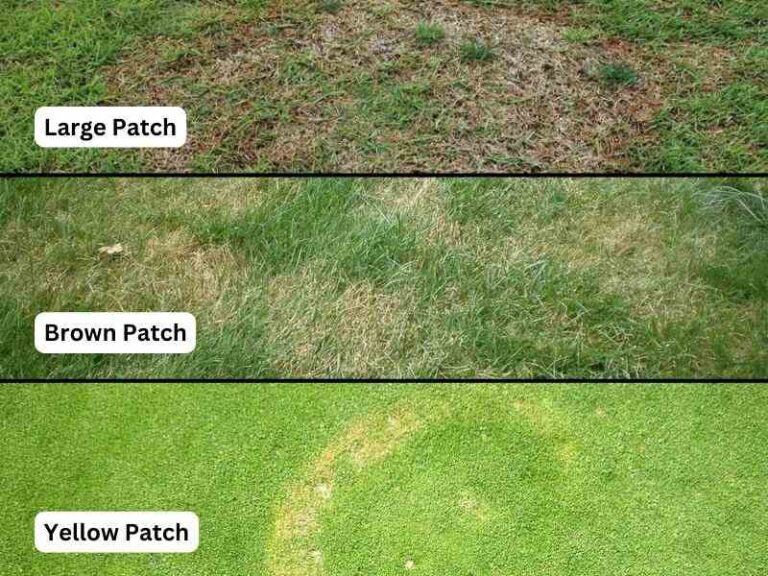
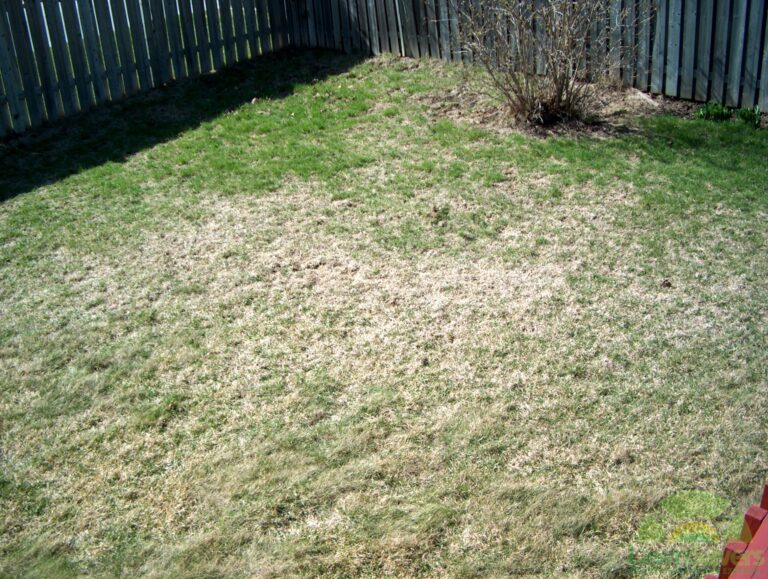
St. Augustine grass turns yellow for five main reasons: iron deficiency, overwatering, underwatering, chinch bug damage, or nitrogen deficiency. The fix depends entirely on which one you’re dealing with, so identifying the pattern of yellowing matters more than reaching for fertilizer first.
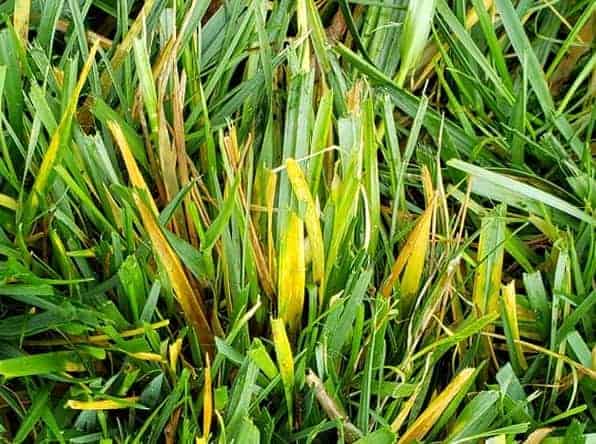
Yellow that appears in streaks or patches between the leaf veins points to iron chlorosis. Yellow that spreads across an entire zone after heavy rain points to root suffocation from overwatering. Irregular patches in full-sun areas during summer heat are the classic sign of chinch bugs.
How to Tell Iron Chlorosis from Other Causes
Iron chlorosis is the most common reason St. Augustine turns yellow in Florida, Texas, and the Gulf Coast states. It shows up as yellowing between the leaf veins while the veins themselves stay green – a pattern called interveinal chlorosis.
It’s most common in alkaline soils (pH above 7.0), where iron is present but locked up in a form the grass can’t absorb. A soil pH test from your local cooperative extension office will confirm it for under $20.
The fix is a foliar spray of chelated iron or a soil drench of iron sulfate. Chelated iron works faster because the grass absorbs it directly through the leaves. The University of Florida IFAS recommends 2 oz of chelated iron per gallon of water, applied in the morning so it doesn’t burn in midday heat (University of Florida IFAS, 2023).
Is Overwatering Making Your Lawn Yellow?
Overwatering is the second most common cause, and it’s easy to misread as a fertilizer problem. When St. Augustine roots sit in waterlogged soil, they can’t take up nutrients even when those nutrients are present. The grass looks starved because it effectively is.
St. Augustine needs about 1 inch of water per week during the growing season, including rainfall (University of Florida IFAS, 2023). If you’re running irrigation more than twice a week, you may be drowning the root zone.
Check your soil 3-4 inches down. If it’s wet and stays wet between watering days, cut your irrigation frequency and check that your sprinkler heads aren’t pooling water in low spots.
How to Spot Chinch Bug Damage Before It Spreads
Chinch bugs are small (about 1/5 of an inch), and they feed by sucking the sap out of St. Augustine grass while injecting a toxin that causes yellowing and browning. Damage starts as irregular yellow patches in the hottest, driest parts of the lawn, usually near driveways, sidewalks, or south-facing slopes.
To check for chinch bugs, press a metal coffee can (both ends removed) into the soil at the edge of a yellow patch and fill it with water. If chinch bugs are present, they’ll float to the surface within a few minutes. This is the standard detection method recommended by Texas A&M AgriLife Extension (Texas A&M AgriLife Extension, 2022).
Bifenthrin-based insecticides (such as Ortho Bug-B-Gon) control chinch bugs effectively. Apply to the affected area and a 5-foot buffer zone around it.
Could It Be a Nitrogen Deficiency Instead?
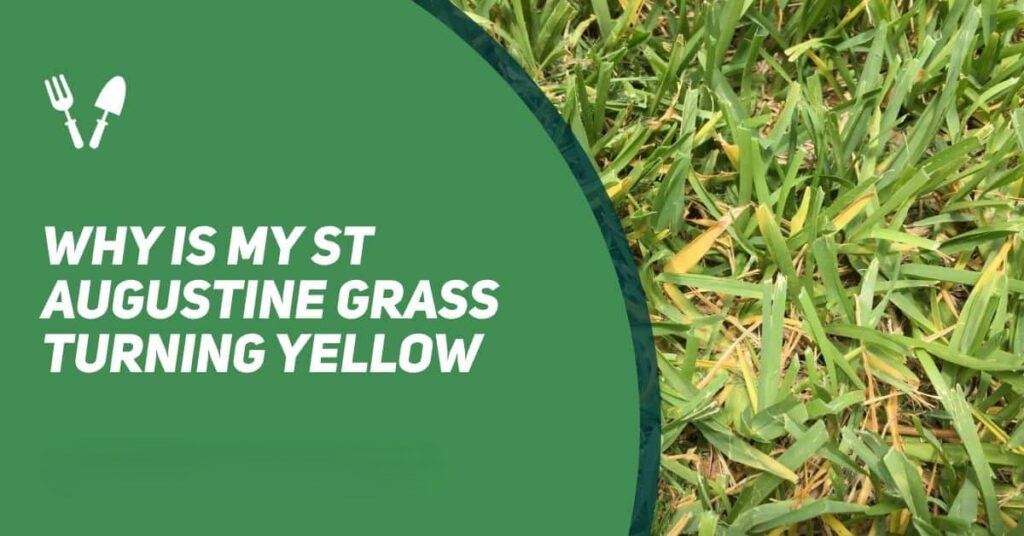
Nitrogen deficiency causes a uniform pale yellowing across the whole lawn rather than patchy or interveinal yellowing. St. Augustine is a heavy feeder – it typically needs 3-4 lbs of nitrogen per 1,000 sq ft per year in the South, applied in split doses from spring through early fall (Clemson Cooperative Extension, 2022).
If you haven’t fertilized since last year, a slow-release nitrogen fertilizer like a 15-0-15 or 16-4-8 formulation will green the lawn back up within 7-14 days.
Do not fertilize in fall or winter. St. Augustine is dormant or slowing down, and late nitrogen pushes soft growth that’s more vulnerable to cold damage and fungal disease.
Yellow Patches After Heavy Rain: What’s Happening
Yellow patches that appear specifically after heavy rain or extended wet periods usually point to either root rot from waterlogged soil or a fungal disease called gray leaf spot (Pyricularia grisea). Gray leaf spot causes small brown lesions with yellow halos on the blades and spreads fast in hot, humid weather.
If you see lesions along with yellowing, a fungicide containing azoxystrobin (such as Heritage or Scotts DiseaseEx) will stop the spread. Avoid high-nitrogen fertilizer when gray leaf spot is active – it makes the disease worse (University of Florida IFAS, 2021).
Yellow and Brown Causes at a Glance
| Cause | Pattern | When It Appears | Fix |
|---|---|---|---|
| Iron chlorosis | Interveinal yellowing on new growth | Spring/summer, alkaline soils | Chelated iron spray or iron sulfate drench |
| Overwatering | Uniform yellowing, soggy soil | Any time, after irrigation increase | Reduce watering to 1 in/week |
| Chinch bugs | Irregular patches, sunny areas | Late spring through summer | Bifenthrin insecticide + buffer zone |
| Nitrogen deficiency | Pale yellow across whole lawn | Spring after winter dormancy | Slow-release nitrogen fertilizer |
| Gray leaf spot | Yellow halos around lesions | Summer, humid weather | Azoxystrobin fungicide, cut nitrogen |
| Underwatering | Widespread yellowing + dry soil | Hot, dry stretches | Deep water 2x per week |
Frequently Asked Questions
Why is my St. Augustine grass turning yellow in patches?
Patchy yellowing in St. Augustine is most often chinch bug damage or uneven irrigation coverage. Check the affected area for chinch bugs using the coffee-can float test described above. If no bugs are found, check whether your sprinkler heads are covering the yellow zones evenly.
Can too much fertilizer turn St. Augustine grass yellow?
Yes. Over-fertilizing with nitrogen can cause fertilizer burn, which appears as yellow or brown streaks following the direction you applied it. If you applied granular fertilizer within the last week, water the lawn deeply to flush the excess nitrogen through the root zone.
How do I fix yellow St. Augustine grass fast?
A foliar spray of chelated iron is the fastest fix for iron chlorosis and will show green-up within 5-7 days. For nitrogen deficiency, a water-soluble quick-release fertilizer will green the lawn in 7-10 days. Neither fix addresses chinch bugs or disease, so confirm the cause before applying anything.
Should I water yellow St. Augustine grass more?
Only if the soil is dry. Watering more when the soil is already wet will make most causes of yellowing worse, especially root rot and fungal disease. Stick your finger 3-4 inches into the soil first. If it’s moist, hold off on irrigation.
What pH should St. Augustine grass soil be?
St. Augustine grows best in soil with a pH between 6.0 and 7.0 (University of Florida IFAS, 2023). Above 7.0, iron becomes unavailable even in soils that contain it, which leads directly to iron chlorosis. If your soil tests above 7.0, apply sulfur to lower the pH gradually alongside iron supplementation.