When to Mow New Grass: The Complete Timing Guide for a Healthy Lawn

TL;DR
- Mow new grass for the first time when it reaches 3 to 4 inches tall – typically 4 to 8 weeks after seeding, depending on grass type and conditions.
- The “one-third rule” applies from day one: never cut more than one-third of the blade height in a single mow.
- Mowing too early is one of the most common causes of new lawn failure – immature roots pull out of the soil under mower weight.
- Cool-season grasses (fescue, bluegrass, ryegrass) are usually ready to mow in 4 to 6 weeks; warm-season grasses (Bermuda, Zoysia, St. Augustine) take 6 to 8 weeks.
- Soil firmness matters as much as blade height – if your foot sinks more than half an inch, the lawn is not ready for mower traffic.
What “Ready to Mow” Actually Means for New Grass
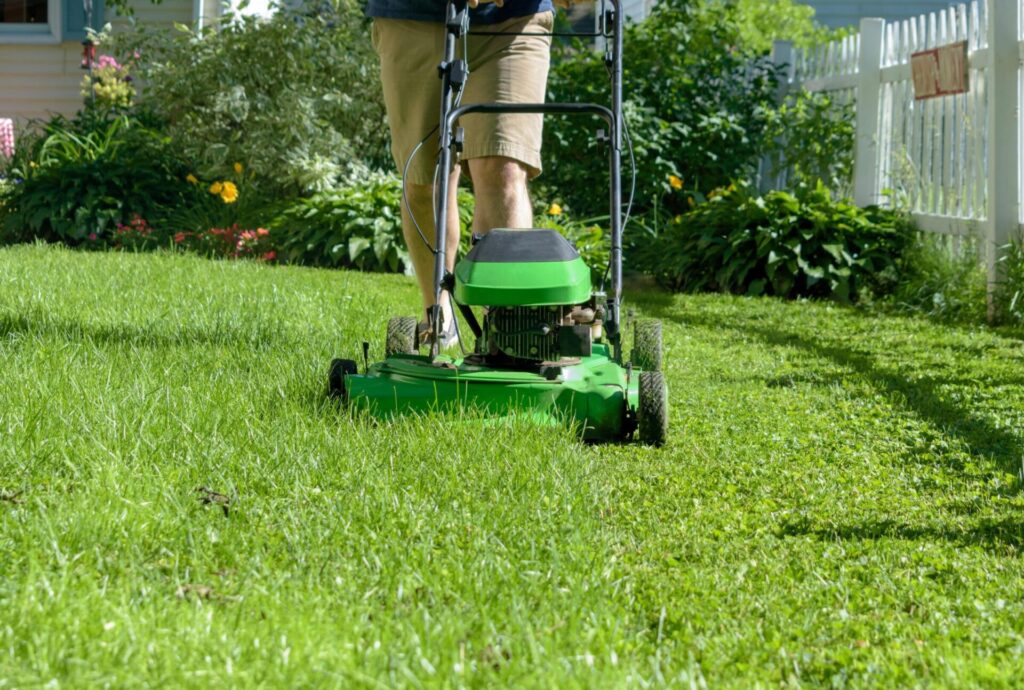
New grass is ready to mow when two conditions are met at the same time: the blades have reached 3 to 4 inches tall AND the roots have anchored firmly enough to hold the plant in place under mower weight. Blade height alone is not enough.
Most homeowners watch the grass and mow when it looks long. That is the wrong signal to follow. A seedling that looks tall can still have roots only a quarter-inch deep. Mowing at that stage does not trim the grass – it yanks it out of the ground. The turf thins, bare patches appear, and weeds move in.
The firmness test is simple: press your foot into the lawn and lift it. If the soil compresses more than half an inch or feels spongy, the root system has not developed enough to handle a mower passing over it. Wait another 5 to 7 days and test again.
How Long New Grass Takes to Reach Mowing Height
The time from seeding to first mow depends on grass species, soil temperature, watering frequency, and sunlight. These are general ranges under good growing conditions.
| Grass Type | Season | First Mow Timeline |
|---|---|---|
| Tall Fescue | Cool | 4 to 6 weeks after seeding |
| Kentucky Bluegrass | Cool | 6 to 8 weeks after seeding |
| Perennial Ryegrass | Cool | 3 to 4 weeks after seeding (fastest germinator) |
| Bermudagrass | Warm | 6 to 8 weeks after seeding |
| Zoysiagrass | Warm | 8 to 10 weeks after seeding |
| St. Augustinegrass | Warm | 7 to 14 days after sodding (not typically seeded) |
| Centipedegrass | Warm | 6 to 8 weeks after seeding |
Perennial ryegrass germinates in 5 to 10 days and grows fast, which is why it reaches mow height sooner than most species. Kentucky bluegrass germinates slowly – sometimes taking 3 weeks just to sprout – and needs extra time before the first cut (University of Minnesota Extension, 2023).
Sod moves faster than seed because the root system is already partially established. Most sod lawns are ready for a first mow 10 to 14 days after installation, once roots have knit into the soil below.
The One-Third Rule: How Much to Cut at First Mow
Never remove more than one-third of the grass blade in a single mowing session. This applies to all lawns, but it matters most for new grass where the root system is still shallow.
Here is how the math works in practice:
- If your target mowing height is 2 inches, wait until grass reaches 3 inches before cutting.
- If your target height is 3 inches, wait until grass reaches 4.5 inches.
- If you let the grass get away from you and it reaches 6 inches, do not cut it to 2 inches in one pass. Drop it to 4 inches, wait a few days, then cut again.
Cutting more than one-third at once stresses the plant. The grass redirects energy from root development to blade regrowth, which slows establishment and leaves the lawn more vulnerable to drought and disease (Penn State Extension, 2022).
What Mowing Height to Use for Each Grass Type
Each grass species has an ideal mowing height range. Cutting below that range, called scalping, exposes the crown of the plant – the growing point just above the soil. Damage to the crown can kill the grass permanently.
| Grass Type | Ideal Mowing Height |
|---|---|
| Tall Fescue | 3 to 4 inches |
| Kentucky Bluegrass | 2.5 to 3.5 inches |
| Perennial Ryegrass | 2 to 3 inches |
| Bermudagrass | 0.5 to 1.5 inches |
| Zoysiagrass | 1 to 2 inches |
| St. Augustinegrass | 3 to 4 inches |
| Centipedegrass | 1.5 to 2 inches |
Warm-season grasses tolerate and often prefer lower cutting heights because they grow laterally (outward) rather than upward. Cool-season grasses grow upright and need more blade surface area to photosynthesize efficiently, so they perform better at taller heights.
4 Signs Your New Lawn Is Not Ready to Mow Yet
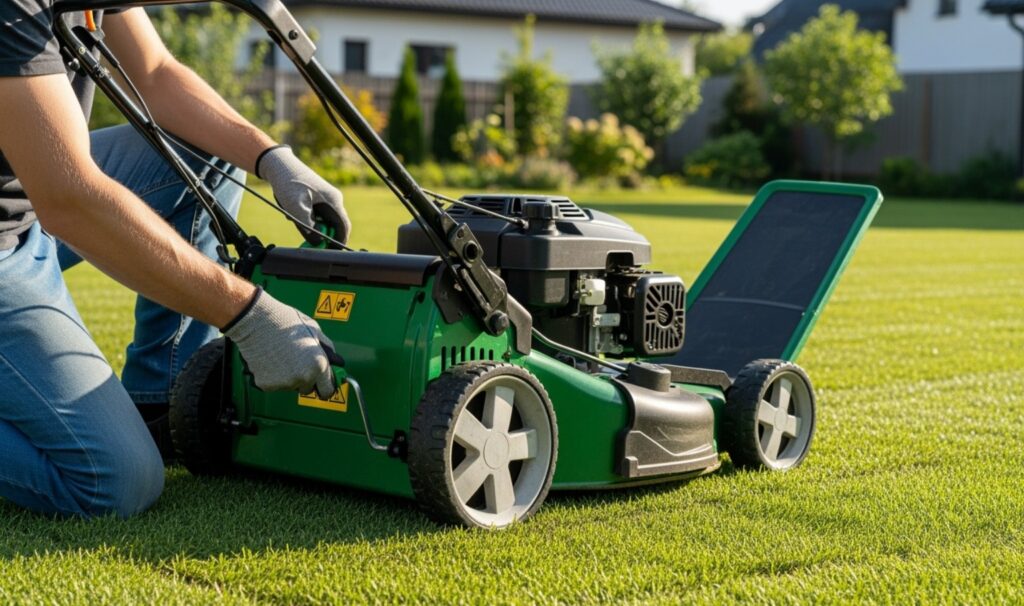
If any of these conditions are present, wait before mowing.
- The tug test fails. Grab a small clump of grass and pull gently. If the seedlings lift out of the soil without resistance, roots have not anchored. Wait 5 to 7 more days and test again.
- The soil feels soft underfoot. Press your heel into the lawn. Sinking more than half an inch means the soil is still too soft to handle mower wheel pressure without compacting or rutting.
- Coverage is below 80%. If large bare patches are still visible, the seedlings in those areas are likely younger and weaker. Mowing the areas that look ready can damage the patches that are not.
- You watered within the last 24 hours. Wet soil compacts easily under mower weight, and wet grass blades bend instead of cutting cleanly. Mow when the surface is dry, even if the lawn is otherwise ready.
How to Mow New Grass Without Damaging It
The first mow sets the pattern for how well the lawn establishes. Follow these steps to avoid setting back the root system.
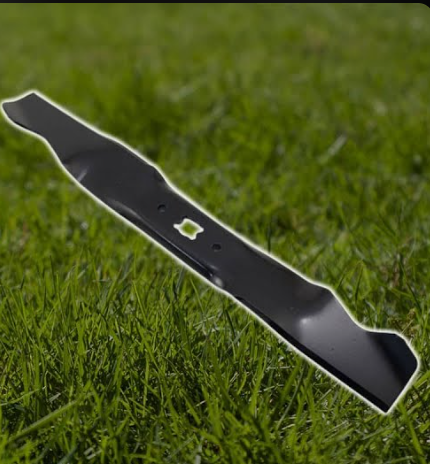
Step 1: Make sure mower blades are sharp. Dull blades tear grass rather than cutting it. Torn tips turn brown within 24 hours and leave the plant open to fungal infection. Sharpen blades at least once per season (Clemson Cooperative Extension, 2024).
Step 2: Set the mowing height before you start. Adjust the mower deck to leave the grass at the correct finished height for your species. Do not eyeball it mid-mow.
Step 3: Mow when the grass is dry. Wet grass clumps, sticks to the deck, and cuts unevenly. Early afternoon on a dry day is better than morning when dew is still on the blades.
Step 4: Use a lightweight mower if possible. Heavy riding mowers can compact soft seedling-stage soil. A walk-behind mower puts less pressure per square inch on new turf.
Step 5: Alternate your mowing direction each session. This prevents the grass from leaning in one direction and encourages upright growth. It also reduces soil compaction tracks from mower wheels.
Step 6: Leave clippings on the lawn. First-mow clippings from young grass are fine and short enough to filter down between blades without smothering. They return nitrogen to the soil as they break down.
Common Mowing Mistakes That Kill New Lawns
- Mowing on a fixed schedule instead of by height. “I mow every Saturday” is the wrong framework for new grass. Mow when the grass reaches the trigger height, not when the calendar says so.
- Using a riding mower too early. A standard riding mower weighs between 400 and 600 pounds. On soil that has not fully firmed up, that weight compacts the root zone and creates ruts that are hard to correct later.
- Bagging clippings from the first mow. Bagging removes organic matter the new lawn needs. Leave short clippings on the surface unless they are so long they form visible clumps.
- Mowing during a heat wave. Cutting grass stresses it temporarily. Mowing during sustained heat above 90 degrees Fahrenheit adds thermal stress on top of mechanical stress. Wait for a cooler day if possible.
- Skipping the tug test. Most new lawn damage from early mowing is invisible on the day it happens. The thinning and bare patches show up 1 to 2 weeks later. The tug test takes 10 seconds and prevents this entirely.
Frequently Asked Questions About Mowing New Grass
When can I mow new grass after seeding?
Most grass types are ready for a first mow 4 to 8 weeks after seeding. The specific window depends on the species – perennial ryegrass grows fast and may be ready in 3 to 4 weeks, while Kentucky bluegrass and Zoysia can take 6 to 10 weeks. Do not go by time alone. Use the 3-to-4-inch height marker and the firmness test together before mowing.
How tall should new grass be before the first mow?
New grass should reach 3 to 4 inches before the first mow. At that height, you can cut it down to 2 to 2.5 inches without removing more than one-third of the blade. Cutting shorter than 2 inches on a first mow risks scalping and crown damage.
Can I mow new grass after 2 weeks?
Only if the grass has already reached 3 to 4 inches tall and the soil passes the firmness test. For most grass species seeded from scratch, 2 weeks is too early – the seedlings have germinated but roots are still shallow. Sod is the exception: if it was installed 10 to 14 days ago and has knit into the soil, it may be ready for a light first cut.
What happens if you mow new grass too early?
Mowing too early pulls seedlings out of the soil, thins the turf, and creates bare patches where weeds establish faster than grass. The damage is usually not visible on the day of mowing – it appears 1 to 2 weeks later as brown or thin areas. Recovery requires reseeding, which pushes your lawn establishment timeline back by weeks.
Should I water new grass before or after mowing?
Water after mowing, not before. Mowing dry grass produces a cleaner cut and reduces disease risk. Wet grass blades bend away from the mower blade instead of cutting straight, leaving an uneven finish. After mowing, a light watering helps the lawn recover from the minor stress of being cut.
Does mowing new grass help it spread?
For some warm-season grasses, yes. Bermudagrass and Zoysia spread laterally through stolons and rhizomes. Mowing at the right height encourages lateral growth rather than vertical growth, which helps the grass fill in bare spots faster. For cool-season grasses like tall fescue, which grow in clumps, mowing does not directly cause spreading – but keeping it at the correct height reduces stress and supports healthy establishment.
Is it okay to use a riding mower on new grass?
Not for the first several mowings. Riding mowers are too heavy for soil that is still in the establishment phase. The wheel pressure compacts the root zone and leaves ruts that are difficult to fix without dethatching or aerating. Use a walk-behind mower for the first 3 to 4 mowing sessions, then assess whether the soil has firmed up enough for a riding mower.
Key Takeaways
- Wait until new grass is 3 to 4 inches tall AND passes the firmness test before the first mow.
- Never cut more than one-third of the blade height in one session – this applies from the first mow onward.
- Timeline varies by grass type: perennial ryegrass is often ready in 3 to 4 weeks; Kentucky bluegrass and Zoysia may need 8 to 10 weeks.
- Use a walk-behind mower with sharp blades on dry grass for the first several cuts.
- The tug test – grabbing a small clump and pulling gently – is the most reliable indicator of whether roots have anchored enough to mow safely.