ZTR Mower vs Lawn Tractor: Which One Is Right for Your Yard

TL;DR
- A zero-turn radius (ZTR) mower cuts faster and maneuvers around obstacles better than a lawn tractor on flat, open yards over half an acre
- A lawn tractor costs $300-$1,500 less upfront and handles slopes up to 15 degrees more safely than most ZTR models (Consumer Reports, 2024)
- ZTR mowers start around $2,500 for entry-level residential models; lawn tractors start around $1,200 (Husqvarna, 2025)
- For yards under half an acre with hills, a lawn tractor is the better buy for most homeowners
- For flat yards over an acre with trees, beds, or fencing to mow around, a ZTR mower saves meaningful time per mow
What Is a ZTR Mower and How Is It Different from a Lawn Tractor?
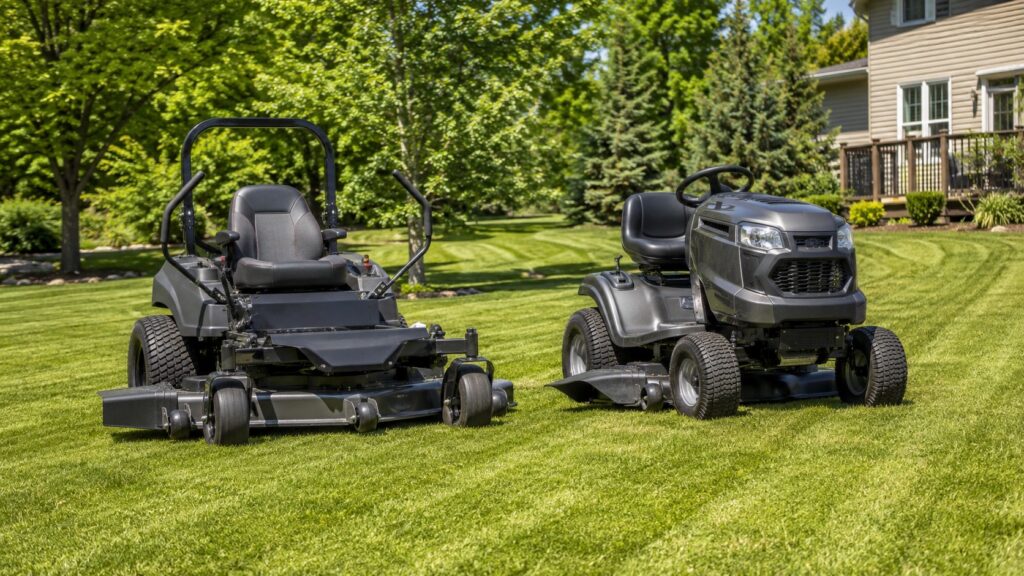
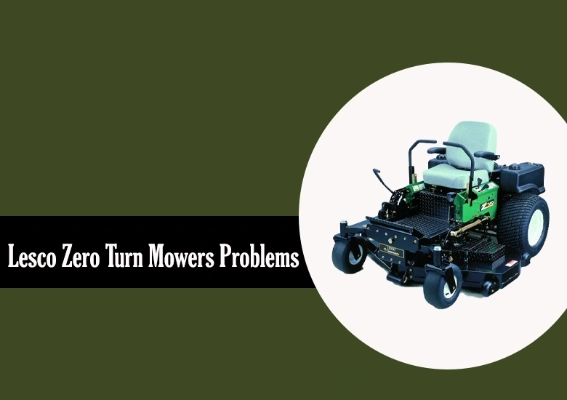
A ZTR mower steers with two independent lap bars or a steering wheel that controls each rear drive wheel separately, letting it spin in place with zero turning radius. A lawn tractor steers like a car – front wheels turn, rear wheels drive. That single difference in steering design is what separates the two machines in almost every practical way: speed, maneuverability, slope handling, and price.
ZTR mowers are built for speed and efficiency around obstacles. Lawn tractors are built for versatility, slope stability, and lower cost of entry.
How Much Does Each Machine Cost?
Entry-level lawn tractors start around $1,200-$1,800 for models like the Craftsman T110 or John Deere E120, which cover yards up to about one acre (John Deere, 2025). Mid-range models with larger decks run $1,800-$2,800.
Entry-level residential ZTR mowers – like the Husqvarna Z254 or Toro TimeCutter 42 – start around $2,500-$3,200 (Husqvarna, 2025). Commercial-grade ZTR mowers can run $7,000-$15,000, though most homeowners have no reason to go there.
| Machine Type | Entry-Level Price | Mid-Range Price | Best Deck Size Range |
|---|---|---|---|
| Lawn tractor | $1,200 – $1,800 | $1,800 – $2,800 | 30 – 46 inches |
| Residential ZTR mower | $2,500 – $3,200 | $3,200 – $5,000 | 42 – 54 inches |
| Commercial ZTR mower | $5,000 – $7,500 | $7,500 – $15,000+ | 48 – 72 inches |
Prices reflect 2025 US retail (Husqvarna, John Deere, Toro, 2025).
Which Machine Cuts Faster?
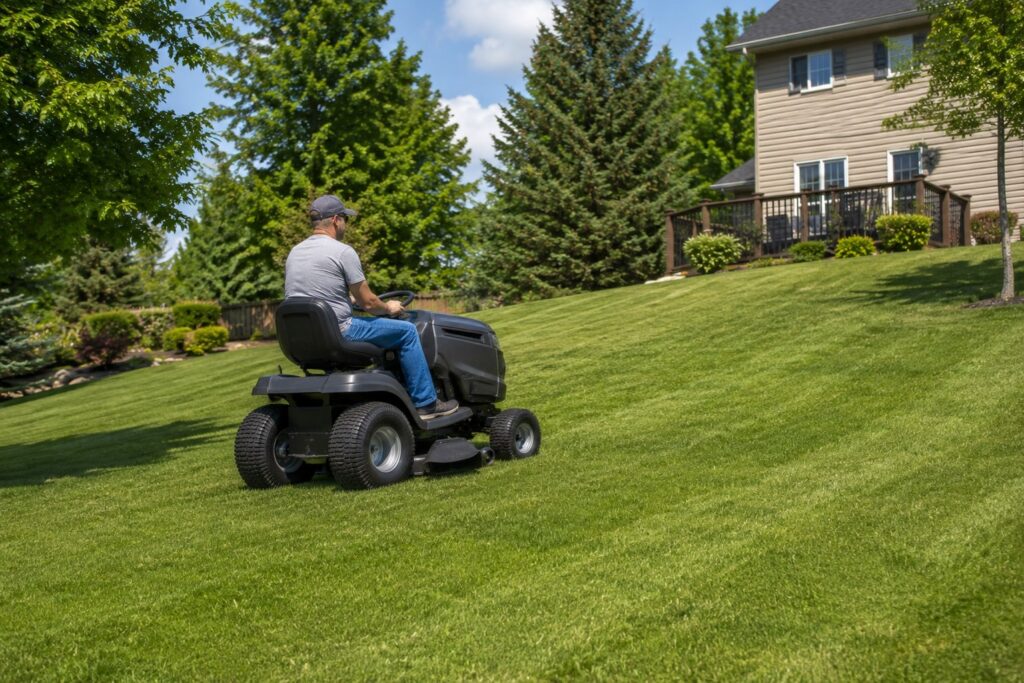
A ZTR mower cuts faster on any yard with obstacles. The zero-turn steering eliminates the 3-5 point turns a lawn tractor needs at the end of each row and around every tree, bed, or fence post. On a one-acre yard with moderate landscaping, most homeowners report cutting time dropping by 30-40% after switching from a lawn tractor to a ZTR (Briggs & Stratton, 2023).
On a wide-open flat yard with no obstacles, the speed difference shrinks. The lawn tractor loses time only at row turns, which matter less when rows are long and uninterrupted.
Which One Handles Hills and Slopes Better?
Lawn tractors handle slopes better. Most residential ZTR mowers are rated safe up to 10-15 degrees of slope because the lap bar steering system reduces the operator’s physical control on a side hill (CPSC, 2023). Lawn tractors, with their front-wheel steering and lower center of gravity relative to the operator position, are generally rated safe up to 15-20 degrees depending on the model.
If your yard has a slope you wouldn’t walk down in dress shoes, a lawn tractor is the safer machine. Some ZTR manufacturers – including Ferris and Bad Boy – now offer models with suspension systems that improve stability, but the baseline safety advantage still belongs to the lawn tractor on grades.
DIY vs. Shop Maintenance: Which Is Easier to Work On?
Both machines use similar small engines – Briggs & Stratton, Kawasaki, and Kohler are common across both categories – so oil changes, spark plug swaps, air filter replacements, and blade sharpening are roughly equal in difficulty.
The one area where lawn tractors are simpler: belt routing. ZTR mowers use more complex drive systems with hydrostatic transmissions on each rear wheel. When a hydrostatic transmission needs service, most homeowners take it to a shop. Lawn tractor transmission repairs are more often DIY-friendly.
| Maintenance Task | Lawn Tractor | ZTR Mower |
|---|---|---|
| Oil change | DIY – easy | DIY – easy |
| Blade sharpening | DIY – easy | DIY – easy |
| Belt replacement | DIY – moderate | DIY – moderate to hard |
| Hydrostatic transmission service | DIY – moderate | Shop recommended |
| Deck leveling | DIY – easy | DIY – easy |
Which One Should You Buy?
Buy a lawn tractor if your yard is under one acre, has any slopes over 10 degrees, or if keeping upfront cost under $2,000 is a real constraint. The Craftsman T225 ($1,699) and John Deere E150 ($2,099) cover most homeowner needs without the complexity of a ZTR drivetrain.
Buy a ZTR mower if your yard is over one acre, mostly flat, and has enough trees, beds, or obstacles that you’re losing 20-30 minutes per mow to turning and trimming passes. The Husqvarna Z254 ($2,799) and Toro TimeCutter 50 ($3,099) are reliable starting points for residential use.
Frequently Asked Questions
How much does a ZTR mower cost compared to a lawn tractor?
ZTR mowers start around $2,500-$3,200 for residential models. Lawn tractors start around $1,200-$1,800. The $1,000-$1,500 price gap is real, and it’s the main reason most first-time buyers choose a lawn tractor (Husqvarna, John Deere, 2025).
Can a ZTR mower handle hills?
Most residential ZTR mowers are safe on slopes up to 10-15 degrees. Beyond that, the steering system reduces your physical control on a side hill and rollover risk increases. For yards with significant slopes, a lawn tractor is the safer choice (CPSC, 2023).
What yard size justifies buying a ZTR mower?
Most equipment dealers and manufacturers recommend ZTR mowers for yards of half an acre or more, with the time savings becoming clear above one acre. Below that, the speed advantage is too small to justify the extra cost.
How long do ZTR mowers last compared to lawn tractors?
Both types last 10-15 years with regular maintenance – annual tune-ups, clean air filters, fresh oil, and proper winter storage. The hydrostatic transmissions on ZTR mowers can be a higher-cost repair if neglected, so consistent maintenance matters more on a ZTR.
Can I use a lawn tractor for anything besides mowing?
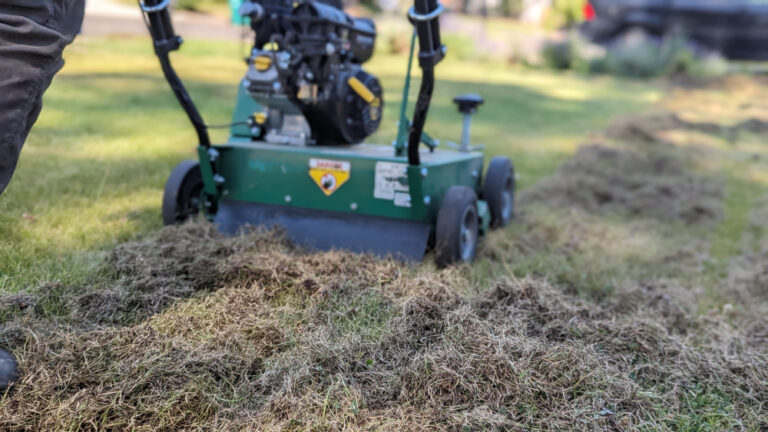
Yes. Most lawn tractors accept attachments: baggers, dethatchers, aerators, carts, snow blades, and spreaders. ZTR mowers have limited attachment compatibility by comparison. If you want one machine for multiple yard tasks, a lawn tractor gives you more flexibility.