Why Is My Grass Turning Yellow: Causes and Fixes

TL;DR
- Yellow grass is most often caused by nitrogen deficiency, overwatering, underwatering, or compacted soil blocking nutrient uptake.
- Yellowing in distinct patches usually points to a pest, fungal disease, or dog urine damage rather than a lawn-wide problem.
- A simple soil test (available at most extension offices for $15-$25) tells you exactly what your lawn is missing before you spend money on fertilizer.
- Cool-season grasses like Kentucky bluegrass yellow in summer heat; warm-season grasses like Bermuda go dormant and yellow in winter – both are normal.
- Most causes are fixable without a lawn service if you identify the right one first.
What Causes Grass to Turn Yellow?
Credit: https://www.lawnstarter.com/
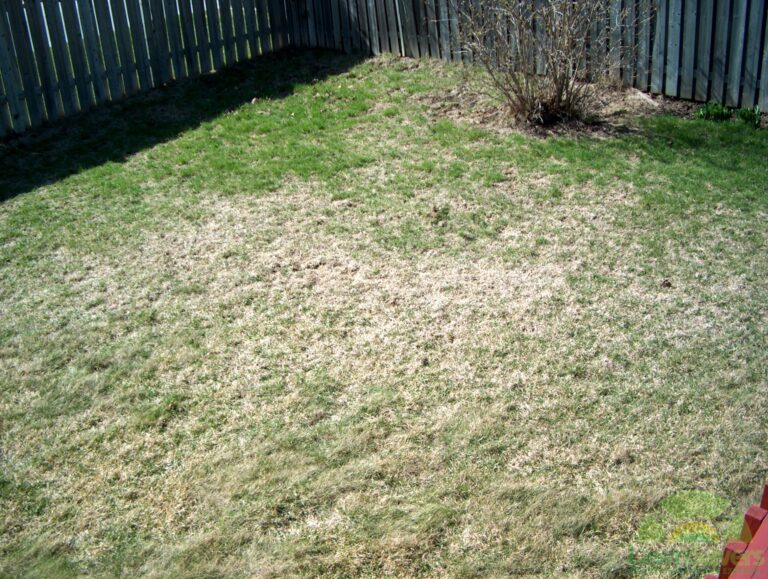
Yellow grass is a symptom, not a single problem. The color change happens when grass blades lose chlorophyll, which is the pigment that keeps them green. Chlorophyll production breaks down when the plant is stressed – whether from a nutrient gap, too much water, too little water, soil problems, pests, or disease.
The fix depends entirely on the cause. Applying fertilizer to a lawn that is actually drowning from overwatering will not help and can make things worse. Start by reading the pattern of the yellowing, then match it to the most likely cause below.
Nitrogen Deficiency: The Most Common Reason Grass Turns Yellow
Nitrogen deficiency is the leading cause of yellow grass in home lawns. Nitrogen is the primary driver of green color and leaf growth, and most soils deplete it faster than homeowners expect – especially after heavy rain, which flushes nitrogen out of the root zone.
Signs of nitrogen deficiency: yellowing starts at older, lower blades first and moves upward; the entire lawn looks pale or faded rather than patchy; growth has slowed noticeably.
Fix it by applying a balanced slow-release nitrogen fertilizer. For most cool-season lawns, a 32-0-10 or 24-0-8 formula applied in early spring and fall covers the base need. Warm-season grasses like Bermuda and Zoysia respond better to fertilizer applications between late spring and midsummer. Always follow package rates – over-applying nitrogen burns grass and creates a different kind of yellowing with brown tips.
Overwatering and Poor Drainage: When Too Much Water Turns Grass Yellow
Overwatering is the second most common cause, and it is easy to misread because the symptoms look a lot like drought stress. Waterlogged soil pushes oxygen out of the root zone, which suffocates roots and prevents them from absorbing the nutrients already in the soil.
Signs of overwatering: grass feels spongy underfoot; soil stays wet 24-48 hours after watering; mushrooms or moss appear; yellowing is widespread and not tied to heat or drought periods.
Fix it by cutting watering frequency immediately. Most established lawns need 1 to 1.5 inches of water per week total, including rainfall (Turfgrass Water Conservation Alliance, 2023). Water deeply and infrequently – two sessions per week at most – rather than shallow daily watering. If drainage is the root problem, core aeration in fall or spring opens up compacted soil and improves water movement.
Drought and Heat Stress: Normal Yellowing You May Not Need to Fix
Cool-season grasses – Kentucky bluegrass, tall fescue, perennial ryegrass – go semi-dormant and yellow during prolonged summer heat above 90°F. Warm-season grasses – Bermuda, Zoysia, St. Augustine – do the same thing in winter once temperatures drop consistently below 50°F. Both are survival responses, not lawn failures.
Signs of dormancy yellowing: the entire lawn yellows uniformly; it follows a heat wave or first cold snap; the grass recovers on its own when temperatures normalize.
If you are in a drought period, water at 1 to 1.5 inches per week to prevent dormancy from becoming permanent damage. Do not fertilize dormant grass – it cannot use the nutrients and the salt load stresses roots further.
Yellow Patches: Pests, Disease, and Dog Urine
Credit: moowy.co.uk
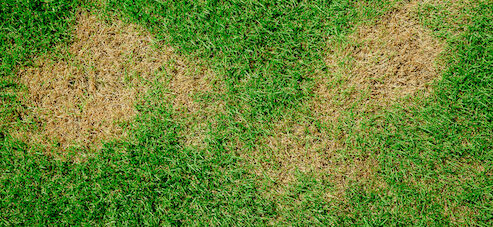
Patchy yellowing – irregular spots rather than lawn-wide fading – almost always points to a localized cause.
Grubs: White grub larvae (the offspring of Japanese beetles, June bugs, and chafers) feed on grass roots through late summer. Affected areas feel spongy, pull up like loose carpet, and yellow in irregular patches. Confirm by cutting a one-square-foot section 3 inches deep – more than 5 grubs per square foot warrants treatment (University of Maryland Extension, 2023). Preventive grub controls like imidacloprid work best applied in June before eggs hatch.
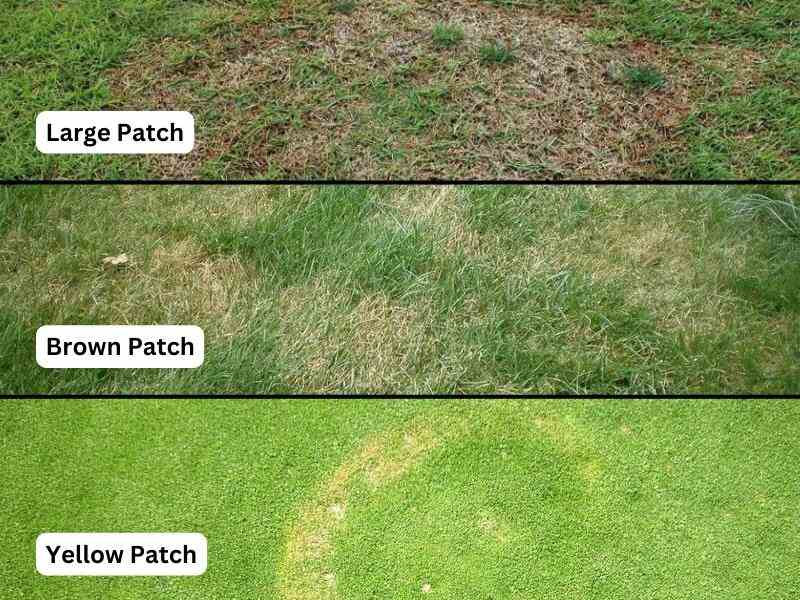
Fungal disease: Brown patch, dollar spot, and rust all produce yellow or tan patches with distinct shapes. Brown patch creates circular rings; dollar spot makes silver-dollar-sized spots; rust coats blades with an orange-yellow powder that rubs off on your shoes. Fungal issues are more common during warm, humid weather with poor air circulation. A targeted fungicide (Scott’s DiseaseEx or similar) controls active outbreaks; improving drainage and mowing height prevents recurrence.
Dog urine: Dog urine creates bright yellow or straw-colored spots surrounded by a dark green ring – the nitrogen in diluted urine fertilizes the border while the concentrated center burns. The pattern is the giveaway. Flush affected spots with water immediately after the dog uses the area to dilute the nitrogen load.
Soil Compaction and pH Problems Block Nutrient Uptake
Grass can turn yellow even when nutrients are present in the soil if the roots cannot access them. Compacted soil physically restricts root growth. Soil pH outside the 6.0-7.0 range locks nutrients into forms the plant cannot absorb – iron deficiency in particular causes yellowing in high-pH (alkaline) soils, a condition called iron chlorosis.
A basic soil test identifies both issues. Most state cooperative extension offices offer testing for $15-$25 and return results with specific amendment recommendations. If pH is too high, sulfur applications bring it down over one to two seasons. Compaction responds to annual core aeration – a 48-inch core aerator rented from Home Depot runs about $70-$90 per day.
Yellow Grass Diagnosis at a Glance
| Yellowing Pattern | Most Likely Cause | First Step |
|---|---|---|
| Entire lawn, pale and uniform | Nitrogen deficiency | Apply slow-release nitrogen fertilizer |
| Entire lawn, spongy and wet | Overwatering | Reduce watering frequency |
| Entire lawn, follows heat or cold snap | Seasonal dormancy | Water at 1-1.5 in/week; wait for temps to normalize |
| Irregular patches, grass pulls up easily | Grub damage | Dig and count grubs; treat if 5+ per sq ft |
| Circular or shaped patches | Fungal disease | Apply targeted fungicide; improve drainage |
| Small spots with dark green ring | Dog urine | Flush with water immediately after use |
| Lawn-wide yellowing despite fertilizer | Soil pH or compaction | Run a soil test; aerate compacted areas |
Frequently Asked Questions
Why is my grass turning yellow after I fertilized it?
Fertilizer burn is the likely cause. Applying too much nitrogen at once – or fertilizing when the soil is dry – pulls moisture out of grass roots through osmosis, which turns blades yellow or brown at the tips. Water the lawn thoroughly immediately after fertilizing and follow package rate instructions exactly. If yellowing appeared within a few days of application, flush the area with water to dilute the nitrogen load.
Can yellow grass turn green again?
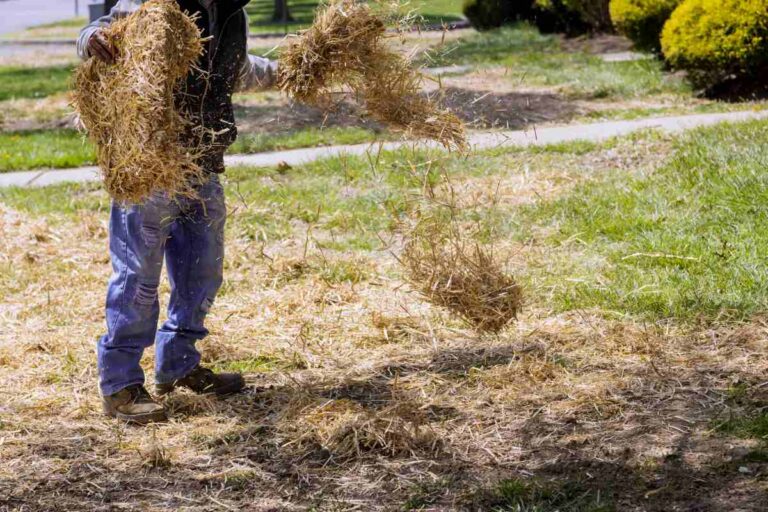
Yes, in most cases. Nitrogen-deficient grass greens up within 7-14 days of a proper fertilizer application. Dormant grass recovers on its own when temperatures return to the right range. Disease and pest damage takes longer – typically two to four weeks after treatment – and severely damaged areas may need overseeding to fill back in fully.
How much water does grass need to stay green?
Most lawns need 1 to 1.5 inches of water per week from rain and irrigation combined (Turfgrass Water Conservation Alliance, 2023). Water in two sessions per week rather than daily to encourage deep root growth. Early morning watering reduces evaporation loss and lowers fungal risk compared to evening watering.
Why is my grass yellow in patches but green everywhere else?
Patchy yellowing points to a localized cause: grub activity, fungal disease, dog urine, or a buried obstruction blocking roots and drainage. Check the patch closely – if the grass pulls up with no resistance, suspect grubs. If the patch has a defined geometric shape or powdery coating, suspect fungal disease. If there is a dark green ring around a straw-colored center, suspect dog urine.
Should I mow yellow grass?
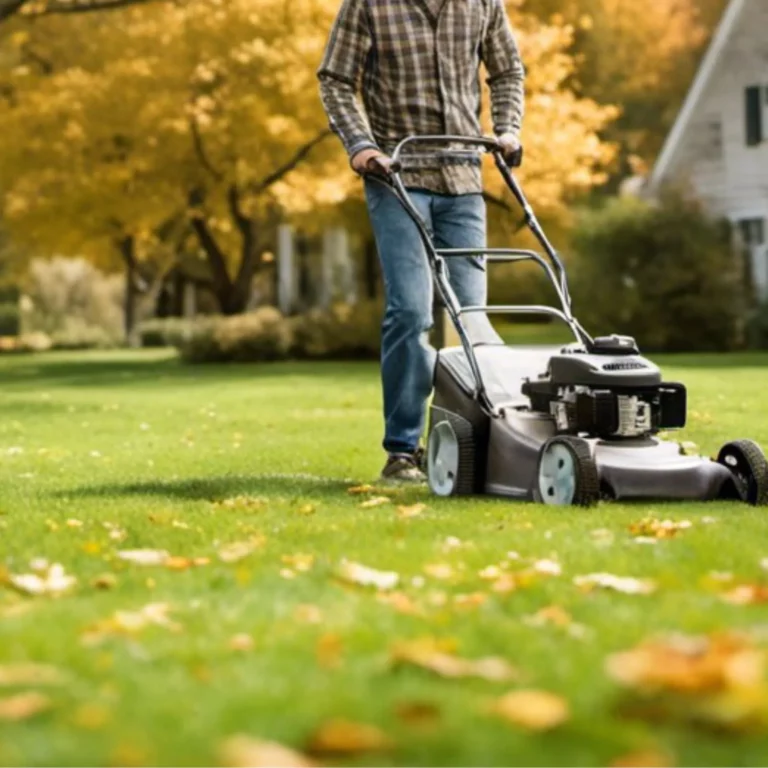
Yes, but raise the mowing height. Cutting yellow or stressed grass short removes leaf area the plant needs for photosynthesis, which slows recovery. Set the deck to 3.5-4 inches for cool-season grasses and 2-2.5 inches for warm-season grasses during stress periods. Never remove more than one-third of the blade height in a single mow.
What is the fastest way to fix yellow grass?
Identify the cause first – treating the wrong problem wastes time and money. If nitrogen deficiency is confirmed, a fast-release nitrogen fertilizer like Scotts Turf Builder shows visible greening within 5-7 days. For everything else, the fastest path is the right diagnosis followed by the right treatment rather than the most aggressive one.