Why Is My Lawn Dying? How to Diagnose and Fix

TL;DR
- The most common reasons a lawn dies are drought stress, compacted soil, pest damage (especially grubs), fungal disease, and scalping from mowing too short.
- Brown patches that pull up like a loose rug often signal grub damage – check by lifting a 1-square-foot section of turf.
- Watering deeply but infrequently (1 inch per week) fixes most drought-related dieback faster than daily shallow watering (University of California Agriculture and Natural Resources, 2023).
- Fungal disease spreads fast in humid weather – it looks like irregular brown or yellow rings and gets worse with evening watering.
- Most lawn problems are fixable without a landscaper if you catch them early.
What’s Actually Killing Your Lawn (And How to Tell)
Credit: https://plantsod.com/
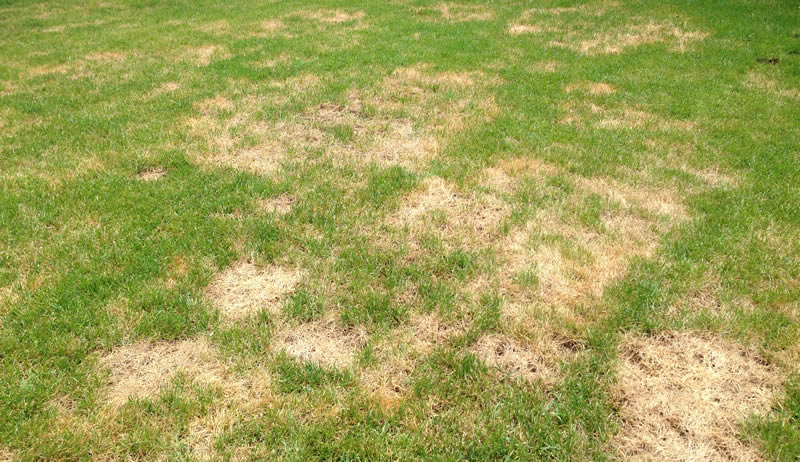
Most dying lawns have one of six causes: drought stress, poor soil, grub or insect damage, fungal disease, wrong mowing height, or fertilizer burn. The fastest way to narrow it down is to look at the pattern. Uniform yellowing across the whole lawn usually points to drought or a soil problem. Irregular patches or rings suggest disease or pests.
Pull a handful of grass from a dead patch. If the roots are brown and the turf lifts easily with no resistance, grubs are the likely cause. If the roots are intact but the blades are brown or straw-colored, the problem is above ground – drought, disease, or mowing damage.
How Drought Stress Kills Grass and How to Fix It
Drought stress is the most common cause of a dying lawn in summer, and it’s also the easiest to reverse if you act before the grass goes fully dormant. Grass under drought stress turns a dull blue-gray first, then yellow, then brown. Footprints that stay visible after you walk across the lawn are an early sign the grass can’t recover its shape – a reliable indicator the soil is too dry (Purdue University Extension, 2022).
Fix: Water deeply once or twice per week rather than a little every day. The goal is 1 inch of water per week total, delivered in fewer, longer sessions so moisture reaches 4-6 inches into the soil where roots actually grow. A tuna can placed in the sprinkler zone measures when you’ve hit 1 inch.
Why Compacted Soil Slowly Suffocates Your Lawn
Compacted soil blocks water, air, and nutrients from reaching grass roots. It’s common in high-traffic yards, clay-heavy soils, and lawns that have never been aerated. The grass doesn’t die overnight – it thins out gradually, especially in areas where people or pets walk regularly.
Fix: Core aeration once a year in the fall for cool-season grasses (fescue, bluegrass, ryegrass) or in late spring for warm-season grasses (Bermuda, zoysia) pulls small plugs of soil out and opens the ground back up. Rent a core aerator from Home Depot or Lowe’s for around $70-$90 per day, or hire a lawn service for $75-$200 depending on yard size (Angi, 2024).
How to Tell If Grubs Are Destroying Your Lawn from Below
White grubs are the larvae of beetles – Japanese beetles, June bugs, and masked chafers are the most common culprits in the USA. They feed on grass roots just below the soil surface from late summer through fall, and the damage looks like irregular brown patches that roll back like a carpet.
Fix: Dig up a 1-square-foot section about 3 inches deep in a dead patch. If you find 5 or more grubs per square foot, treatment is worth it. Scotts GrubEx (active ingredient: chlorantraniliprole) applied in late spring before eggs hatch is the most effective timing. It’s available at most hardware stores for around $20-$30 for a 5,000 sq ft bag.
Why Fungal Disease Spreads Fast and What to Do About It
Credit: https://www.lawnbuddies.com/
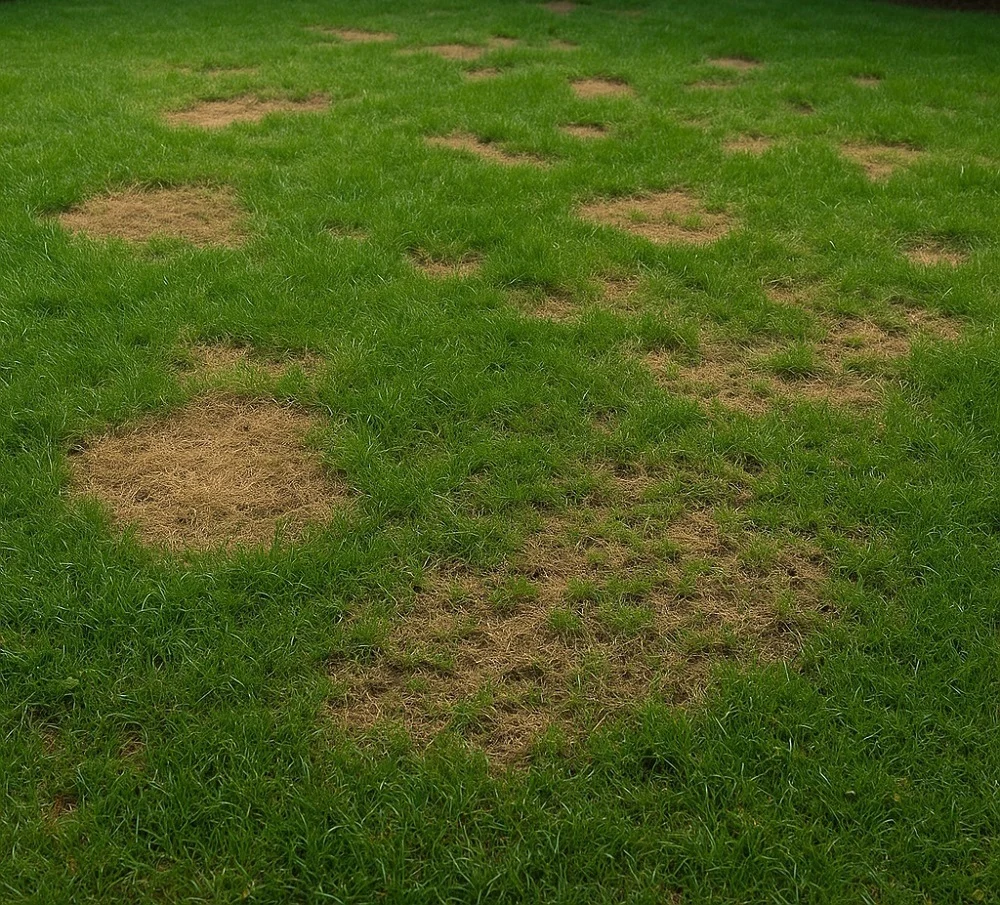
Lawn fungus thrives in warm, humid weather with poor air circulation – exactly the conditions of a typical American summer. Dollar spot, brown patch, and red thread are the three most common fungal diseases in home lawns. Dollar spot leaves silver-dollar-sized dead circles. Brown patch creates large irregular rings, sometimes with a darker border. Red thread shows pink or red threads on the grass blades.
Fix: Water in the morning so blades dry before nightfall. Fungal diseases spread dramatically faster when grass stays wet overnight. For active infections, a contact fungicide like Scotts DiseaseEx (about $20 for 5,000 sq ft at Lowe’s) controls most common turf fungi within two to three applications.
How Mowing Too Short Kills Grass Over Time
Cutting grass shorter than its recommended height – called scalping – removes too much of the blade at once. Grass blades are how the plant photosynthesizes. Cut too much off and the plant can’t produce enough energy to sustain root growth. Scalped lawns turn brown fast, especially in heat.
The correct mowing height by grass type:
| Grass Type | Recommended Height | Never Cut Below |
|---|---|---|
| Tall fescue | 3.5-4 inches | 2.5 inches |
| Kentucky bluegrass | 2.5-3.5 inches | 2 inches |
| Bermuda grass | 1-1.5 inches | 0.75 inches |
| Zoysia | 1-2 inches | 0.75 inches |
| St. Augustine | 3.5-4 inches | 2.5 inches |
Rule of thumb: never remove more than one-third of the blade height in a single mow, regardless of grass type (Oregon State University Extension, 2021).
Common Mistakes That Make a Dying Lawn Worse
- Overwatering after diagnosis: More water is not always the answer. If the problem is fungal disease or root rot, extra water accelerates the damage. Diagnose first, then water.
- Fertilizing stressed or dormant grass: Applying fertilizer to drought-stressed or heat-damaged turf causes fertilizer burn, which compounds the damage. Wait until the lawn shows signs of recovery.
- Skipping the soil test: Most lawn problems trace back to pH imbalance or nutrient deficiency. A basic soil test from your county extension office costs $10-$20 and tells you exactly what the lawn is missing (USDA, 2023).
Frequently Asked Questions
Why is my lawn dying in patches?
Patchy dieback usually points to grubs, fungal disease, or localized drought stress. Lift a section of dead turf – if roots are gone and the turf peels up easily, check for grubs. If roots are intact but blades are brown, look for fungal signs like rings or discoloration patterns.
Can a dead lawn come back?
Grass that has gone dormant from drought or heat stress can recover with consistent watering over two to four weeks. Grass that is fully dead at the root level won’t recover and needs reseeding or sodding. The distinction matters: dormant grass is tan and stiff but roots are still white and firm.
How much water does a dying lawn need?
1 inch of water per week is the standard target for most cool-season and warm-season grasses in the USA. Deliver it in two sessions rather than seven shallow ones. Early morning watering reduces evaporation and fungal risk compared to evening watering (University of California Agriculture and Natural Resources, 2023).
What does grub damage look like vs. drought damage?
Grub damage creates patches that lift off the soil like loose carpet because the roots have been eaten through. Drought damage leaves the roots intact – the turf stays anchored even when brown. If you can peel up a patch of dead grass with your hand, pull it back and look for C-shaped white larvae.
When should I call a lawn care professional?
Call a pro if the damage covers more than 30-40% of the lawn, if you’ve tried watering and mowing adjustments with no improvement after three to four weeks, or if you suspect a disease that’s actively spreading. A lawn care service can diagnose and treat most problems for $75-$200 per visit (Angi, 2024).