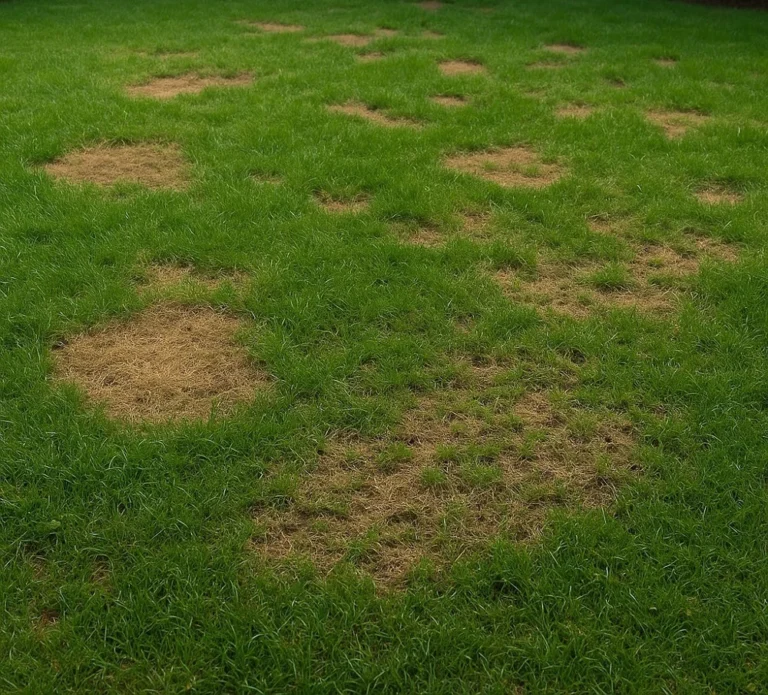
Why Grass Stops Growing Even When You Water It: 6 Real Causes

TL;DR
- Grass stops growing when soil temperature drops below 50°F or rises above 90°F, regardless of how much water you apply (University of Maryland Extension, 2023).
- Summer browning is usually dormancy, not death – most cool-season grasses go dormant to survive heat stress and will recover when temperatures drop.
- Compacted soil, nitrogen deficiency, and thatch buildup are three common problems that block growth even when irrigation is consistent.
- Watering frequency matters less than watering depth: 1 inch per week applied in two sessions reaches the root zone far better than daily light sprinkles.
- If your grass hasn’t recovered after 6 weeks of ideal conditions, a soil test is the fastest way to find the actual problem.
Why Watering Alone Does Not Make Grass Grow

Credit: https://www.owentree.com/
Water is one input. Grass needs four others to grow: adequate soil temperature, available nutrients, oxygen at the root zone, and enough light. When any one of those is missing, the grass stops growing – and more water won’t substitute for what’s actually lacking.
This is the core disconnect most homeowners run into. You’re doing one thing right, but something else is the bottleneck. The six causes below are the most common reasons grass stalls despite regular watering.
Soil Temperature Is Outside the Growth Range
Grass growth shuts down at temperature extremes, and soil temperature is the trigger – not air temperature. Cool-season grasses like Kentucky bluegrass, tall fescue, and perennial ryegrass grow actively when soil temperature sits between 50°F and 65°F (University of Maryland Extension, 2023). Warm-season grasses like Bermuda and zoysia need soil at 65°F to 95°F to grow well.
When soil drops below those thresholds in fall or climbs above them in midsummer, the grass simply goes dormant or pauses growth. Pouring water on dormant turf doesn’t wake it up any faster.
You can check soil temperature with an inexpensive probe thermometer – the kind used for composting works fine. Push it 2-3 inches into the soil and read it in the morning for the most accurate picture.
Your Grass Is Dormant, Not Dead
Dormancy is a survival state, not a death sentence. Cool-season grasses go dormant in hot summers; warm-season grasses go dormant in cold winters. In both cases the crown of the plant (the growing point just above the soil surface) stays alive even when the blades turn brown.
The mistake is panicking and overwatering dormant grass. Applying 2-3 inches of water per week to a lawn that has intentionally gone dormant can actually trigger disease by keeping the soil wet without the growth to use it.
If you’re in a summer heat stretch and you want to keep cool-season grass from going fully dormant, apply about 1 inch of water per week to keep the crowns alive – enough to maintain survival without forcing growth the plant can’t sustain (Purdue University Turfgrass Science, 2022).
Compacted Soil Is Blocking Root Growth

credit: https://blog.nutrilawn.com/
Compacted soil is one of the most overlooked reasons grass stops growing. When soil particles are pressed together tightly – from foot traffic, heavy clay content, or repeated mowing on wet ground – water pools on the surface instead of soaking down to the roots.
The result looks like drought stress even when you’re watering consistently. The roots can’t get air or water past the compacted layer, so growth stalls.
The standard fix is core aeration: a machine pulls small plugs of soil out of the ground, opening channels for water, air, and fertilizer to reach the root zone. Most lawn care professionals recommend aerating cool-season lawns in early fall and warm-season lawns in late spring (Scotts Lawn Care Guide, 2024). You can rent a walk-behind aerator from Home Depot or Lowe’s for around $75-$90 per day (estimate based on national rental averages, 2024).
Nitrogen Is Too Low to Support Leaf Growth
Grass needs nitrogen to produce the chlorophyll that drives growth. Without it, the lawn turns pale green or yellow and stops putting out new blades – even with plenty of water available.
A basic soil test (available through your state’s cooperative extension office for $15-$25) will tell you whether nitrogen, phosphorus, or potassium is short. Most extension offices will also give you a specific application rate for your grass type and square footage.
If you’ve already confirmed low nitrogen and want a fast response, a quick-release fertilizer like a 32-0-4 blend applied at the label rate will show results within 7-10 days on actively growing turf. Slow-release options like Milorganite or Scotts Natural Lawn Food feed more gradually over 6-8 weeks and carry less risk of burning the lawn if you apply too much.
Thatch Is Blocking Water from Reaching the Roots
Thatch is the layer of dead and decomposing organic matter that builds up between the grass blades and the soil surface. A thin layer (under 1/2 inch) is normal and even beneficial. Once it exceeds 3/4 inch, it acts like a sponge that absorbs irrigation water before it ever reaches the roots.
You can check thatch depth by pulling a small plug of turf and measuring the brown, spongy layer above the soil. If it’s thicker than your thumb, dethatching is likely overdue.
Power raking or vertical mowing removes thatch mechanically. For cool-season grasses, do this in early fall. For warm-season grasses, late spring is the right window, when the grass is actively growing and can recover quickly.
Watering Depth Is Too Shallow to Matter
Shallow, frequent watering trains grass roots to stay near the surface, where they’re most vulnerable to heat and drought. If you’re watering every day for 10 minutes, you may be keeping the top inch of soil moist while the root zone 3-4 inches down stays completely dry.
The goal is 1 inch of water per week, applied in two sessions of roughly 0.5 inches each. To calibrate your sprinkler system, place empty tuna cans around the lawn while it runs and measure how long it takes to collect 0.5 inches.
Clay soils absorb water slowly. If you see runoff before reaching the half-inch mark, break the session into two shorter cycles 30-60 minutes apart on the same day.
Common Mistakes That Make the Problem Worse
- Watering every day in small amounts keeps roots shallow and weak, making the grass more prone to heat stress and disease than a twice-weekly deep soak would.
- Applying fertilizer to dormant grass is mostly wasted – the nutrients sit in the soil and risk leaching into groundwater before the grass can absorb them.
- Mowing stressed or drought-affected grass too short removes the leaf area the plant needs to recover. Raise the deck to 3.5-4 inches during heat stress or slow-growth periods.
- Ignoring pH: grass grows poorly when soil pH falls outside the 6.0-7.0 range, and no amount of watering or fertilizing will fully fix that until the pH is corrected with lime or sulfur.
Frequently Asked Questions
Why does grass stop growing even when you water it regularly?
Grass stops growing when soil temperature is outside its active growth range, when roots can’t access water due to compaction or thatch, or when the lawn is in dormancy. Water is one of five requirements for growth – temperature, nutrients, light, and oxygen are the others, and any one of them can stall the lawn regardless of irrigation.
How do I know if my grass is dormant or dead?
Tug on a handful of brown grass blades. If the blades pull out easily without any resistance and the crown (the white base at soil level) comes with them, the grass is likely dead. If the crown stays in the ground and feels firm, the grass is dormant and should recover when conditions improve.
How much water does grass actually need per week?
Most grasses need 1 inch of water per week from rainfall and irrigation combined (University of California Agriculture and Natural Resources, 2023). That’s best delivered in two sessions of 0.5 inches each, applied deeply enough to wet the soil 4-6 inches down.
When should I do a soil test if my grass won’t grow?
Do a soil test before you apply any fertilizer or soil amendment. Testing first tells you exactly what’s short instead of guessing. State cooperative extension offices offer tests for $15-$25 and return results with specific product recommendations for your grass type and region.
Can too much water stop grass from growing?
Yes. Overwatering saturates the root zone and pushes out the oxygen grass roots need to function. It also creates conditions where fungal diseases like brown patch and pythium blight thrive. The grass may look stressed for the same reason it would under drought: the roots can’t do their job properly.
What grass types go dormant in summer?
Cool-season grasses go dormant in summer heat, including Kentucky bluegrass, tall fescue, fine fescue, and perennial ryegrass. They typically brown out when daytime temperatures stay above 85-90°F for extended periods. Warm-season grasses like Bermuda, zoysia, St. Augustine, and centipede go dormant in winter when soil temperature drops below 55°F.