White Smoke From a Lawn Mower: Causes and How to Fix It

TL;DR
- White smoke from a lawn mower almost always means the engine is burning oil, not coolant — unlike in cars.
- The most common cause is an overfilled crankcase; check the oil level before anything else.
- A tipped mower, a blown head gasket, or worn piston rings can also push oil into the combustion chamber.
- 2-stroke engines burning white smoke usually have a wrong fuel-to-oil mix ratio.
- Most causes are DIY-fixable in under an hour; a blown head gasket or worn rings may need a shop.
Key Takeaways
- White smoke means burning oil in virtually every lawn mower scenario.
- Too much oil in the crankcase is the single most common cause and the easiest to fix.
- Tipping a 4-stroke mower on its side — to clean the deck or sharpen the blade — can flood the combustion chamber with oil temporarily.
- A head gasket failure produces persistent white or blue-white smoke and usually requires professional repair.
- Running a 2-stroke engine on straight gasoline instead of a premixed fuel will cause heavy white smoke and rapid engine damage.
What White Smoke From a Lawn Mower Actually Means

Credit: https://lawn.com.au/
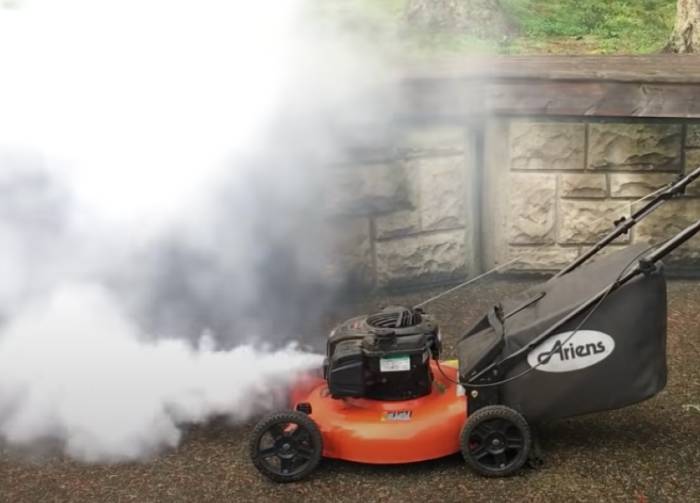
White smoke from a lawn mower means the engine is burning oil inside the combustion chamber. On a car, white smoke often points to coolant — but nearly all residential lawn mower engines are air-cooled and have no coolant system. If your mower is smoking white, oil is getting somewhere it should not be.
The color can help narrow the cause. True white smoke is usually unburned oil mist. Blue-white smoke is partially burned oil. Both point to the same category of problem. Black smoke is a different issue entirely — that indicates a fuel mixture problem, not oil.
The Most Common Causes of White Smoke — and How to Fix Each One
Too Much Oil in the Crankcase
Overfilling the crankcase is the most common reason a 4-stroke mower smokes white. When the oil level is too high, the crankshaft splashes through it and pushes oil past the rings and into the combustion chamber, where it burns off as white or blue-white smoke.
How to fix it: Check the oil level with the dipstick on a flat surface with the engine cold. The oil should sit between the two marks — not above the upper mark. If it is overfilled, drain the excess using a turkey baster or oil extractor pump through the dipstick tube. Start the mower and let it run for a few minutes. The remaining smoke should clear on its own.
Mower Was Tipped on Its Side
If you tipped the mower to clean the deck or work on the blade, oil almost certainly ran into the combustion chamber or air filter housing. This produces a burst of white smoke on the next startup that usually clears within a few minutes.
How to fix it: Check the air filter first — if it is soaked with oil, replace it before running the engine again. A saturated air filter will keep feeding oil smoke into the engine. If the filter is dry or only lightly oiled, let the mower run at low throttle on flat ground for two to three minutes. The smoke should stop once the pooled oil burns off. Always tip a 4-stroke mower with the air filter side up to prevent this.
Wrong Fuel Mix in a 2-Stroke Engine
2-stroke engines — common in handheld trimmers, some older push mowers, and certain commercial walk-behinds — require a specific gasoline-to-oil mix, typically 50:1 (2.6 oz of 2-stroke oil per 1 gallon of gas). Running straight gasoline, or a mix that is too oil-heavy, causes heavy white smoke and will damage the engine fast.
How to fix it: Drain the fuel tank completely. Mix fresh fuel at the correct ratio specified in the owner’s manual — this varies by engine, so check before mixing. Refill and restart. If the engine was run dry of oil for any period, check the manufacturer’s guidance on whether the engine needs inspection before continued use.
Blown Head Gasket
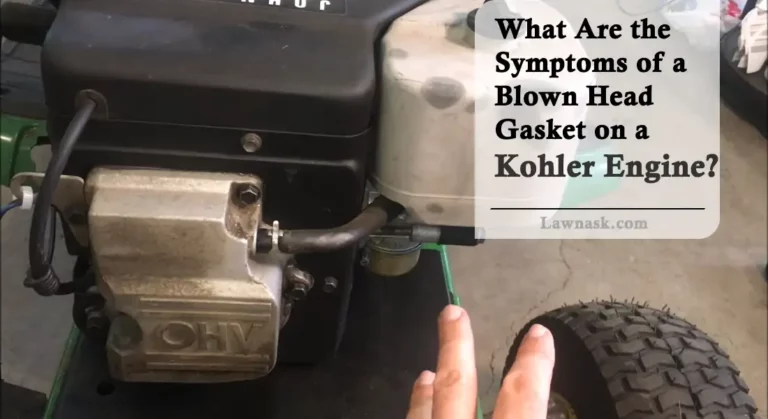
A head gasket seals the combustion chamber from the rest of the engine. When it fails, oil leaks past the seal and into the cylinder, where it burns. The smoke from a blown head gasket is persistent — it does not clear after a few minutes the way tipping-related smoke does. You may also notice the engine losing power, running rough, or oil weeping around the cylinder head.
How to fix it: This is the repair most likely to need a shop. A head gasket replacement on a small engine typically costs $100-$200 in parts and labor (Angi, 2024). If you are comfortable with small engine work, replacement gaskets for common engines like the Briggs & Stratton 550e or Honda GCV160 are available at most hardware stores for under $20. The job requires removing the cylinder head, cleaning the mating surfaces, replacing the gasket, and torquing the head bolts to spec — typically 140-200 in-lbs depending on the engine (consult the engine service manual for the exact value).
Worn Piston Rings
Piston rings seal the gap between the piston and cylinder wall. When they wear out, oil from the crankcase gets past the rings and into the combustion chamber. The smoke is blue-white and ongoing, often heavier at startup and on acceleration. This is more common on older mowers or engines that have run low on oil repeatedly.
How to fix it: Worn rings are a significant repair — more involved than a head gasket on most small engines. On a mower that is more than 10 years old or has a deeply worn engine, the honest answer is that repair cost often exceeds replacement value. A small engine shop can do a cylinder inspection and give you a straight answer. If the mower is newer, ring replacement with a cylinder hone is a legitimate repair but requires disassembling the engine block.
White Smoke Diagnosis at a Glance
| Cause | Smoke Pattern | DIY Fix | Difficulty |
|---|---|---|---|
| Overfilled oil | Starts smoking, may clear slowly | Drain excess oil | Easy |
| Tipped mower | Brief burst at startup, clears fast | Replace air filter if soaked | Easy |
| Wrong 2-stroke mix | Heavy, continuous | Drain and remix fuel | Easy |
| Blown head gasket | Persistent, does not clear | Replace gasket | Moderate-Hard |
| Worn piston rings | Ongoing, worse at startup | Engine teardown or replace | Hard |
Common Mistakes That Make White Smoke Worse
Credit: https://lawnmanual.com/
- Adding more oil when the crankcase is already full: More oil makes the smoke worse, not better. Always check the level before topping off.
- Running the engine to “burn off” a soaked air filter: A filter soaked in oil will not clear on its own — it feeds the problem. Replace it.
- Ignoring persistent smoke: Brief white smoke at startup after a tip-over is normal. Smoke that continues for more than five minutes of running is a signal to shut the engine down and diagnose before continuing.
Frequently Asked Questions
Is white smoke from a lawn mower dangerous?
White smoke is a sign of burning oil, which means the engine has a problem that needs attention. Running a mower with a serious oil leak — from a blown gasket or worn rings — can cause permanent engine damage in a short time. Shut it down, find the cause, and fix it before the next use.
How long does white smoke last after tipping a mower?
White smoke from a tipped 4-stroke mower typically clears within two to five minutes of running at low throttle on flat ground, assuming the air filter is not soaked with oil. If it lasts longer than that, check the oil level and the air filter.
Can I still use my mower if it is smoking white?
It depends on the cause. If the smoke is from an overfill or a recent tip-over and it clears quickly, the mower is fine to use after the smoke stops. If the smoke is persistent and does not clear, do not continue using the mower — ongoing oil burning can damage cylinder walls and accelerate engine wear.
How much does it cost to fix white smoke from a lawn mower?
An overfill fix costs nothing. A replacement air filter runs $5-$15. A head gasket repair at a shop typically costs $100-$200 (Angi, 2024). Piston ring replacement can run $150-$300 or more depending on the engine, and on older mowers it often makes more economic sense to replace the mower.
Does white smoke mean I need a new lawn mower?
Not automatically. Most white smoke causes — overfill, tipping, wrong 2-stroke mix — are free or near-free to fix. A blown head gasket is repairable. Worn piston rings on an older mower are the one scenario where replacement often makes more financial sense than repair.