How to Dispose of a Lawn Mower: Gas, Electric, and Riding Mowers

TL;DR
- You cannot put a lawn mower in regular curbside trash — most municipal pickup services will not take it, and in some areas you can be fined for trying
- Before disposal, drain all gas and oil from a gas-powered mower; remove the battery from an electric mower
- Working mowers can be sold on Facebook Marketplace or donated to Habitat for Humanity ReStores, Goodwill, or local nonprofits
- Non-working mowers go to a scrap metal yard, your municipal household hazardous waste (HHW) facility, or a junk removal service
- Use Earth911.com to find the nearest recycling or HHW drop-off location for your ZIP code
Why You Cannot Just Throw Away a Lawn Mower

Most city garbage pickup services will not accept old lawn mowers left on the curb, and in many areas you could face a fine for improper disposal. Gas and oil residue inside the mower count as hazardous waste under most municipal codes.
Since most lawn mowers are made from metal and hard plastic parts, they are technically recyclable — but it is not as simple as tossing one into your blue curbside recycling bin. The process takes a few extra steps depending on whether your mower runs on gas or electricity.
Step 1: Prepare the Mower Before Anything Else
Drain fluids before the mower goes anywhere. Skipping this step can get your mower rejected at a recycling center or create a safety hazard during transport.
For gas-powered mowers:
- Run the engine until it stalls from an empty tank, or use a hand pump to pull remaining fuel into a sealed container
- Drain the oil by tilting the mower (check your owner’s manual for the correct direction) and draining into a clean container
- Take the drained oil to a local auto parts store or mechanic — many will recycle it for you at no charge
- Take the gasoline and the oil together to your municipal household hazardous waste (HHW) disposal facility; find yours by checking your city’s website or calling your waste management department
- Disconnect the spark plug wire before handling the blade or deck
For electric mowers:
- Remove the battery and take it to a local e-waste recycling facility for proper disposal; the mower body can then typically be taken to a recycling center or landfill
- Many communities have specific drop-off locations for e-waste — locate e-waste recycling facilities in your area through Earth911 or your city’s waste management site
Step 2: Decide What to Do Based on Whether It Still Runs
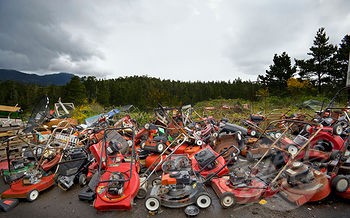
The condition of your mower determines which path makes sense. A working mower has real value; a dead one still has scrap value.
| Mower Condition | Best Options |
|---|---|
| Working push mower | Sell (Facebook Marketplace, Craigslist), donate, give away |
| Working riding mower | Sell, independent dealer trade-in, donate |
| Non-working but intact | Scrap yard, junk removal service, municipal bulk pickup |
| Non-working electric | E-waste facility (battery), scrap yard or junk service (body) |
| Riding mower, any condition | Junk removal service, scrap yard, dealer trade-in |
How to Sell a Working Lawn Mower
List your mower for sale in the spring or summer, when people are actively doing yard work. Take clear photos including underneath the deck and the blades, and write an honest description of the condition. Facebook Marketplace is a reliable platform, but OfferUp, Craigslist, NextDoor, and UsedMowersOnline are also worth trying.
Be specific in your listing: name the brand (Toro Recycler, Honda HRX217, Husqvarna LC221RH), the engine type (Briggs & Stratton 675exi, Kawasaki, Kohler), approximate hours of use, and any recent maintenance. A mower that has a fresh oil change and a new spark plug listed in the ad sells faster and at a better price.
How to Donate a Working Lawn Mower
Habitat for Humanity ReStores often accept garden tools and lawn care equipment for resale. Some Goodwill branches accept functional mowers. Local schools or community centers may also need equipment for maintaining sports fields or community gardens.
Call ahead before loading the mower in your truck. Confirm the organization accepts mowers, whether it needs to be running, and whether they offer pickup. If you donate to a qualifying nonprofit, get a formal receipt so you can claim the tax deduction.
How to Recycle or Scrap a Non-Working Lawn Mower
A good way to dispose of a non-working gas-powered mower is to disassemble it and recycle the metal parts for scrap. Some facilities accept the whole mower, while others require you to separate the components first — call ahead to confirm their requirements.
Use Earth911.com and search “lawn mower” with your ZIP code to find the nearest metal recycling facility. Scrap yards typically accept steel decks, aluminum engine housings, and steel blades without charge, and some will pay you a small amount by weight for the metal.
Before taking a gas mower to any recycling center, drain and remove all hazardous materials like fuel and oil beforehand. Most facilities will turn away mowers that still have fluids in them.
Other Options: Municipal Pickup, Junk Removal, and Trade-In Programs
Municipal bulk pickup: Some cities and towns offer large item pickup for recycling, but you will usually need to schedule it in advance. Contact your local waste management department to ask about bulk item pickup schedules and whether mowers are accepted.
Junk removal services: If you do not have the right vehicle to haul a riding mower or push mower to the local dump or recycling center, hiring a professional junk removal service is a smart option. Companies like 1-800-GOT-JUNK and LoadUp offer pickup and handle the disposal. Prices vary by region and mower size — expect to pay more for a riding mower than a push mower.
Trade-in programs: Home Depot, Lowe’s, and other local garden equipment suppliers occasionally run trade-in promotions, but these are not permanent national programs. Some regional air quality districts also run gas-to-electric exchange programs where you can trade in a working gas mower for a voucher toward an electric model. Check with your local air quality management district or your state’s environmental agency for current programs in your area.
What to Do If Something Goes Wrong
| Problem | Likely Cause | Fix |
|---|---|---|
| Recycling center rejected the mower | Fluids were not fully drained | Drain gas and oil completely, then call to reschedule |
| Scrap yard won’t take plastic parts | They only buy metal | Remove plastic handles, fuel tank, and housing; bring metal-only components |
| Electric mower battery refused at drop-off | Wrong facility type | Find a certified e-waste facility through Earth911 rather than a standard recycler |
| Curbside trash turned it away | Mowers are bulk/hazardous waste | Schedule a bulk pickup, or haul it to the HHW facility yourself |
| Can’t transport a riding mower | Too large for personal vehicle | Book a junk removal service with a truck — they come to you |
Frequently Asked Questions
Can you put a lawn mower in the trash?
No. Most city garbage pickup services will not accept old lawn mowers, and in many areas you could face a fine for putting one on the curb. The gas and oil residue inside the mower make it hazardous waste. Drain the fluids first, then use one of the disposal options above.
How do you dispose of the gas and oil from a lawn mower?
Take drained gasoline and used oil to your local municipal household hazardous waste (HHW) facility. Many auto parts stores and mechanics will also accept used motor oil for recycling at no cost. Never pour gas or oil down a drain or on the ground.
Can you scrap a lawn mower for money?
Yes, though the payout is modest. Most scrap yards accept lawn mowers and pay by weight for the steel and aluminum. The metal in a standard push mower is worth a few dollars; a full riding mower with more steel has more value. Call your local scrap yard to confirm current prices and whether they accept whole mowers or prefer disassembled parts.
How do you dispose of an electric lawn mower?
Remove the battery first and take it to a certified e-waste facility — lithium-ion and lead-acid batteries cannot go in standard recycling bins. Some retail chains like Best Buy accept certain e-waste, but call ahead to confirm they accept electric lawn mower components. The mower body can then go to a scrap yard or municipal bulk pickup.
How long do lawn mowers typically last before disposal?
A lawn mower’s lifespan generally ranges from 8 to 10 years, depending on maintenance and usage. If repairs on an older mower would cost more than 60-70% of the price of a new one, disposal and replacement is usually the better call.
Is it worth selling a mower that doesn’t run?
Sometimes. If the mower is still in decent condition but has a problem that is too expensive to repair, local repair shops may be interested in buying it — sometimes to fix and resell, sometimes for parts. Post it honestly on Facebook Marketplace or Craigslist as “non-running, for parts” and see what comes in.