What Type of Oil Does a Lawn Mower Use? A Homeowner’s Guide

TL;DR
- Most four-stroke lawn mower engines use SAE 30 motor oil in warm weather (above 40°F).
- 10W-30 is the better choice if temperatures in your area swing between cool mornings and hot afternoons.
- Two-stroke engines (common on older or lightweight mowers) need oil mixed directly into the gas – never use straight motor oil in these.
- Always check your engine’s dipstick cap or owner’s manual before adding oil – Briggs & Stratton, Honda, and Kawasaki each publish specific recommendations.
- Use only small-engine or automotive motor oil labeled “SF” or higher on the API service classification; avoid oils with more than 10% ethanol or heavy-duty diesel additives.
What Oil Grade a Lawn Mower Actually Needs

Credit: https://www.acehardware.com/
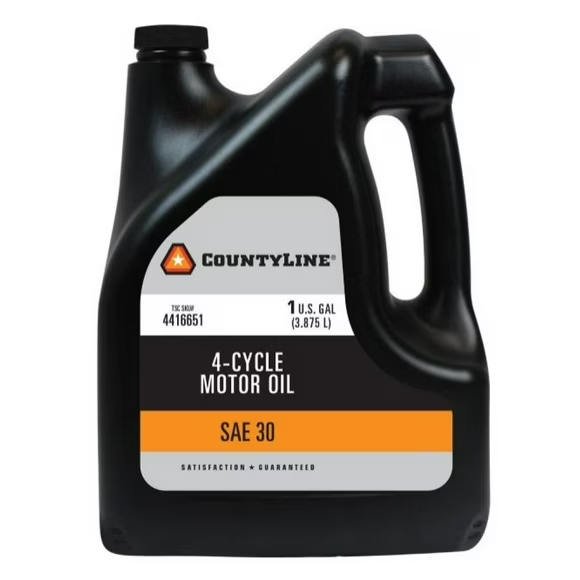
The right oil for most walk-behind and riding mowers is SAE 30 for warm-weather use or 10W-30 if temperatures vary. SAE 30 is a single-viscosity oil that works well when the air is consistently above 40°F – which covers the bulk of the mowing season across most of the U.S.
The “SAE” stands for Society of Automotive Engineers. The number tells you how thick the oil is. Thicker oil (higher number) holds its film better under heat; thinner oil (lower number) flows more easily in the cold. For a small air-cooled engine sitting in a shed all winter and then running on an 85°F July afternoon, SAE 30 hits the sweet spot.
If you’re mowing in spring when mornings are still cool, or you’re in a region with variable temps, 10W-30 gives you a wider operating range without hurting anything.
SAE 30 vs. 10W-30 vs. Synthetic: Which One to Use
| Oil Type | Best Temperature Range | Typical Use Case |
|---|---|---|
| SAE 30 | Above 40°F | Standard warm-season mowing |
| 10W-30 | 0°F to 100°F+ | Variable climates, spring/fall use |
| SAE 5W-30 | Below 40°F | Cold-weather starts, early spring |
| Full Synthetic 5W-30 | Wide range | Extended drain intervals, premium engines |
| Two-stroke oil | N/A (mixed with gas) | Two-stroke engines only |
Briggs & Stratton, which powers a large share of the walk-behind mowers sold in the U.S., recommends SAE 30 for temperatures above 40°F and 10W-30 for use below that threshold (Briggs & Stratton Owner’s Manual, 2024). Honda’s GCV series engines follow the same logic, with 10W-30 as the factory-fill recommendation for new engines.
Full synthetic oil is fine for any four-stroke lawn mower engine. It runs cleaner, lasts longer between changes, and handles heat better than conventional oil. The catch: it costs roughly two to three times more per quart, and on a small engine that only holds 18-20 oz. of oil, the performance gains are modest for most homeowners.
How Two-Stroke Mower Engines Work Differently
Two-stroke engines don’t have a separate oil reservoir – the oil gets mixed into the gasoline before you pour it in. If you add straight motor oil to a two-stroke crankcase, you’ll seize the engine.
The standard mix ratio for most two-stroke lawn equipment is 50:1 (50 parts gas to 1 part oil), though some older engines call for 32:1. The ratio is printed on the engine housing or in the manual. Use two-stroke-specific oil, not automotive motor oil – the two are formulated differently.
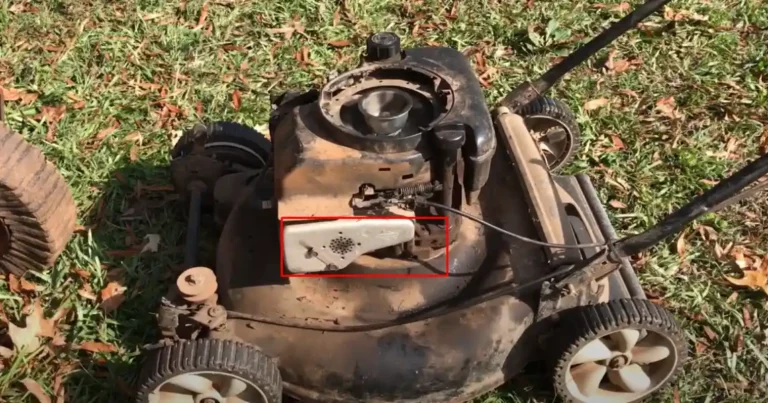
Two-stroke walk-behind mowers are less common today, but they still show up in older machines and some lightweight trimmers. If you’re not sure which type you have, a four-stroke engine has a dipstick; a two-stroke does not.
How Much Oil a Lawn Mower Takes
Most walk-behind mowers with single-cylinder engines hold between 15 and 20 oz. (roughly 0.47 to 0.6 quarts) of oil. Riding mowers with larger engines typically take 48-64 oz. (1.5 to 2 quarts).
Don’t guess. Check the dipstick before every mowing session – it takes 30 seconds and prevents the kind of low-oil damage that costs $200 to $400 to fix. An overfilled engine is nearly as bad as an underfilled one; too much oil can blow out seals or get drawn into the air intake and foul the spark plug.
Change the oil once per season for walk-behind mowers, or every 50 hours of use – whichever comes first. New mowers should have their first oil change after the initial 5 hours of break-in (Briggs & Stratton, 2024). Neglecting this lets metal shavings from new engine parts circulate through the oil and act like sandpaper on bearings.
Common Oil Mistakes That Damage Mower Engines
- Using diesel or two-stroke oil in a four-stroke engine. Diesel engine oil contains additives that can foam up and lose viscosity in the high-RPM environment of a small lawn mower engine.
- Topping off without checking the level first. If the oil is already at the full line and you add more, you’ll overfill it. Pull the dipstick, wipe it clean, reinsert it fully, then read the level.
- Skipping oil changes because the mower “still runs fine.” Used oil turns acidic over time. Acids corrode engine internals quietly, long before the engine starts knocking.
- Using car oil with heavy friction modifiers. Some high-mileage automotive oils contain seal conditioners and friction modifiers that aren’t appropriate for small air-cooled engines. Stick to standard SF-rated or higher motor oil.
Frequently Asked Questions About Lawn Mower Oil
Can I use 10W-30 instead of SAE 30 in my lawn mower?
Credit: https://www.walmart.com/
Yes. 10W-30 is compatible with any engine that calls for SAE 30. It performs slightly better in cooler temps and won’t harm the engine in warm weather. If you only want to keep one oil in the garage, 10W-30 is the more flexible choice.
Can I use car oil in my lawn mower?
Standard automotive motor oil – SAE 30 or 10W-30 – works fine in most four-stroke lawn mower engines. Avoid high-mileage formulas with heavy additive packages, and stay away from diesel-rated oils. Check that the oil meets API service classification SF or higher.
How often should I change the oil in my lawn mower?
Change it once per season or every 50 hours of use, whichever comes first. For a new mower, do the first change after 5 hours of break-in use to flush out metal particles from the manufacturing process (Briggs & Stratton, 2024).
What happens if I run a lawn mower with no oil?
The engine seizes, usually within minutes. Without oil, metal parts grind directly against each other, generate heat fast, and weld together. This is not a repairable situation in most cases – it typically means a new engine or a new mower.
Does synthetic oil work in a lawn mower?
Yes. Full synthetic 5W-30 or 10W-30 is safe and effective in four-stroke mower engines. It handles temperature swings better than conventional oil and can extend the interval between changes. It’s not required, but it’s not harmful.
What type of oil does a Honda lawn mower use?
Honda recommends SAE 10W-30 for its GCV and GX series engines as the general-purpose choice. For temperatures consistently above 60°F, SAE 30 is listed as an alternative (Honda GCV Engine Owner’s Manual, 2023). Capacity for most Honda walk-behind engines is around 13.5 oz.
Key Takeaways
- SAE 30 is the standard for warm-weather mowing; 10W-30 covers a wider temp range.
- Four-stroke and two-stroke engines need completely different oil handling – know which one you have.
- Check the dipstick before every mow; change the oil once a season or every 50 hours.
- New mowers need an oil change after the first 5 hours of use.
- Synthetic oil works fine – it’s just not necessary for most homeowners running a residential mower.