What Is a Self Propelled Lawn Mower? Your Complete Guide for 2026

TL;DR
- A self propelled lawn mower moves forward on its own using a drive system connected to the rear or front wheels – you steer, it walks.
- It cuts mowing effort significantly compared to a push mower, especially on slopes and yards larger than a quarter acre.
- Most self propelled mowers cost between $300 and $700 at retail (Consumer Reports, 2024).
- Rear-wheel drive handles hills better; front-wheel drive is easier to maneuver around tight obstacles.
- Honda, Toro, and Husqvarna make the most recommended models in the mid-range price bracket.
What Is a Self Propelled Lawn Mower and How Does It Work?
Credit: https://globalideas.org.au/
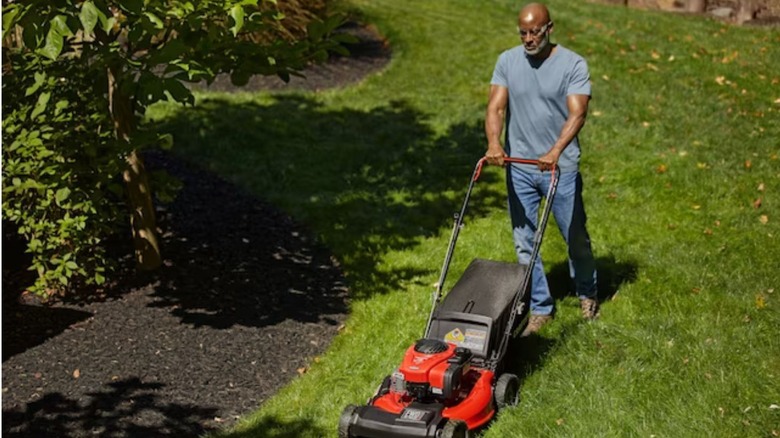
A self propelled lawn mower is a walk-behind mower with a built-in drive system that powers the wheels forward. You hold the handle, engage a bail or lever, and the mower pulls itself across the lawn at a set speed. Your job is to steer and turn – not to push the machine’s weight with every step.
The drive system connects the engine to either the front wheels, the rear wheels, or all four wheels through a transmission and belt. When you squeeze the drive bail on the handle, the belt engages and the wheels turn. Release it and the mower stops moving but the blade keeps cutting.
Most homeowners notice the difference on the first pass. A 70-pound mower that felt punishing to push up a slope becomes manageable when the drive system carries its own weight.
Front-Wheel Drive vs. Rear-Wheel Drive: Which One Do You Need?
Self propelled mowers come in two main drive configurations, and the right choice depends on your yard.
Front-wheel drive (FWD) puts the power to the front wheels. This makes the mower easy to tip back and pivot around flower beds, trees, and tight corners. The downside is that FWD loses traction when mowing uphill because the weight shifts to the rear and the front wheels can lose contact with the ground.
Rear-wheel drive (RWD) puts the power to the rear wheels, which stay in contact with the ground on slopes and uneven terrain. RWD is the better choice for yards with hills, wet grass, or irregular surfaces. It is slightly less nimble when turning but far more capable on anything but flat ground.
| Drive Type | Best For | Weaker On |
|---|---|---|
| Front-wheel drive | Flat yards with many obstacles | Hills and wet slopes |
| Rear-wheel drive | Sloped or uneven yards | Tight pivot turns |
| All-wheel drive | Large properties with varied terrain | Price – typically $500 and up |
How a Self Propelled Mower Differs from a Push Mower
A push mower has no drive system. The engine powers only the blade. You supply every bit of forward motion by pushing the mower’s weight across the lawn yourself.
A self propelled mower costs $100 to $250 more than a comparable push mower at the same deck size and engine class (Angi, 2024). That gap narrows over a full mowing season when you factor in fatigue, time spent, and the added difficulty of pushing a 65-80 pound machine on an incline.
For flat yards under a quarter acre, a push mower is usually the practical choice. Once your yard tops a quarter acre, includes grades steeper than 10 degrees, or you are mowing in heat, a self propelled mower earns its price difference quickly.
What Speed Settings Does a Self Propelled Mower Have?
Credit: https://www.thespruce.com/
Most self propelled mowers offer either a fixed drive speed or a variable speed control. Variable speed is the more useful option.
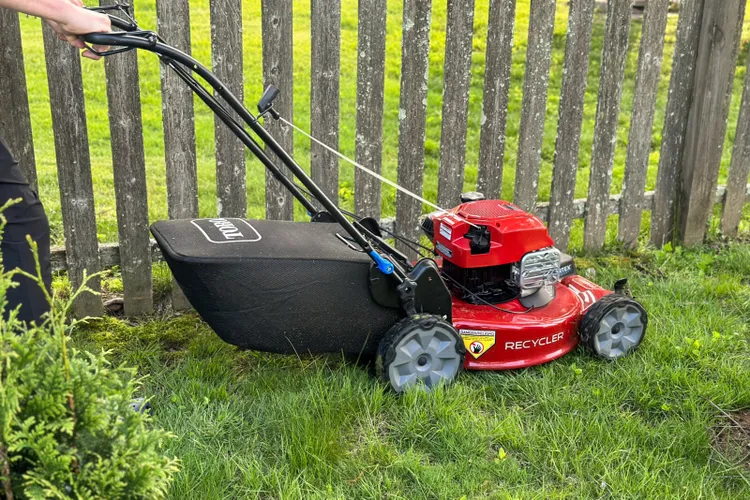
Variable speed models let you slow the drive pace down for thick, wet grass or speed it up on a dry open run. The Toro Recycler 60V and Honda HRN series both use a single-lever variable speed that adjusts with thumb pressure – a genuine quality-of-life feature that fixed-speed models skip.
Fixed-speed models are cheaper and simpler mechanically, but if the set pace does not match your stride, you end up fighting the mower instead of walking with it.
Common Mistakes That Cost You More in the Long Run
- Skipping the drive belt inspection at the start of each season: A worn or glazed belt is the most common cause of a self propelled mower that suddenly stops driving. Belts typically cost $15-30 and take 20 minutes to swap – catching a failing belt early is far cheaper than a seized transmission.
- Ignoring wheel height adjustments when the mower feels slow: Self propelled mowers drive hardest on shorter deck settings because the wheels have less clearance. If your drive feels sluggish, check that all four wheels are at the same height setting.
- Using the mower on slopes steeper than 15 degrees: Most residential self propelled mowers are rated for slopes up to 15 degrees (Husqvarna operator manuals, 2024). Beyond that, you are in zero-turn or walk-behind commercial territory.
Frequently Asked Questions
What is a self propelled lawn mower used for?
A self propelled lawn mower is used to cut grass with less physical effort than a push mower. It is the best fit for yards larger than a quarter acre, sloped terrain, or anyone who wants to reduce fatigue during a mow.
How much does a self propelled lawn mower cost?
Most homeowner-grade self propelled mowers cost between $300 and $700 at major retailers. Entry-level models from Craftsman and Ryobi start around $300. Honda and Husqvarna mid-range models run $450 to $650 (Consumer Reports, 2024).
Is a self propelled lawn mower worth it?
For yards over a quarter acre or any yard with noticeable slopes, yes. The $100 to $200 price premium over a push mower is offset by reduced mowing time and physical effort across a full season.
Can a self propelled mower go in reverse?
Most residential self propelled mowers do not have a powered reverse. You disengage the drive and pull the mower back manually. Some commercial and premium models include a reverse assist feature.
How do you maintain a self propelled lawn mower?
Change the engine oil at the start of each season, replace the spark plug annually, clean or replace the air filter, and inspect the drive belt and wheels for wear. Check the blade for nicks and balance it if the mower vibrates during a cut.