Electric vs Gas Lawn Mower: Which One Is Right for Your Yard in 2026?

TL;DR
- Electric mowers are quieter, cheaper to run, and need far less maintenance than gas mowers.
- Gas mowers deliver more power and longer run time – better for large lawns over half an acre.
- For lawns under half an acre, a battery-powered electric mower handles the job just as well as gas in most conditions.
- Gas mowers cost less upfront but cost more to maintain annually due to oil, filters, spark plugs, and fuel.
- If you have a flat, small-to-medium lawn and access to a charging point, electric is the practical choice in 2026.
Electric vs Gas Lawn Mower: What Is the Difference?
The core difference is the power source. A gas lawn mower runs on a combustion engine fueled by gasoline – the same basic technology used in cars. An electric lawn mower runs on either a battery pack (cordless) or a direct power cable (corded), with a brushless electric motor doing the cutting work.
That single difference in power source drives almost every other difference between the two: noise level, maintenance requirements, upfront cost, running cost, power output, and environmental impact. Neither type is universally better. The right choice depends on the size of your lawn, your budget, and how much time you want to spend on maintenance.
How Each Mower Type Works
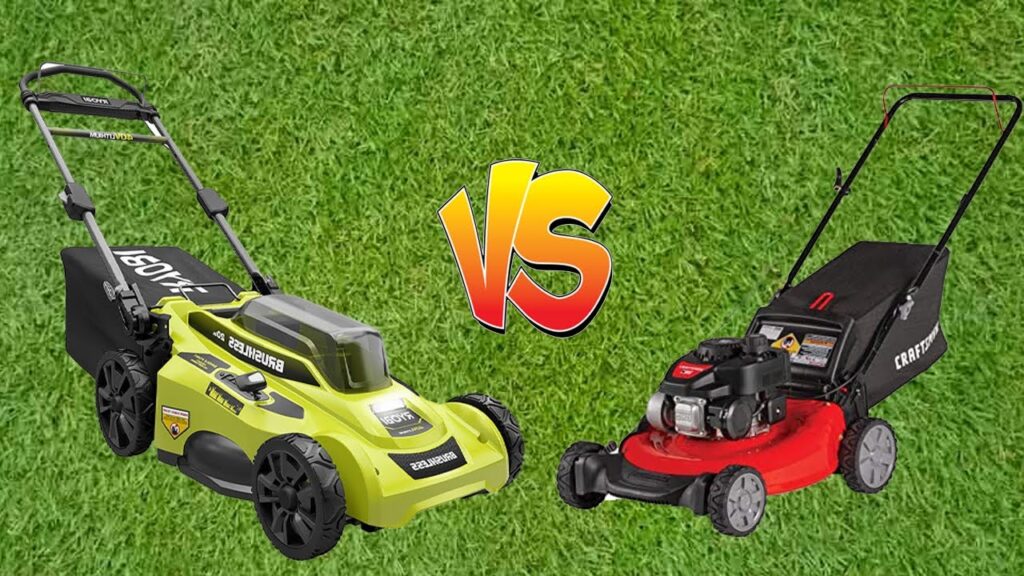
Credit: storage.googleapis.com
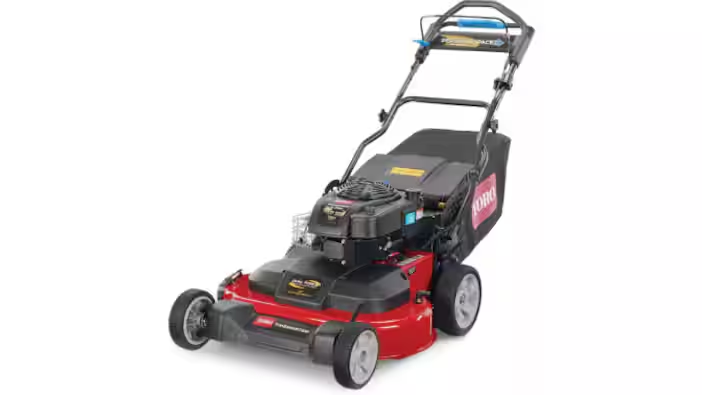
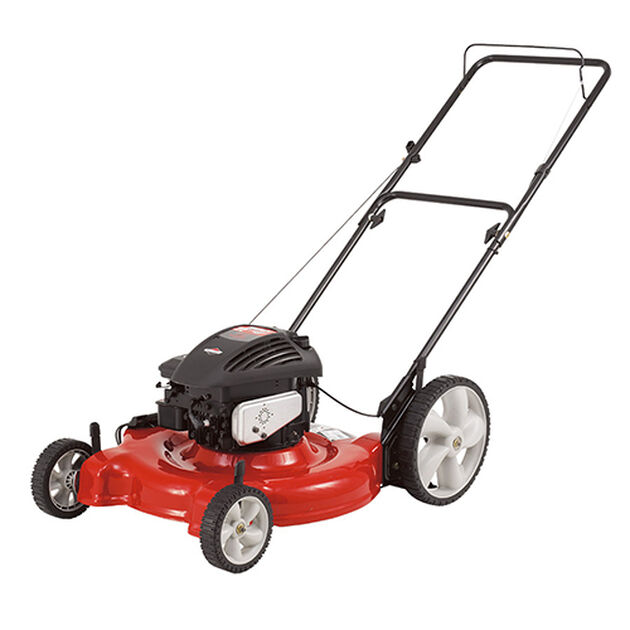
Gas mowers use a four-stroke or two-stroke internal combustion engine to spin the cutting blade. Four-stroke engines – the standard on most residential gas mowers – require separate oil and gasoline. Two-stroke engines mix oil and gas together. Both produce exhaust emissions and require regular maintenance to stay reliable.
Corded electric mowers draw power directly from a wall outlet through an extension cord. They never run out of charge and cost almost nothing to operate, but the cord limits range to roughly 100 feet from the outlet and requires careful management while mowing.
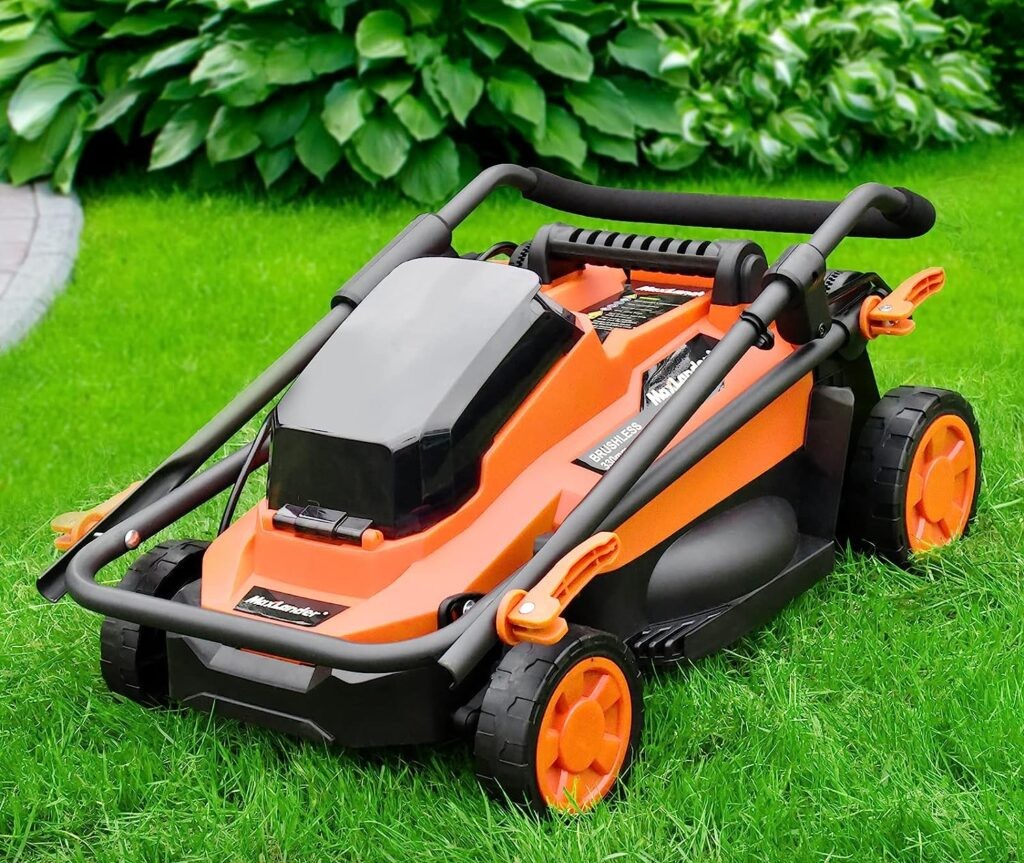
Battery-powered (cordless) electric mowers use a removable lithium-ion battery pack, typically ranging from 40V to 80V on residential models. They offer the freedom of a gas mower without the cord, but run time is limited to 30 to 60 minutes per charge depending on battery voltage and lawn conditions.
Electric vs Gas Lawn Mower: Head-to-Head Comparison
| Factor | Electric (Battery) | Gas |
|---|---|---|
| Upfront cost | $200 – $600 | $250 – $600 |
| Annual running cost | $10 – $20 (electricity) | $100 – $200 (fuel + oil + parts) |
| Noise level | 75 dB (approx.) | 95 dB (approx.) |
| Emissions | Zero at point of use | Yes – CO2, CO, hydrocarbons |
| Maintenance | Minimal – blade sharpening only | Oil changes, air filter, spark plug, fuel stabilizer |
| Run time per session | 30 – 60 minutes | Unlimited (refuel as needed) |
| Best lawn size | Up to 0.5 acres | 0.5 acres and above |
| Weight | Lighter (35 – 60 lbs) | Heavier (65 – 90 lbs) |
| Storage | Simple – no fuel concerns | Requires fuel stabilizer for storage |
Cost Comparison: Electric vs Gas Over 5 Years
Upfront prices are similar. The gap opens up in running and maintenance costs.
A gas mower requires an oil change every 25 to 50 hours of use, a new air filter annually, a spark plug replacement every one to two seasons, and fresh fuel each mowing season. According to the American Automobile Association (AAA, 2026), the average annual maintenance cost for a residential gas lawn mower runs between $100 and $200 when parts and occasional servicing are factored in. Add fuel costs – roughly $50 to $80 per season for a typical residential lawn – and a gas mower costs $150 to $280 per year to operate.
An electric battery mower costs $10 to $20 per year in electricity to charge, and the only regular maintenance is blade sharpening once a season. The battery pack will eventually need replacement – lithium-ion packs typically last 3 to 5 years with regular use – but replacement packs for most major brands run $80 to $150.
Over five years, a gas mower costs $750 to $1,400 more to run than a comparable electric model, excluding any repair costs.
Power and Performance: Where Gas Still Has the Edge
Electric mowers have closed the performance gap considerably since 2020, but gas still leads in two specific situations.
Large lawns over half an acre. Battery run time caps at 30 to 60 minutes. A half-acre lawn takes roughly 45 minutes to mow at a normal walking pace. Anything larger either requires a second battery – adding $80 to $150 to the cost – or a gas mower that can run as long as there is fuel in the tank.
Thick, overgrown, or wet grass. Gas engines produce more consistent torque under heavy load. An electric motor can slow or bog down when cutting through very thick grass, tall overgrown sections, or wet conditions. A gas mower maintains blade speed more consistently in these situations.
For a standard residential lawn that is mowed regularly and kept at a reasonable height, most homeowners will not notice any performance difference between a quality electric mower and a comparable gas model.
Noise and Emissions: Where Electric Wins Clearly
Gas mowers produce approximately 95 decibels of noise during operation – roughly the same as a motorcycle at close range. The U.S. Centers for Disease Control and Prevention (CDC, 2026) lists prolonged exposure to sounds above 85 dB as a risk for hearing damage. Most local noise ordinances restrict loud equipment use before 8 a.m. and after 8 p.m., which limits when you can mow with a gas machine.
Electric mowers operate at around 75 dB – noticeably quieter and generally within noise limits at any hour. That difference is meaningful if you have close neighbors, young children at home, or prefer mowing early in the morning.
On emissions, the U.S. Environmental Protection Agency (EPA, 2026) estimates that a single gas-powered lawn mower running for one hour produces the same hydrocarbon emissions as driving a car approximately 300 miles. Electric mowers produce zero emissions at the point of use.
Maintenance: What Each Type Requires
Gas mower maintenance (per season):
- Oil change every 25 to 50 hours of use
- Air filter cleaning or replacement once per season
- Spark plug replacement every one to two seasons
- Fuel stabilizer added to the tank before winter storage
- Blade sharpening once per season
- Carburetor cleaning if the mower has been stored with old fuel
Electric mower maintenance (per season):
- Blade sharpening once per season
- Battery terminal cleaning if corrosion is visible
- Deck cleaning after each use to prevent clipping buildup
The maintenance difference is significant for homeowners who do not enjoy mechanical work. A gas mower that sits through winter with untreated fuel is a common source of starting problems in spring – a problem electric mowers do not have.
Which Lawn Size Suits Each Mower Type
Under 0.25 acres: A corded or battery electric mower is the straightforward choice. Run time is sufficient, and the lower noise and maintenance make daily use easier.
0.25 to 0.5 acres: A 40V to 60V battery mower handles this range comfortably on a single charge for most flat lawns. Hilly terrain or thick grass may require a second battery or a gas mower.
0.5 to 1 acre: Gas or a high-voltage (80V) battery mower with a second battery pack. At this size, run time becomes a real constraint for standard battery models.
Over 1 acre: Gas walk-behind or a riding mower. Battery technology has not yet reached the run time needed for lawns this large on a single charge at an accessible price point.
Common Mistakes Homeowners Make When Choosing Between Electric and Gas
- Buying gas because it feels more powerful. For a standard residential lawn under half an acre, a quality 40V or 60V battery mower cuts just as effectively as a comparable gas model. Paying more for gas power you do not need adds cost without benefit.
- Underestimating battery run time needs. A 40V mower rated for 45 minutes will run shorter in thick or wet grass. Measure your lawn size and factor in your grass type before committing to a battery voltage.
- Ignoring storage conditions. Electric mowers require a dry, temperature-controlled storage space for the battery. Storing lithium-ion batteries in a garage that drops below freezing significantly shortens battery life.
- Forgetting about slope. Electric mowers are lighter, which is an advantage on flat ground. On steep slopes, a heavier gas mower provides more stability and consistent power through resistance.
Frequently Asked Questions About Electric vs Gas Lawn Mowers
Is an electric lawn mower as good as a gas mower?
For most residential lawns under half an acre, yes. Modern 40V to 60V battery mowers cut just as cleanly as comparable gas models on flat, regularly maintained grass. Gas mowers hold an advantage for large lawns, steep slopes, and very thick or overgrown growth where sustained high torque is needed.
Are electric lawn mowers cheaper to run than gas?
Yes, significantly. An electric mower costs $10 to $20 per year in electricity. A gas mower costs $150 to $280 per year when fuel and regular maintenance parts are included. Over five years, the running cost difference typically reaches $750 to $1,400 in favor of electric.
How long does a battery lawn mower last on a single charge?
Most residential battery mowers deliver 30 to 60 minutes of run time per charge. A standard half-acre flat lawn takes roughly 45 minutes to mow. Run time shortens in thick grass, wet conditions, or hilly terrain. Higher-voltage batteries (60V to 80V) generally deliver longer run times than entry-level 40V models.
What are the downsides of an electric lawn mower?
The main downsides are limited run time per charge, reduced performance in very thick or wet grass, and the eventual need to replace the battery pack (every 3 to 5 years). Cordless models also require a charging point nearby, and battery performance degrades if stored in freezing temperatures.
Which is better for the environment – electric or gas?
Electric mowers produce zero emissions at the point of use. The EPA estimates one hour of gas mower operation produces hydrocarbon emissions equivalent to driving a car approximately 300 miles (EPA, 2026). Even accounting for the emissions involved in generating electricity, an electric mower has a significantly lower environmental impact over its lifetime.
Can an electric lawn mower handle long grass?
A quality 60V or 80V battery mower can handle moderately long grass. For grass that is significantly overgrown – more than 50 percent above its ideal height – a gas mower’s higher sustained torque handles the load more reliably. If using an electric mower on long grass, raise the cutting height and make two passes rather than attempting a single deep cut.
Key Takeaways
- Electric mowers cost less to run, require far less maintenance, and are quieter – advantages that matter for most homeowners with small to medium lawns.
- Gas mowers remain the better choice for lawns over half an acre, steep slopes, and situations where consistent high torque is needed.
- The five-year running cost difference between electric and gas is $750 to $1,400 in favor of electric, not including repairs.
- Battery run time – not cutting power – is the main practical limitation of electric mowers in 2026.
- For a flat lawn under half an acre, a 40V to 60V battery mower is the practical, lower-maintenance choice.