Dethatching a Lawn With a Mower: Step-by-Step Guide

TL;DR
- Dethatching removes the layer of dead grass, roots, and debris sitting between your soil and live turf – thatch over 1/2 inch thick blocks water, air, and fertilizer from reaching roots
- You can dethatch with a dethatching blade fitted to your existing mower or use a dedicated dethatcher mower (also called a scarifier or power rake)
- Best times to dethatch are early spring (March-April for cool-season grasses) or early fall (August-September for warm-season grasses)
- Plan to water, fertilize, and overseed immediately after – your lawn will look rough for 1-2 weeks before it recovers
- For light thatch under 3/4 inch, a mower attachment works fine; for heavy thatch or compacted soil, rent or buy a dedicated power rake
What Is Thatch and When Does It Become a Problem?
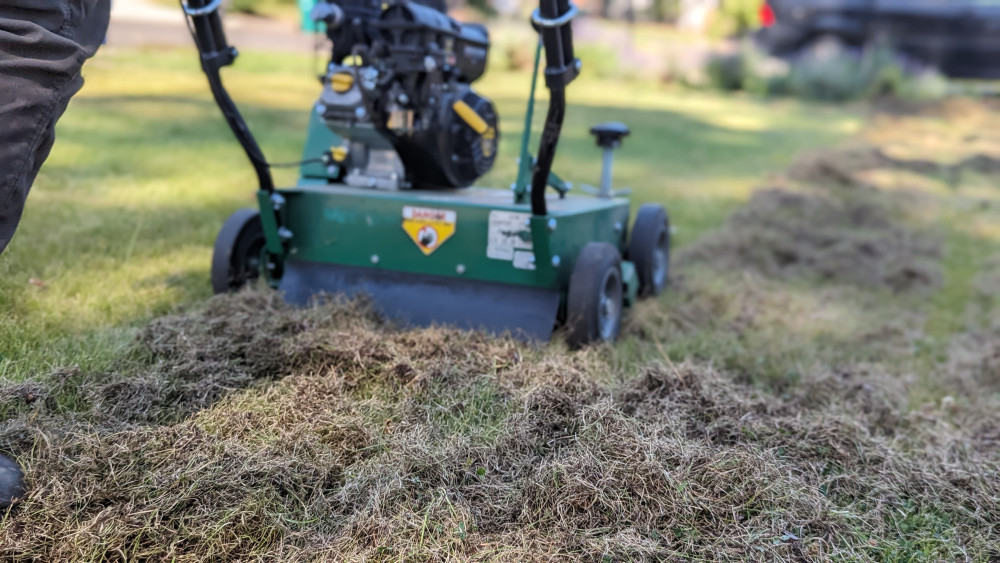
Credit: https://automatedlawnandpest.com/
Thatch is the layer of dead and living grass stems, roots, and organic debris that builds up between the soil surface and the green grass blades above it. A thin layer – under 1/2 inch – is normal and actually helps retain moisture. Once it crosses 1/2 inch, it starts blocking water, fertilizer, and oxygen from reaching the root zone.
You can check your thatch thickness by pushing a screwdriver or finger down through the grass to the soil. If you feel a spongy, fibrous layer more than 1/2 inch deep, it is time to dethatch.
Heavy thatch is common in lawns that receive frequent light watering, heavy fertilizer use, or have clay-heavy soil that slows decomposition (University of Minnesota Extension, 2023).
Dethatching Blade vs. Dedicated Dethatcher: Which One Do You Need?
A dethatching blade (also called a thatching blade or flail blade) replaces your mower’s standard cutting blade and uses spring-steel tines to comb through the thatch layer as you mow. It fits most walk-behind mowers and costs $20-$50 for the blade itself (Amazon, 2024). It works well for light-to-moderate thatch and lawns you maintain regularly.
A dedicated dethatcher – also called a power rake or scarifier – uses rotating flail blades or tines driven by its own engine or an electric motor. These machines pull significantly more material and cut deeper than a blade attachment. Rental cost runs $60-$100 per day at most Home Depot or Sunbelt Rentals locations (Home Depot, 2024).
| Method | Best For | Upfront Cost | Depth of Thatch Removed |
|---|---|---|---|
| Dethatching mower blade | Light thatch, regular maintenance | $20-$50 | Shallow – up to 1/2 inch |
| Walk-behind power rake (rental) | Moderate to heavy thatch | $60-$100/day | Up to 1 inch |
| Dedicated dethatcher mower | Large lawns, annual use | $200-$600 | Up to 1.5 inches |
When to Dethatch Your Lawn
Dethatch cool-season grasses – Kentucky bluegrass, tall fescue, perennial ryegrass – in early spring (March-April) or early fall (August-September). The grass recovers fastest when temperatures are mild and growth is active.
Dethatch warm-season grasses – Bermuda, zoysia, St. Augustine – in late spring to early summer, once the lawn is actively growing (Purdue Extension, 2022). Never dethatch a dormant lawn – you will damage roots that are not prepared to recover.
Do not dethatch during a drought or heat wave. Stressed grass has a much harder time bouncing back after the disruption.
What You Need Before You Start
Tools:
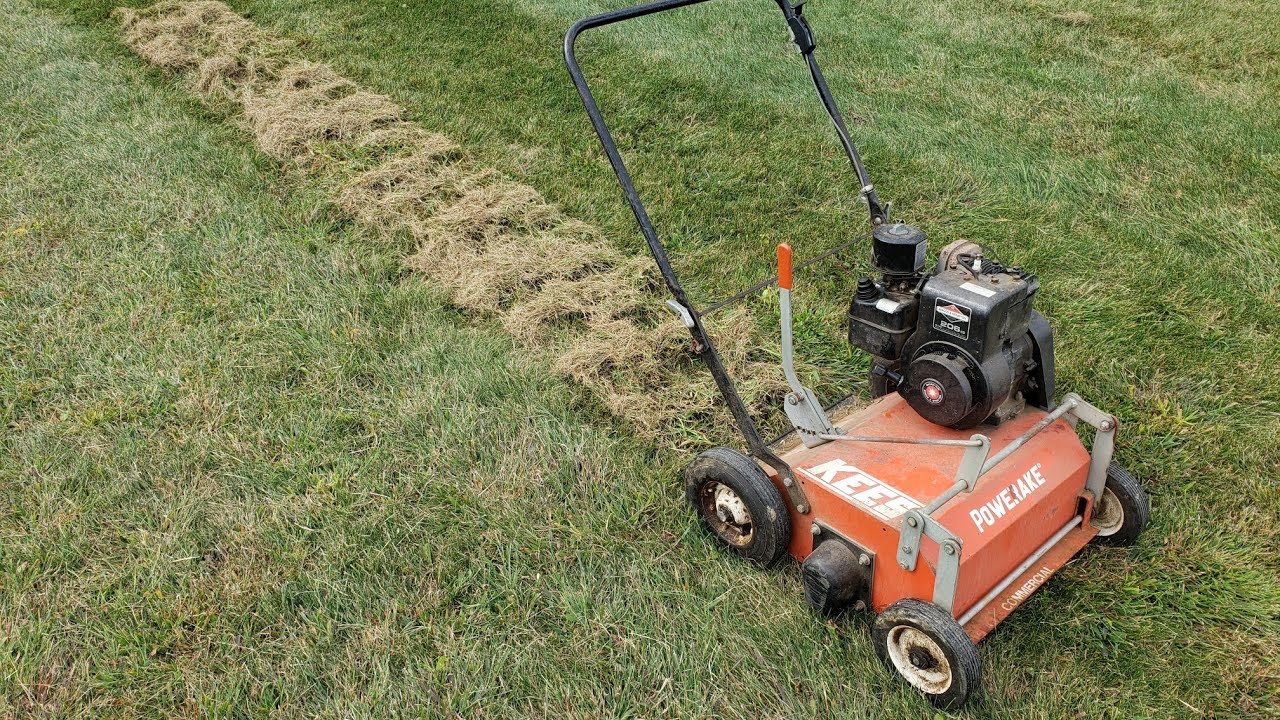
- Walk-behind mower with dethatching blade attachment, or a rented power rake
- Lawn rake or leaf blower (to collect pulled debris)
- Lawn mower at normal cutting height setting
Supplies:
- Grass seed matched to your existing turf type (for overseeding after)
- Starter fertilizer – a 10-10-10 or similar balanced formula
- Water access – you will need to water immediately after
Safety steps:
- Disconnect the spark plug wire before swapping a blade on your mower
- Wear safety glasses – dethatching throws debris
- Clear the lawn of sticks, rocks, and toys before any pass
Step 1: Mow the Lawn Short Before Dethatching
Set your mower to its lowest comfortable cutting height – about 1.5 to 2 inches for most grass types – and mow the full lawn before dethatching. Shorter grass lets the dethatching tines or blade reach the thatch layer without fighting through tall blades above it.
Do not scalp the lawn. Going below 1.5 inches on most grass types stresses the plant before you have even started the dethatching process.
Step 2: Attach the Dethatching Blade or Set Up the Power Rake
If you are using a dethatching blade, disconnect the spark plug wire, remove the standard blade, and bolt on the dethatching blade according to the manufacturer’s instructions. Torque the center bolt to spec – typically 35-50 ft-lbs for most walk-behind mowers (Briggs & Stratton, 2023). Reconnect the spark plug wire.
If you rented a power rake, set the tine depth so the tines just contact the soil surface. Start shallow – you can always make a second pass deeper if needed.
Step 3: Run Your First Pass Across the Lawn
Make your first pass in straight, overlapping rows – the same pattern you use for mowing. Keep your pace steady. The machine will pull up large amounts of brown, fibrous material. This is normal and expected.
For heavy thatch, run a second pass at a 90-degree angle to the first. This cross-hatch pattern pulls significantly more material than a single-direction pass.
Step 4: Rake or Blow Out the Debris
After dethatching, the lawn surface will be covered in pulled thatch. Rake it into piles or use a leaf blower to collect it, then bag and remove it. Do not leave thick piles sitting on the lawn – they will smother the grass underneath.
Your lawn will look rough at this stage. Thin patches, exposed soil, and brown areas are all normal.
Step 5: Overseed, Fertilize, and Water
This is the most important step most homeowners skip. Dethatching opens the soil surface and creates ideal conditions for seed-to-soil contact. Spread grass seed matched to your existing turf, apply a starter fertilizer, and water deeply – about 1 inch of water within 24 hours of finishing (Scotts, 2024).
Keep the soil consistently moist for the first two weeks while the new seed germinates. Avoid heavy foot traffic during recovery.
What to Do If Something Goes Wrong
| Problem | Likely Cause | Fix |
|---|---|---|
| Lawn looks scalped and bare | Tine depth set too deep | Raise tine depth, water and fertilize immediately, overseed thin areas |
| Mower bogging down or stalling | Thatch too heavy for blade attachment | Switch to a rented power rake |
| Grass not recovering after 3 weeks | Dethatched during drought or dormancy | Water daily, apply starter fertilizer, give it 4-6 weeks |
| Large amounts of thatch but lawn still looks thin | Underlying compaction issue | Follow dethatching with core aeration |
Frequently Asked Questions
How often should you dethatch a lawn?
Most lawns need dethatching once every 1-3 years. Lawns with heavy clay soil, high fertilizer use, or grass varieties that spread by stolons – like Bermuda or Kentucky bluegrass – tend to build thatch faster and may need annual attention (University of Minnesota Extension, 2023).
Can dethatching hurt your lawn?
Yes, if done at the wrong time or too aggressively. Dethatching a dormant or drought-stressed lawn causes damage that takes months to recover from. Done correctly during active growth with proper watering after, most lawns recover fully within 2-4 weeks.
Do I need to aerate after dethatching?
Not always, but it helps. If your soil is compacted – common in clay-heavy lawns or high-traffic areas – aerating after dethatching improves water and nutrient penetration further. The two treatments work well together in the same session.
How long does dethatching take?
A typical residential lawn of 5,000-10,000 square feet takes 1-3 hours with a walk-behind power rake or mower attachment, plus additional time for raking debris and overseeding (HomeAdvisor, 2024).
Is a dethatching blade as good as a power rake?
For light thatch, yes. A dethatching blade on a standard walk-behind mower handles maintenance-level thatch effectively and costs far less. For thatch over 3/4 inch, or a lawn that has not been dethatched in several years, a power rake pulls significantly more material and does a more thorough job.
Quick Recap
- Mow short before you start – 1.5 to 2 inches
- Attach dethatching blade or set power rake tines to just contact the soil
- Run passes in straight rows; cross-hatch for heavy thatch
- Rake out all pulled debris immediately
- Overseed, fertilize, and water within 24 hours of finishing