Mulching Leaves With a Mower: What Every Homeowner Should Know

TL;DR
- Mulching leaves with a mower works well when the leaf layer is thin enough to see grass underneath.
- Shredded leaves decompose and return nitrogen, carbon, and organic matter to the soil.
- A standard mower can mulch leaves, but a dedicated mulching blade does a better job.
- Thick, wet leaf piles should be bagged or raked first – mulching them causes more problems than it solves.
- Fall is the best window: mow when leaves are dry, grass is still growing, and the ground is not frozen.
Does Mulching Leaves With a Mower Actually Work?
Yes – mulching leaves with a mower works, and for most homeowners it is easier and better for the lawn than bagging. A mower with a mulching blade chops leaves into small pieces that fall between grass blades, break down over a few weeks, and feed the soil. Michigan State University Extension research found that mulched leaves left on the lawn do not harm turf and can reduce lawn fertilizer needs over time.
The catch: it only works when the leaf layer is manageable. If you can see at least 50% of the grass through the leaves, you are in good shape to mulch. If the leaves form a solid mat, bag or rake first.
What Mulched Leaves Actually Do for Your Lawn
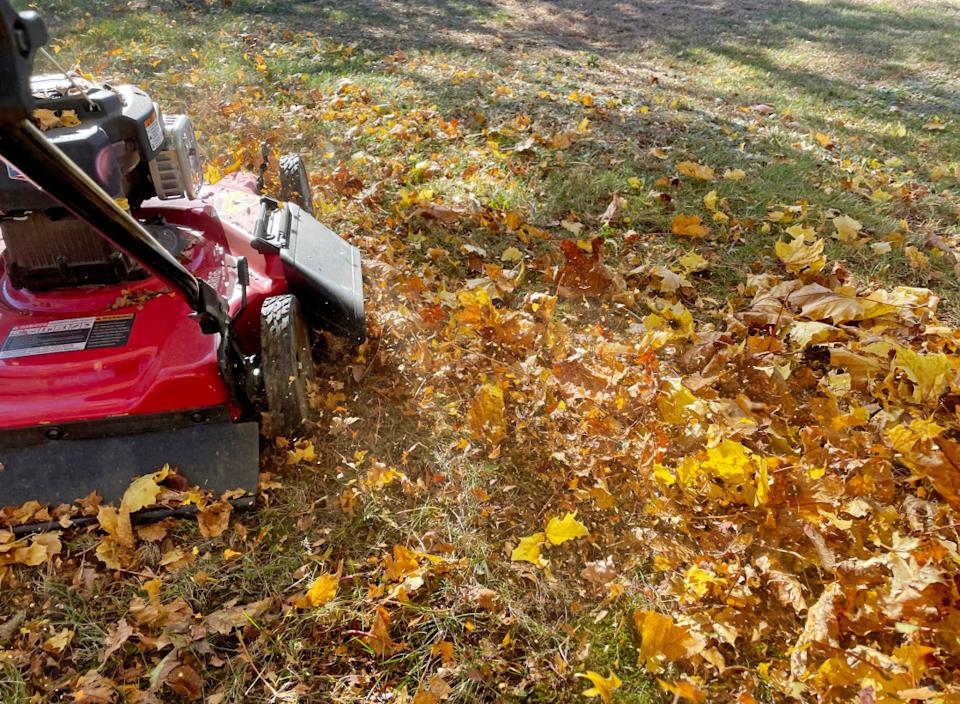
Credit: https://www.lawnsite.com/
Shredded leaves are free organic matter. As they decompose, they return nitrogen, phosphorus, potassium, and carbon to the soil. A 2008 study from Michigan State University found that lawns where leaves were mulched annually for three years had measurably fewer dandelions and better soil quality than lawns where leaves were removed.
Mulched leaves also feed earthworms and soil microbes, which improve drainage and root health over time. Think of it as slow-release compost you never had to buy.
When to Mulch Leaves and When to Bag Them
Mulching works well in fall when leaves are dry, the grass is still actively growing, and you are mowing at least once every week or two. Here is a simple guide:
| Condition | Mulch or Bag? |
|---|---|
| Light layer, grass visible underneath | Mulch |
| Leaves are dry | Mulch |
| Thick mat, grass not visible | Bag or rake first, then mulch |
| Leaves are wet or freshly rained on | Wait until dry, then mulch |
| Ground is frozen or lawn dormant | Bag – decomposition stalls |
| Oak or walnut leaves only, heavy layer | Bag – these break down slowly and can mat |
Wet leaves are the main enemy. They clump, clog the deck, and sit on the lawn in thick mats that can smother grass if left too long.
Do You Need a Special Mulching Mower?
You do not need a new mower to mulch leaves, but the right blade makes a real difference. Most walk-behind and riding mowers can mulch with a few adjustments.
Standard blade: Will chop leaves into rough pieces. Works for light layers.
Mulching blade (also called a 3-in-1 blade): Has a curved cutting edge that keeps leaves circulating inside the deck longer, chopping them into finer pieces. Brands like Oregon and Arnold make aftermarket mulching blades for most Toro, Honda, Husqvarna, and Craftsman mowers, typically for $15-$30.
Dedicated mulching mower: Models like the Toro Recycler 22 or Honda HRX217 are designed with mulching-optimized decks and come with mulching blades from the factory. They produce the finest cut on both grass and leaves.
If your mower has a side discharge chute, close or block it when mulching leaves – you want the material to stay under the deck and get chopped multiple times.
How to Mulch Leaves With a Mower: The Short Version
Credit: https://www.yahoo.com/
- Wait until leaves are dry. Mowing wet leaves clogs the deck and produces clumps.
- Raise your mowing height one notch above normal. This lets you run over the leaves without scalping the lawn.
- Mow in overlapping passes. Run over the same area twice if the leaf layer is heavier than usual.
- Aim for pieces no larger than a dime. If you see large leaf chunks left on the lawn, make another pass.
- Leave the shredded material on the lawn. It will disappear into the turf within two to three weeks.
Common Mistakes That Cost You More in the Long Run
- Waiting too long to mow: A full season’s worth of leaves builds up fast. Mow every week or two during peak fall drop instead of letting it pile up.
- Mulching wet leaves: Wet leaves mat together and do not break down the same way. Wait 24-48 hours after rain.
- Leaving large chunks on the lawn: Bigger pieces take much longer to decompose and can block light if left in thick spots. Make a second pass.
Frequently Asked Questions
Is mulching leaves with a mower better than raking?
For most homeowners, yes. Mulching saves time, returns nutrients to the soil, and eliminates the need to bag and dispose of leaves. Raking makes more sense when the leaf layer is too thick to mulch or when you are dealing with a lawn disease and want to remove infected material.
How many times should you run over leaves when mulching?
One pass is enough for a light layer. For a heavier covering, make two overlapping passes at a slight angle to the first. The goal is pieces no larger than a dime.
Will mulched leaves kill my grass?
A thin, shredded layer will not kill grass. A thick mat of whole or poorly chopped leaves can smother turf by blocking light and trapping moisture. Shred the leaves finely and you will not have a problem.
What type of mower blade works best for mulching leaves?
A mulching blade, sometimes called a 3-in-1 blade, works best. It has a curved profile that keeps material circulating under the deck for a finer cut. Oregon and Arnold both make compatible blades for most common mower models.
Can you mulch leaves in the spring?
You can mulch any leaves that blew in over winter, but spring mulching does less for your lawn than fall mulching since the soil is just waking up. Run over any remaining leaf debris before your first regular mow of the season to clear the lawn.