Why Your Lawn Is Turning Brown: Causes and How to Fix It

TL;DR
- A brown lawn is most often caused by drought stress, which turns grass tan and dormant rather than dead
- Other common causes include grub damage, fungal disease, mowing too short, and dog urine spots
- Pull the tug test before you water: grab a handful of brown grass and pull – if it lifts out easily, grubs are likely the problem
- Most brown lawns recover with the right fix; watering a disease-affected lawn makes it worse, not better
- Correct diagnosis before treatment – treating drought like disease (or vice versa) wastes time and money
What Causes a Lawn to Turn Brown?
credit: https://randylemmon.com/
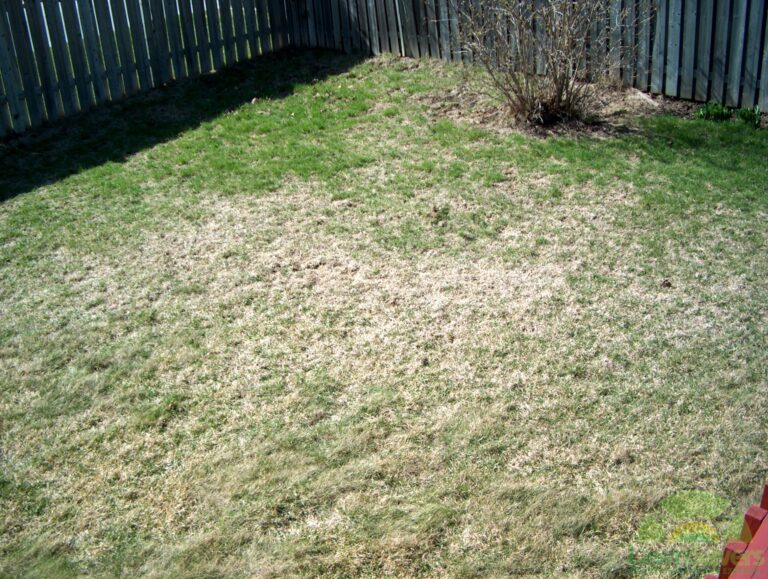
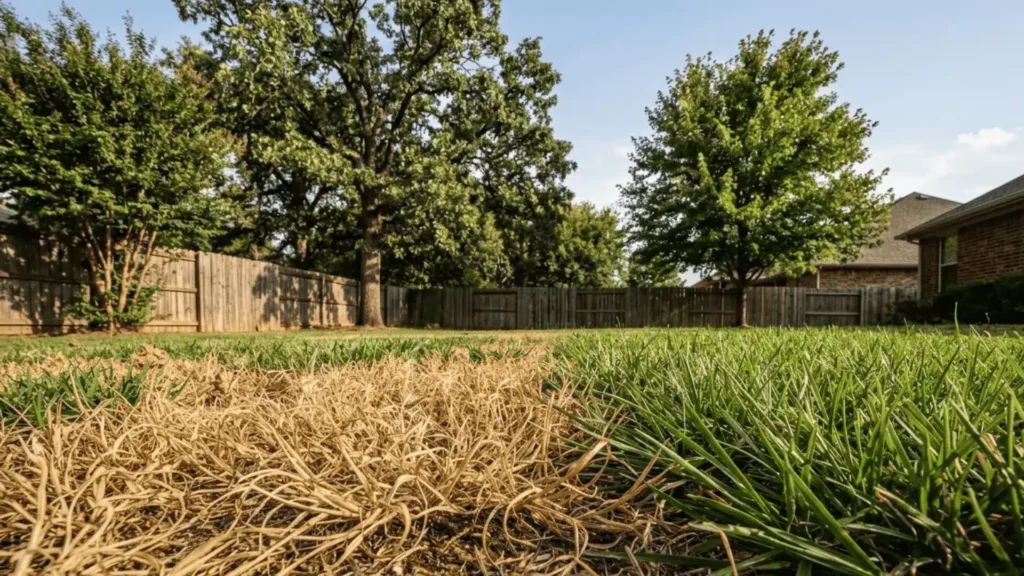
Brown grass has six common causes: drought stress, dormancy, grub infestation, fungal disease, mowing damage, and dog urine burns. The fix for each one is different, so identifying the right cause before doing anything is the most important step. Watering a lawn that has grub damage, for example, does nothing – the roots are already gone.
How to Tell What Is Actually Killing Your Grass
The pattern of browning tells you most of what you need to know before you even grab a tool.
| Pattern | Likely Cause |
|---|---|
| Uniform tan across the whole lawn | Drought stress or dormancy |
| Irregular brown patches with defined edges | Fungal disease |
| Circular dead patches that pull up like a mat | Grub infestation |
| Small, dark-edged spots scattered randomly | Dog urine burns |
| Brown strips following your mowing lines | Scalping from mowing too short |
| Brown around sprinkler edges only | Irrigation gap or dry zones |
Do the tug test first: grab a handful of brown grass near the edge of a patch and pull firmly. If the turf lifts out easily with no resistance and you find white C-shaped larvae underneath, you have grubs. If the roots hold and the soil is dry two inches down, drought stress is almost certainly the cause.
Drought Stress vs. Dormancy: What’s the Difference?
Drought stress and dormancy look almost identical from the street, but they are not the same thing. Drought stress means the grass is actively suffering and needs water. Dormancy is a survival response – cool-season grasses like Kentucky bluegrass and tall fescue go dormant in summer heat, turning tan on purpose to conserve energy.
To tell them apart, check the crown of the plant at soil level. If the crown is still green or white and firm, the grass is dormant and will recover when temperatures drop. If the crown is brown and dry, the plant may be dead from prolonged drought.
Cool-season grasses typically go dormant when temperatures stay above 90°F for more than two weeks (University of Minnesota Extension, 2023). They can stay dormant for three to four weeks without permanent damage as long as the soil gets at least one inch of water per week.
Grub Damage: The Brown Patch That Pulls Up Like a Rug
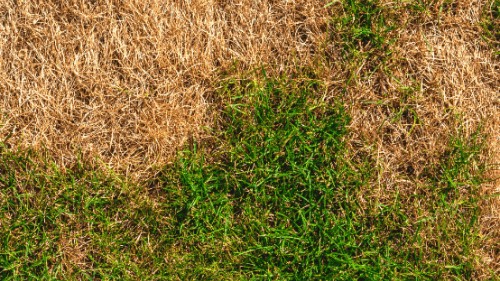
Grub damage shows up as irregular brown patches in mid to late summer, usually July through September. Japanese beetle larvae and June beetle grubs feed on grass roots just below the soil surface, cutting the connection between the plant and its water supply.
The turf above a grub infestation feels spongy underfoot and lifts away from the soil with almost no resistance – like pulling back a loose carpet. If you find more than five grubs per square foot, treatment is justified.
Apply a grub control product containing imidacloprid or chlorantraniliprole in late June or early July, before larvae grow large enough to cause visible damage (Purdue Extension, 2024). Once the brown patches appear, a curative product is needed – preventative timing has already passed.
Fungal Disease: When Watering Makes It Worse
Fungal diseases like brown patch, dollar spot, and summer patch all create brown areas in the lawn – but unlike drought, watering an infected lawn spreads the problem. Brown patch, caused by Rhizoctonia solani, is the most common summer lawn disease in the USA.
Brown patch creates circular or irregular tan patches with a darker brown ring at the outer edge. Dollar spot produces small, silver-dollar-sized bleached spots scattered across the turf. Both conditions worsen in high humidity with warm overnight temperatures above 70°F.
If you suspect fungal disease, let the lawn dry out between waterings, mow in the morning so the grass dries by afternoon, and avoid evening watering entirely. A fungicide containing azoxystrobin or propiconazole treats active infections (Clemson Cooperative Extension, 2024).
Mowing Damage and Dog Spots: The Easy Fixes
Scalping happens when the mower deck is set too low, removing more than one-third of the grass blade in a single pass. It shows up as brown strips or a uniformly thin and pale lawn after mowing. Set mowing height to 3 to 3.5 inches for most cool-season grasses, and never cut more than one-third of the blade at once.
Dog urine spots appear as small bright-green rings surrounding a dead brown center – the nitrogen in urine fertilizes the outer edge while burning the concentrated center. The fix is simple: flush the spot with water immediately after the dog urinates. For existing spots, scratch out the dead material, add a thin layer of soil, and reseed.
Frequently Asked Questions
Will a brown lawn come back on its own?
It depends on the cause. A dormant lawn recovers when temperatures cool and rain returns in fall. A drought-stressed lawn recovers within two to three weeks of consistent watering. Grub-damaged and disease-affected areas often need reseeding once the underlying problem is treated.
How much water does a brown lawn need to recover from drought?
Most lawns need one inch of water per week, applied in two deep sessions rather than daily shallow watering (Iowa State University Extension, 2023). Deep watering encourages roots to grow downward, which makes the lawn more drought-resistant long-term.
When is brown grass actually dead vs. just dormant?
Check the crown at soil level. A firm, white or green crown means the plant is dormant and alive. A dry, brown, crumbling crown means the plant is dead. Dormant grass that has gone without any water for more than four to six weeks in summer heat is at risk of crossing from dormancy into death.
Can I overseed a brown lawn in summer?
Late summer to early fall, from mid-August through September, is the best window to overseed cool-season grass in most of the USA. Soil temperatures are still warm enough for germination, but air temperatures are dropping, which reduces competition from weeds and stress on new seedlings.
How do I stop brown patches from spreading?
Identify the cause first. For fungal disease, reduce watering frequency and improve airflow. For grubs, apply a curative treatment and remove dead turf. For drought, water deeply twice a week. Treating the wrong cause – especially watering a diseased lawn – will make the spread worse, not better.