Is It Okay to Mow the Grass When Wet? What Homeowners Need to Know in 2026

TL;DR
- Mowing wet grass is not recommended in most situations because it damages both the lawn and the mower.
- Wet clippings clump together, block sunlight, and can cause fungal disease to spread across your lawn.
- The main exceptions are an overgrown lawn before rain or light morning dew that has mostly dried off.
- If you must mow wet grass, slow down, raise the cutting height, and clean the mower deck immediately after.
- The safest rule: wait until the grass blades stand upright and the surface feels dry to the touch.
Is It Okay to Mow Wet Grass?
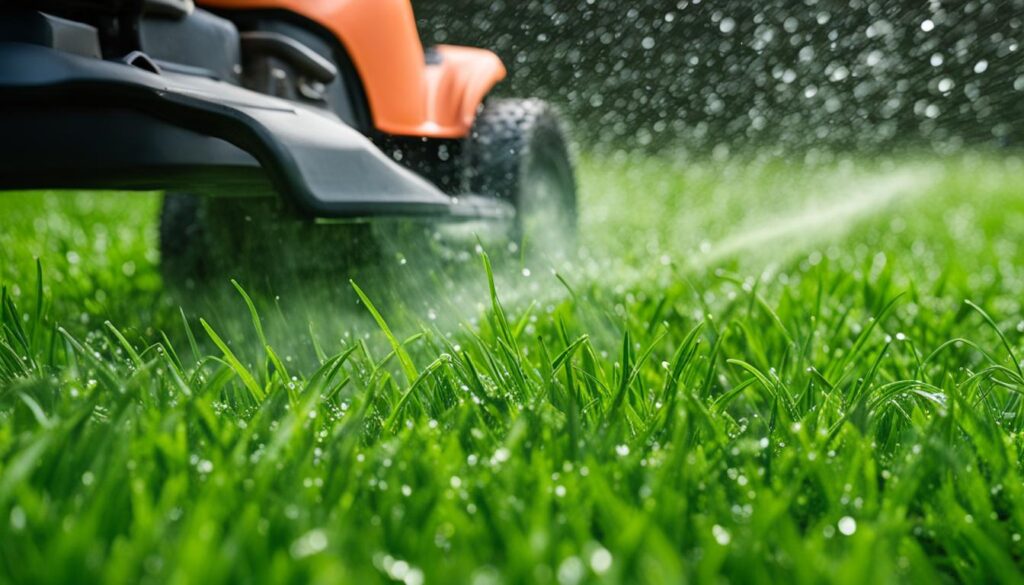
Mowing wet grass is generally a bad idea. The risks – to your lawn, your mower, and your personal safety – outweigh the convenience in almost every situation. Wet grass blades bend sideways instead of standing upright, so the mower cuts them unevenly or misses them entirely. The result is a patchy, ragged lawn that takes longer to recover than if you had simply waited a day.
That said, “wet grass” covers a wide range of situations. Light morning dew that burns off by mid-morning is very different from mowing right after a heavy rainstorm. The guidance below breaks down each scenario so you can make the right call for your lawn.
Credit: everythingbackyard.net
What Happens to Your Lawn When You Mow It Wet
Mowing wet grass causes three distinct problems that compound over time.
Uneven cuts and torn blades. Wet grass leans to one side under the weight of the water. A mower blade moving at speed tears through bent, slippery blades instead of making a clean cut. Torn grass tips turn yellow or brown within a day or two – a condition called tip burn – and make the lawn look stressed even when it isn’t.
Clumping clippings that suffocate the turf. Wet clippings stick together into dense mats instead of scattering evenly. Those mats block sunlight and trap moisture against the soil surface, which can kill the grass underneath within 24 to 48 hours. You either have to rake the clumps by hand or risk dead patches.
Fungal disease. Lawn fungi such as brown patch (Rhizoctonia solani) and dollar spot thrive in exactly the conditions wet mowing creates – moisture, torn tissue, and poor air circulation. The mower also physically moves fungal spores from one part of the lawn to another with every pass. According to the University of California Agriculture and Natural Resources (UC ANR, 2026), mowing during wet conditions is one of the leading contributors to fungal spread in residential lawns.
What Happens to Your Mower When You Mow Wet Grass
The damage is not limited to your lawn. Wet grass puts mechanical stress on every part of the mower that comes into contact with it.
Clogged deck and discharge chute. Wet clippings pack densely inside the mowing deck and around the discharge chute. On a gas mower, this forces the engine to work harder and can cause it to bog down or stall. On an electric or battery mower, the motor draws more current and overheats faster.
Blade corrosion. Water trapped between packed clippings accelerates rust on the mower blade. A corroded blade goes dull faster, which means it tears rather than cuts – compounding the lawn damage described above.
Wheel ruts and soil compaction. A wet lawn is soft. A mower – especially a heavy riding mower – will press down into soft ground and leave visible ruts. Repeated rutting compacts the soil underneath, which restricts root growth and reduces drainage long-term.
When It Is Actually Okay to Mow Wet Grass
There are two situations where mowing wet grass is an acceptable trade-off.
Light morning dew. Morning dew is surface moisture only. If the sun has been up for an hour or two and the dew is mostly gone, the grass is usually fine to mow. A quick check: press your hand flat against the lawn. If the blades spring back upright and the surface feels slightly cool but not wet, it is safe to mow.
Overgrown grass with no dry window in sight. If your lawn has grown well past its ideal height and the forecast shows rain for the next five to seven days, mowing in wet conditions is less damaging than leaving the grass to grow even taller. Tall, overgrown grass creates its own disease and pest problems. In this case, raise the cutting height by one setting, mow slowly, and clear the clumps immediately after.
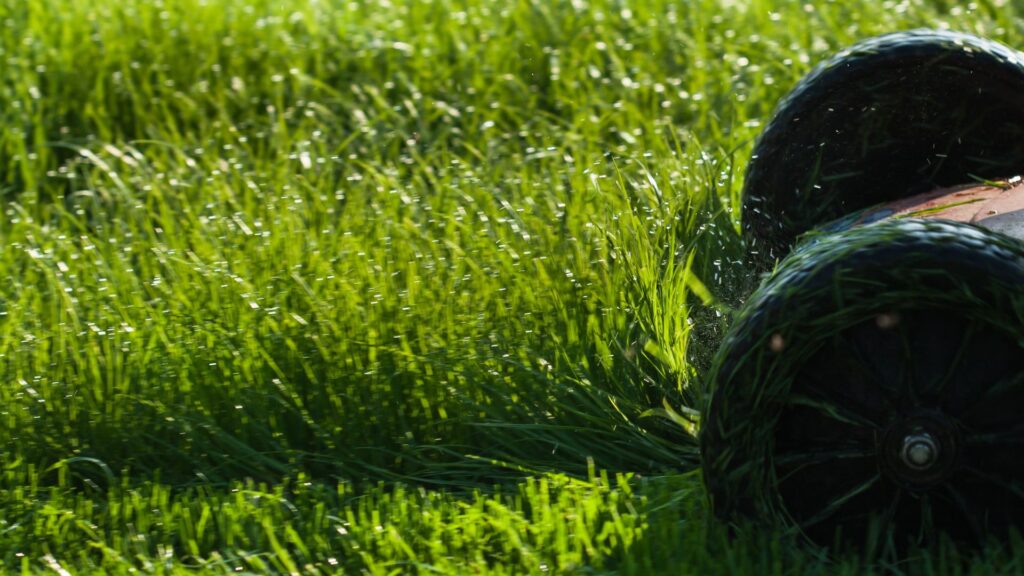
These are the only two situations where wet mowing is defensible. If neither applies, wait.
Credit: www.inkl.com
How to Mow Wet Grass Safely If You Have No Choice
If you are in one of the situations above and need to mow, follow these steps to limit the damage.
Raise the cutting height. Set the mower deck one notch higher than your usual setting. A higher cut reduces the chance of scalping and puts less stress on the mower blade when it contacts dense, wet growth.
Slow down your mowing speed. Moving the mower more slowly gives the blade more time to process each section of grass. Fast passes over wet turf cause more clumping and more uneven cuts.
Mow in a single direction. Avoid overlapping passes more than necessary. Each pass over already-cut wet ground increases the risk of ruts.
Empty the bag or clear clumps as you go. Do not let wet clippings pile up in the collection bag or along the discharge path. Stop every few rows and clear any buildup.
Clean the mower deck immediately after. Use a hose and a stiff brush to remove all clippings from the underside of the deck, the discharge chute, and around the blade. Let the mower dry fully before storing it.
How Long Should You Wait After Rain Before Mowing?
The general guideline from most lawn care extension programs is to wait at least 24 hours after significant rainfall before mowing. For heavy rain or clay-heavy soil that drains slowly, 48 hours is safer.
The best indicator is not the clock – it is the grass itself. When the blades stand upright on their own and the top inch of soil feels firm under foot pressure, the lawn is ready to mow. Soggy, spongy ground that compresses under your weight needs more time regardless of how many hours have passed.
Common Mistakes Homeowners Make When Mowing in Wet Conditions
- Mowing at the normal cutting height. Wet grass needs a higher cut to compensate for bending. Keeping the deck at the usual setting scalps low-lying sections and stresses the mower.
- Leaving clippings on the lawn. Wet clippings do not break down quickly. Leaving mats of them in place blocks air and light and creates the conditions fungal disease needs to take hold.
- Storing the mower without cleaning it. Wet clippings left inside the deck corrode metal surfaces and breed mold. Cleaning immediately after a wet mow extends the life of the mower significantly.
- Using a dull blade. A sharp blade makes a clean cut even in less-than-ideal conditions. A dull blade tears grass tissue whether it is wet or dry – and the damage is noticeably worse when the grass is already compromised by moisture.
- Mowing slopes when wet. Wet grass on a slope is a slip hazard. The American National Standards Institute (ANSI, 2026) safety standards for outdoor power equipment specifically list wet slope mowing as a high-risk activity. Walk-behind mowers are particularly dangerous on wet inclines.
Frequently Asked Questions About Mowing Wet Grass
Is it okay to mow wet grass?
It is okay in limited situations – light morning dew that has mostly dried off, or when the lawn is dangerously overgrown with no dry weather window ahead. In all other situations, mowing wet grass damages the lawn through uneven cuts and fungal spread, and damages the mower through clogging and corrosion. Waiting 24 to 48 hours after rain is the standard recommendation.
Does mowing wet grass cause disease?
Yes. Mowing wet grass increases the risk of fungal lawn disease. The mower blade tears rather than cuts wet grass tissue, and the physical movement of the mower spreads fungal spores across the lawn. Wet mats of clippings left on the surface make the problem worse by holding moisture against the turf. Common diseases triggered or worsened by wet mowing include brown patch and dollar spot.
How long should I wait to mow after rain?
Wait at least 24 hours after moderate rainfall. After heavy rain or on clay soil that drains slowly, wait 48 hours. The most reliable test is not time-based – press your hand flat on the lawn. If the grass blades stand upright and the ground feels firm, not spongy, it is safe to mow.
Can mowing wet grass damage my mower?
Yes. Wet grass clippings pack densely inside the mower deck and discharge chute, forcing the engine or motor to work harder. This can cause gas mowers to stall and electric mowers to overheat. Wet clippings also accelerate rust on the blade and surrounding metal surfaces. Cleaning the mower immediately after any wet mowing session limits this damage.
Is wet grass more dangerous to mow?
Yes, particularly on slopes. Wet grass reduces traction for both the mower wheels and your footwear. Walk-behind mowers on wet slopes are a slip and fall risk. ANSI safety standards for outdoor power equipment list wet slope mowing as a high-risk activity. If your lawn has significant slopes, do not mow until the surface has dried.
What is the best time of day to mow the lawn?
Mid-morning – roughly 8 a.m. to 10 a.m. – is the window most turf specialists recommend. Morning dew has dried by then, but the heat of the afternoon has not yet stressed the grass. Avoid mowing in the evening because the grass stays damp longer overnight, which increases fungal risk.
Key Takeaways
- Wet grass bends sideways, so mowers cut unevenly – leading to tip burn and a patchy appearance.
- Wet clippings clump into mats that block sunlight and create conditions where fungal disease spreads fast.
- Wait 24 to 48 hours after rain, and use the grass-and-ground test rather than relying on the clock alone.
- If you must mow wet grass, raise the cutting height, slow down, and clean the mower deck as soon as you finish.
- Morning dew and an urgently overgrown lawn are the only two cases where wet mowing is a reasonable trade-off.