How to Level a Mower Deck: Step-by-Step for Walk-Behind and Riding Mowers

TL;DR
- An uneven deck causes striped, scalped, or one-sided cuts – leveling it fixes the problem in under 30 minutes
- You need a flat surface, a tire pressure gauge, and a ruler or deck gauge tool
- Walk-behind decks are adjusted at the blade or wheel height brackets; riding mower decks adjust at the lift link and drag link
- Check deck level at the start of every mowing season and after any hard impact
- No special tools are required – most adjustments take a wrench and a flat surface
Why Your Mower Is Cutting Unevenly

Credit: https://lawnmowersadadvice.com/
An unlevel deck is the most common reason a lawn comes out with uneven stripes, scalped patches, or a noticeably higher cut on one side. The deck holds the blade, and if it tilts even a quarter inch in any direction, the blade arc follows that angle across your entire lawn.
Decks go out of level from normal use – hitting a tree root, running over a curb edge, or simply from seasonal vibration loosening adjustment hardware. Checking level once a season takes less time than fixing the ruts it leaves in your grass.
What You Need Before You Start
Tools:
- Tape measure or a dedicated deck gauge tool (Oregon 42-742 or equivalent)
- Wrench set (usually 1/2 inch and 9/16 inch)
- Tire pressure gauge
Safety steps:
- Park on a flat, hard surface – concrete or asphalt, not grass
- Remove the ignition key before touching anything under the deck
- On walk-behind mowers, disconnect the spark plug wire before reaching near the blade
How to Level a Walk-Behind Mower Deck
Walk-behind decks on most push mowers – including the Toro Recycler 22 and Craftsman M105 – adjust through the wheel height brackets on each corner of the mower.
Step 1: Set all four wheels to the same height position
Move every wheel bracket to the same numbered slot. This is the starting point. If one wheel sits one position higher than the others, the deck tilts to that side.
Step 2: Measure blade tip height on both sides
Turn the blade so it points side to side. Measure from a flat surface to each blade tip. The difference between the two sides should be zero. If one side reads higher, adjust the wheel brackets on that side up or down until both tips measure the same.
Step 3: Check front-to-back pitch
Turn the blade front to back. Most manufacturers – including Honda and Briggs & Stratton powered mowers – recommend the front blade tip sit 1/8 to 1/4 inch lower than the rear. This slight forward pitch improves airflow and reduces drag. Check your owner’s manual for the exact spec for your model.
Step 4: Re-check after adjusting
After any bracket change, re-measure all four positions. One adjustment can shift another. Confirm all four readings before mowing.
How to Level a Riding Mower Deck

Credit: https://au.grandado.com/
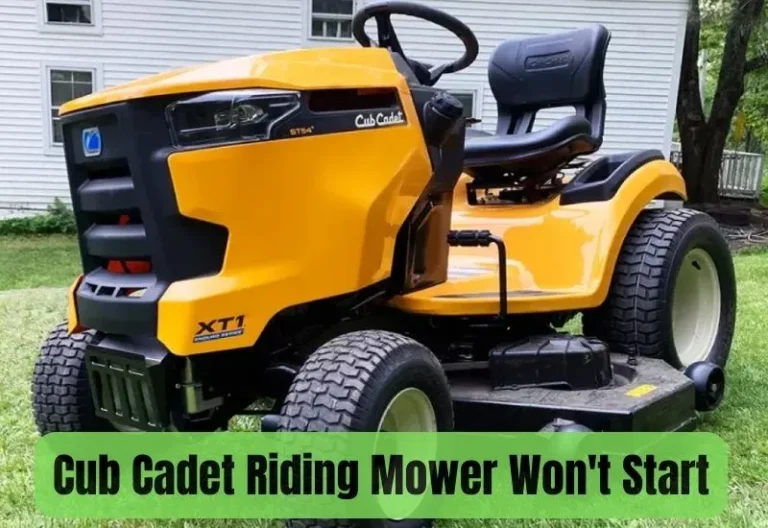
Riding mowers – including the John Deere E100 series and Husqvarna TS 100 – use a lift linkage system to hang the deck. Leveling involves the lift link on each side and, on some models, a drag link at the front.
Step 1: Check tire pressure before anything else
Low or uneven tire pressure throws off every measurement. Front tires on most riding mowers run between 10 and 14 PSI. Check your manual, inflate to spec, and only then start measuring. This step gets skipped constantly and causes bad readings every time.
Step 2: Set the deck to a mid-range cutting height
Lower the deck to a mid-range position – usually 3 inches. This puts the linkage under normal operating tension, which is the position you want to measure and adjust from.
Step 3: Measure side-to-side level
Rotate the blade to point side to side. Measure from the ground to each blade tip. Both sides should be within 1/8 inch of each other. If one side is low, find the lift link on that side – it connects the deck hanger bracket to the mower frame – and turn the adjustment nut to raise or lower that corner.
Step 4: Measure front-to-back pitch
Rotate the blade front to back. The front tip should sit 1/4 to 1/2 inch lower than the rear tip on most riding mowers (John Deere specifies 1/4 inch for the E100 series). Adjust the front draft rod or drag link to correct this. Loosen the jam nut, turn the rod to lengthen or shorten it, and re-check.
Step 5: Confirm and test
Recheck all measurements, reinstall any guards removed during adjustment, and make one test pass on a flat section of lawn before finishing the job.
Common Problems and Fixes
| Problem | Likely Cause | Fix |
|---|---|---|
| One stripe higher on the right | Right side of deck sits too high | Lower right-side wheel bracket (walk-behind) or lift link (riding) |
| Scalping in the middle | Deck sagging at center | Check center blade for bend; inspect deck hanger brackets |
| Uneven cut front to back | Incorrect front-to-back pitch | Adjust draft rod or front wheel height to restore 1/4 inch forward pitch |
| Measurements keep shifting | Loose adjustment hardware | Tighten jam nuts and lock bolts after every adjustment |
| Good level but still uneven cut | Worn or bent blade | Replace the blade – a bent blade cuts unevenly regardless of deck position |
Frequently Asked Questions
How often should you level a mower deck?
Check deck level once at the start of each mowing season and again after any hard impact – hitting a stump, a curb edge, or a buried rock. On riding mowers used frequently, a mid-season check in July is worth the 10 minutes.
Do I need a special tool to level a mower deck?
No. A standard tape measure works fine. A dedicated deck gauge tool like the Oregon 42-742 (around $10 at most hardware stores) makes repeatable measurements faster, but it is not required.
Can an unlevel deck damage my lawn?
Yes. A deck that sits low on one side scalps the grass on that side, cutting it below 2 inches and exposing the soil. Scalped grass browns quickly, weakens the root system, and opens space for weeds to move in.
What if my deck looks level but still cuts unevenly?
Check the blade first. A bent or worn blade causes uneven cutting even when the deck is perfectly level. Spin the blade by hand with the engine off – any wobble or visible bend means it needs replacement or sharpening.
How long does it take to level a mower deck?
Walk-behind decks take 10 to 15 minutes once you have the tools on hand. Riding mower decks take 20 to 30 minutes for a first-timer, less once you know where the adjustment points are on your specific model.
Quick Recap
- Park on concrete, check tire pressure, and disconnect power before starting
- Walk-behind: match all four wheel brackets, then measure blade tip height side to side and front to back
- Riding mower: inflate tires to spec, set mid-range height, adjust lift links side to side, then correct front-to-back pitch with the drag link
- Recheck all measurements after every adjustment before mowing